

If you’re struggling with a Cortisol Belly, you’ve probably realized that no amount of sit-ups can fix a problem that starts in your adrenal glands.
It’s one of the most frustrating sights in the mirror: you’re working out, you’re eating “clean,” but that stubborn midsection won’t budge. In fact, for many of us, the harder we push in the gym, the worse the “stress pooch” seems to get.
This isn’t just about vanity. What we colloquially call a “cortisol belly” is actually a physical manifestation of a system out of balance.
It’s your body’s way of screaming that it’s under siege. In the world of fitness, we spent decades focusing on calories in versus calories out. But as any veteran lifter or coach will tell you, hormones are the real “board of directors” deciding where that energy goes.
In this guide, we are going to dive deep into the science of stress-related weight gain. We’ll cover the knowledge gaps that most mainstream health sites ignore—like why your gut health dictates your stress levels and why your menopause transition is making cortisol your worst enemy.
Most importantly, we’ll give you an actionable, four-pillar plan to reclaim your metabolism.
What Exactly is a Cortisol Belly?
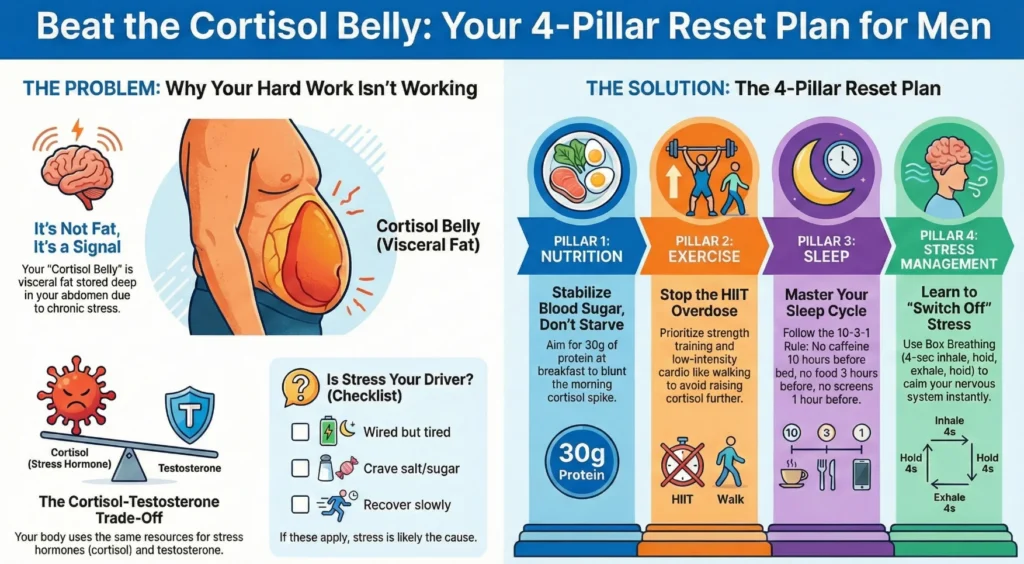
Technically, “cortisol belly” isn’t a term you’ll find in a medical textbook, but the science behind it is very real. When we talk about this, we are usually referring to the accumulation of visceral fat.
The Role of the Stress Hormone
Cortisol is often cast as the villain, but it’s actually essential for life. Produced by your adrenal glands, it helps regulate your blood pressure, blood sugar, and metabolism. It’s your “fight or flight” hormone.
Thousands of years ago, if a tiger jumped out of the bushes, cortisol dumped glucose into your bloodstream so you had the energy to run or fight.
The problem in 2025 is that the “tiger” is now a 9:00 AM Zoom call, a mortgage payment, and 24/7 news alerts.
Your body doesn’t know the difference between a physical threat and a psychological one. When stress becomes chronic, cortisol levels stay high. This signals your body to do two things:
- Increase Appetite: You start craving high-calorie, “comfort” foods.
- Store Fat: Specifically, it moves fat into the abdominal cavity to protect your organs and provide a “quick” energy source for the ongoing “emergency.”
Table 1: Visceral vs. Subcutaneous Fat
| Feature | Visceral Fat (Cortisol Belly) | Subcutaneous Fat |
| Location | Deep inside the abdomen, surrounding organs. | Just under the skin. |
| Texture | Often feels firm or “hard” to the touch. | Soft, “pinchable,” and jiggly. |
| Health Risk | High; linked to heart disease and diabetes. | Lower; mostly a cosmetic concern. |
| Primary Driver | Chronic stress and insulin resistance. | Caloric surplus and genetics. |
The Hormonal Symphony: It’s Not Just Cortisol
One of the biggest mistakes in health reporting is isolating one hormone. Your body is a symphony, and cortisol is just the conductor that’s gone off the rails. To truly understand why the cortisol belly is so hard to lose, we have to look at the other players.
The Insulin Connection
Cortisol and insulin have a “see-saw” relationship. When cortisol goes up, it triggers the release of sugar into your blood for energy. To manage that sugar, your pancreas pumps out insulin. If this happens every day, your cells start to ignore insulin—a state called insulin resistance.
Once you are insulin resistant, your body is effectively locked in “fat storage mode,” making it nearly impossible to burn abdominal fat even if you are in a calorie deficit.
The Hunger Hormones: Ghrelin and Leptin
Ever notice how a stressful day at work leads to a midnight raid on the pantry? That’s cortisol messing with your appetite regulators.
- Ghrelin: This is your “I’m hungry” hormone. High cortisol levels crank this up.
- Leptin: This is your “I’m full” hormone. Chronic stress makes you “leptin resistant,” meaning your brain never gets the signal that you’ve had enough to eat.
To get a better handle on how these hormones impact your training, you might want to check out our deep dive on does ashwagandha really boost testosterone, as this adaptogen is famous for lowering cortisol and balancing the hormonal environment.
Quick Check: Is it Stress or Just Calories?
Tick the boxes that apply to you over the last 30 days:
- ✅ “Wired but Tired”: You’re exhausted all day but can’t sleep at night.
- ✅ Midsection Focus: Your arms and legs are lean, but your belly is growing.
- ✅ Salt/Sugar Cravings: Intense urges for chips or chocolate in the afternoon.
- ✅ Low Recovery: You’re sore for days after even a light workout.
If you checked 3 or more, your “Cortisol Belly” is likely driven by adrenal stress.
Knowledge Gap: The Gut-Brain Axis
Most articles tell you to “eat fiber.” They don’t tell you why your gut is the secret to lowering cortisol. About 90% of your body’s serotonin—the “feel-good” neurotransmitter that counteracts stress—is produced in your gut.
When your gut microbiome is out of whack (dysbiosis), it sends inflammatory signals to the brain. The brain interprets inflammation as a physical threat, which triggers—you guessed it—more cortisol.
This creates a “leaky gut, leaky stress” cycle. If you want to lose the belly, you have to heal the gut. This is why we often recommend probiotics for fitness to our athletes who are struggling with recovery.
Demographic Nuances: Why Age and Gender Matter
A 25-year-old male athlete and a 50-year-old woman in perimenopause do not have the same “cortisol belly.”
The Menopause Factor
For women, the transition into menopause is a hormonal perfect storm. As estrogen levels drop, the body becomes more sensitive to cortisol. Estrogen helps regulate where fat is stored; without it, the body defaults to storing fat in the abdomen.
Furthermore, the loss of estrogen makes the body less resilient to stress, meaning a small argument or a bad night’s sleep can cause a much larger cortisol spike than it did a decade ago.
The Aging Male
For men, the issue is often the “Cortisol-Testosterone Cross.” These two hormones are made from the same raw materials. If your body is constantly making cortisol to deal with work stress, it “steals” the resources meant for testosterone.
This is known as the “Pregnenolone Steal.” Low testosterone leads to muscle loss, and less muscle means a slower metabolism and more belly fat. Understanding how long does it take testosterone boosters to work can be helpful here, but remember: you can’t supplement your way out of a high-stress lifestyle.
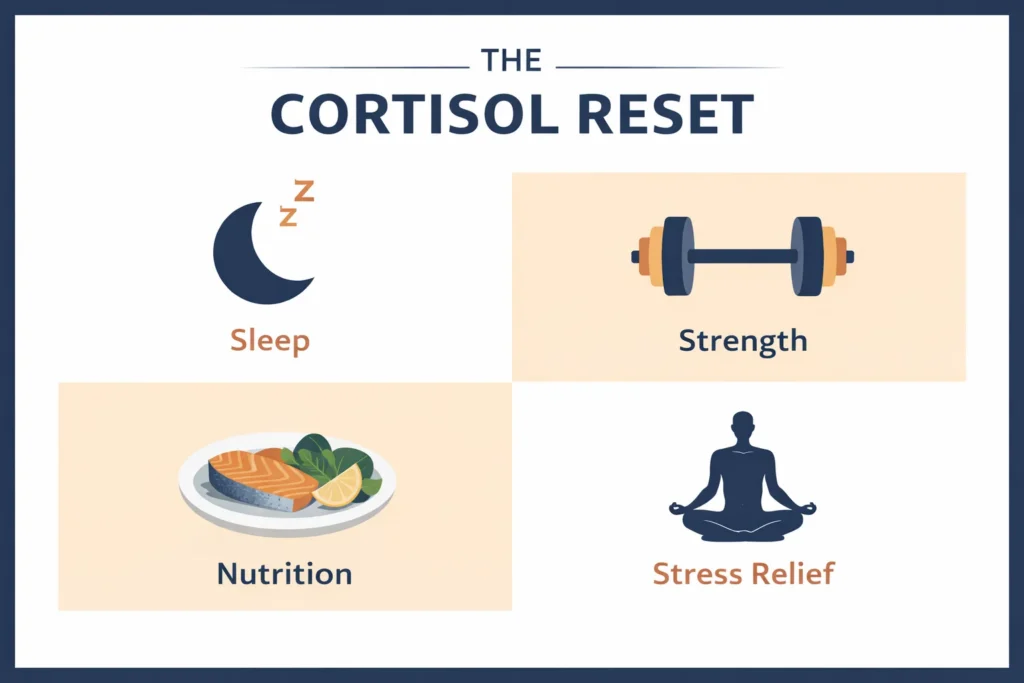
The 4-Pillar Cortisol Reset Plan
To get rid of a cortisol belly, you need a strategy that calms the nervous system while revving the metabolism. Here is your roadmap.
Pillar 1: Cortisol-Conscious Nutrition
Stop “dieting.” Aggressive calorie cutting is a physical stressor that raises cortisol. Instead, focus on blood sugar stability.
- The 30g Rule: Aim for 30 grams of protein at breakfast to blunt the morning cortisol spike.
- Magnesium-Rich Foods: Spinach, pumpkin seeds, and dark chocolate help relax the nervous system.
- Vitamin C: Your adrenal glands have the highest concentration of Vitamin C in the body. They burn through it during stress. Load up on bell peppers and citrus.
Table 2: Top Foods to Lower Cortisol
| Food Category | Examples | Why It Works |
| Healthy Fats | Salmon, Walnuts, Avocado | Omega-3s reduce inflammation and cortisol spikes. |
| Complex Carbs | Sweet Potatoes, Berries, Oats | Provides steady glucose without the insulin crash. |
| Fermented Foods | Kimchi, Kefir, Sauerkraut | Supports the gut-brain axis and serotonin production. |
Pillar 2: Strategic Exercise (Stop the HIIT Overdose)
One of the most common mistakes is doing too much high-intensity interval training (HIIT). While HIIT is great for fat loss, it is a massive cortisol trigger. If you are already stressed, 45 minutes of burpees is the last thing you need.
- Prioritize Strength: Lifting weights improves insulin sensitivity without the massive cortisol drain of long-distance cardio.
- Embrace LISS: Low-Intensity Steady-State cardio (like walking) is a “cortisol killer.” A 30-minute walk in nature can drop cortisol levels significantly.
- Watch for Red Flags: If you’re experiencing overtraining syndrome, your belly fat will likely increase regardless of your effort.
Pillar 3: Master the Sleep Cycle
Sleep is when your body “washes” cortisol out of the brain. If you get less than 7 hours, your cortisol levels the next day will be roughly 30% higher.
- The 10-3-1 Rule: No caffeine 10 hours before bed, no food 3 hours before bed, and no screens 1 hour before bed.
- Cool the Room: A temperature of 65°F (18°C) is ideal for deep sleep.
Pillar 4: Active Stress Management
You cannot “avoid” stress, but you can change your physiological response to it.
- Box Breathing: 4 seconds in, 4 seconds hold, 4 seconds out, 4 seconds hold. This signals the vagus nerve to switch from “Fight or Flight” to “Rest and Digest.”
- Meditation: It’s not just for monks. For athletes, meditation for athletes is a performance-enhancing tool that lowers resting cortisol.
The “Stress vs. Sweat” Gauge
Which workout should you do today?
When to See a Doctor: Is it Cushing’s?
It is vital to distinguish between lifestyle-induced cortisol belly and a medical condition called Cushing’s Syndrome. Cushing’s occurs when the body produces pathologically high levels of cortisol, often due to a tumor or long-term steroid use.
According to the Cleveland Clinic, signs that your belly fat might be more serious include:
- A “buffalo hump” (fat pad between the shoulder blades).
- A very rounded “moon face.”
- Purple or pink stretch marks (striae) on the abdomen.
- Thin skin that bruises easily.
If you have these symptoms, stop reading and make an appointment with an endocrinologist. They can run blood, saliva, or 24-hour urine tests to check your actual hormone levels. For most of us, however, the solution lies in the mirror and our daily habits.
The Role of Targeted Supplements
Can supplements help? Yes, but they are the “icing on the cake,” not the cake itself.
- Adaptogens: Herbs like Ashwagandha and Rhodiola help the body “adapt” to stress. In our PrimeGenix Cortisync review, we look at how specific blends can help lower cortisol levels in men who are chronically overworked.
- Omega-3s: Essential for reducing the neuro-inflammation that keeps the stress response active.
- Phosphatidylserine: A phospholipid that has been shown in studies to blunt the cortisol response to intense physical exercise.
Cortisol-Lowering Daily Meal Template
- 🍳 Breakfast: 3 Scrambled eggs with spinach and 1/2 avocado. (High protein + Magnesium).
- 🥗 Lunch: Grilled salmon over a large green salad with walnuts and olive oil dressing. (Omega-3s + Healthy Fats).
- 🍏 Snack: An apple with almond butter or a small piece of dark chocolate (70%+ cacao).
- 🍗 Dinner: Roasted chicken breast with sweet potato and steamed broccoli. (Complex carbs for sleep-inducing serotonin).
Myth-Busting the Cortisol Belly
Let’s set the record straight on a few things that the “influencers” get wrong.
Myth: You can “spot reduce” cortisol fat with crunches.
Fact: You cannot choose where your body burns fat. Crunches build the muscle underneath the fat, which is great, but they won’t burn the visceral fat. To lose the belly, you have to lower systemic cortisol and create a sustainable (not aggressive) caloric deficit.
Myth: You should cut all carbs.
Fact: Extreme low-carb diets (Keto) can actually be a stressor for some people, causing cortisol to spike to maintain blood sugar levels. For those with a cortisol belly, moderate amounts of high-fiber, complex carbohydrates in the evening can actually help you sleep better by assisting in the production of tryptophan and serotonin.
Myth: Cardio is the best way to burn it off.
Fact: Over-doing cardio is a primary cause of high cortisol in the fitness community. As noted by the Mayo Clinic, over-exercising without recovery leads to a hormonal breakdown. If you want to burn fat, you need to be a “fat-burning machine,” which requires muscle. Muscle is built through resistance training, not endless hours on the treadmill.
The 28-Day Cortisol Reset Checklist
If you’re ready to take action, don’t try to change everything at once. Use this phased approach:
Week 1: The Foundation
- Commit to 7.5 hours of sleep.
- Start a 10-minute morning walk.
- Drink 1 glass of water before every meal.
Week 2: Nutrition Shift
- Ensure every breakfast has 30g of protein.
- Swap refined sugars for berries or nuts.
- Limit caffeine to before 12:00 PM.
Week 3: Training Nuance
- Reduce HIIT sessions to once per week.
- Add two full-body strength training sessions.
- Check for signs of cardio and cortisol imbalance (e.g., feeling “flat” or losing strength).
Week 4: Mindset & Recovery
- Practice 5 minutes of box breathing daily.
- Unplug from all work emails after 7:00 PM.
- Reflect on your “Non-Scale Victories” (Better mood, more energy).
Summary: Reclaiming Your Midsection
The journey to losing a cortisol belly is unique because it requires you to do something counter-intuitive in our “hustle” culture: You have to slow down to speed up.
By prioritizing sleep, stabilizing your blood sugar, and choosing restorative movement over punishing workouts, you signal to your body that the “emergency” is over. Once your brain feels safe, it will finally let go of the visceral fat it’s been hoarding.
Remember, this isn’t a 7-day fix. It’s a physiological reset. Be patient, be consistent, and listen to your body’s signals. You didn’t get stressed out overnight, and you won’t balance your hormones overnight either—but with this 4-pillar plan, you are finally moving in the right direction.
Cortisol Belly FAQ
Common questions about stress-related weight gain and recovery.
Hormonal changes take time. You might notice better sleep and less bloating within 14 days, but significant visceral fat loss typically requires 2 to 3 months of consistent stress management and proper nutrition. Remember, you are healing a system, not just burning calories.
It depends on timing. Caffeine stimulates the adrenals. If you drink it on an empty stomach while already stressed, it can spike cortisol levels excessively. Try having your coffee after a protein-rich breakfast to buffer the response.
Absolutely. For those with burnout, rest is the workout. Lowering cortisol through sleep and meditation can often trigger more fat loss than a punishing cardio routine that further stresses the body.
That “hardness” is a hallmark of visceral fat. Unlike subcutaneous fat (the kind you can pinch), visceral fat is stored behind your abdominal muscles, pushing them outward and creating a firm, distended appearance.
Walking at a brisk but comfortable pace is the gold standard. It lowers stress hormones while keeping your heart rate in a fat-burning zone without triggering a survival response from your adrenal glands.