Understand diet and testosterone evidence, build balanced meals and plan a repeatable week without miracle foods or unnecessary supplement stacks.
- A meal cannot guarantee a testosterone increase.
- Avoid turning hormone concerns into extreme food rules.
- Plan meals you can repeat and adjust to your needs.
Bottom line Choose one balanced meal you can repeat this week; persistent symptoms deserve evaluation rather than a stricter food list.
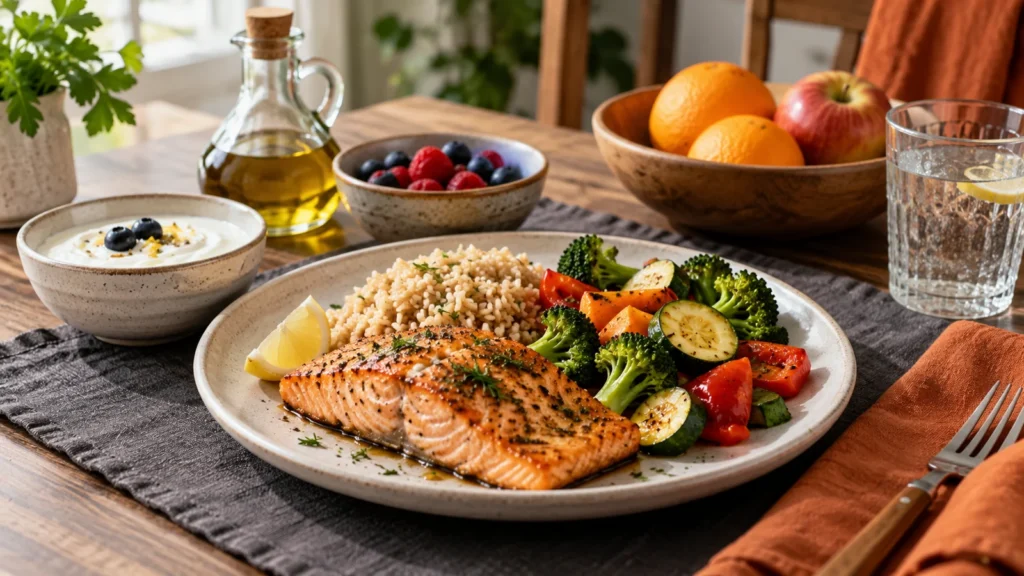
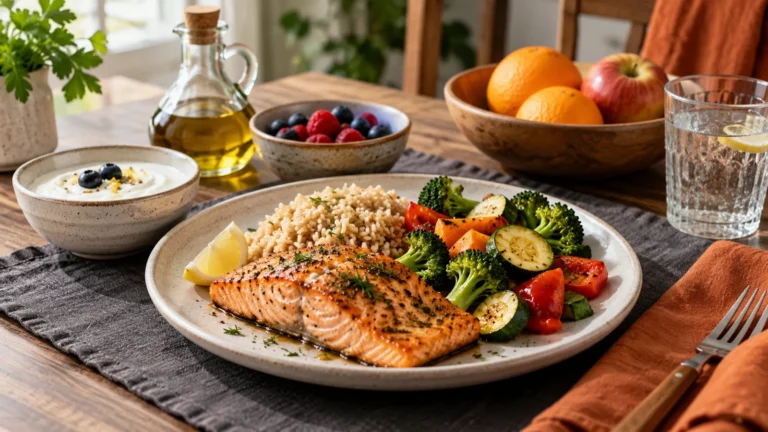
For diets that boost testosterone, the evidence depends on the starting context, including inadequate intake and obesity-related hormonal changes. A meal, nutrient or named diet is not a treatment for low testosterone. Check what your usual eating pattern provides and what it may be missing.
This guide separates the research from a practical task: build meals you can repeat, with enough variety and portions suited to your needs. The meal ideas, images and helper are illustrative planning tools. They were not tested for a testosterone effect, and they do not prescribe calories or a medical diet.
Quick Summary: Diets That Boost Testosterone
- No single food or diet guarantees a testosterone increase.
- Weight-loss research in men with obesity does not mean every man should restrict calories.
- Small studies of dietary fat do not establish a universal hormone-optimizing ratio.
- Start with repeatable meals: a protein, plants, an energy source and suitable unsaturated fats.
- Persistent symptoms need evaluation; adding foods or supplements cannot diagnose the cause.
What can diet change, and what does the evidence not establish?
Nutrition questions depend on your starting point. A person who skips meals while training hard has a different problem from someone pursuing weight management with clinical support. A restrictive “testosterone diet” can miss both situations if it begins with a banned-food list instead of an assessment of needs.
| Question | What was studied | Practical limit |
|---|---|---|
| Does weight loss affect testosterone? | A 2013 systematic review and meta-analysis examined weight loss in men with obesity, including diet and bariatric interventions, and found increases in testosterone. | This population and context matter. It does not show that a lean person, someone under-fueled or every man with symptoms should eat less. |
| Does dietary fat matter? | A 2021 review of six intervention studies, totaling 206 men, found lower testosterone measures with lower-fat versus higher-fat diets. | The authors called for more randomized trials. The result does not define an ideal fat intake or establish that adding saturated fat improves health or symptoms. |
| Can one food fix low testosterone? | The studies above assessed dietary interventions and outcomes in defined groups, not a guaranteed effect from an ordinary serving of one ingredient. | A food’s nutrient content is not proof that it treats a hormone disorder. Do not assign a testosterone percentage to eggs, nuts, fish or a smoothie. |
The reviews do not supply a personal calorie target, an optimal carbohydrate-to-fat split or a deadline for feeling different. If changing body weight is part of your care plan, work within that plan. Our testosterone boosters and weight loss guide explains why supplement promises and weight management require separate judgments.
The Prime Perspective
Start by improving one meal you regularly eat. Check whether it has useful variety and a portion that fits your needs. Record practical changes separately from any hormone concern; symptoms require appropriate assessment.
Start with a balanced pattern you can maintain
The Harvard Nutrition Source’s Healthy Eating Plate supports a varied pattern using vegetables, fruit, whole grains, suitable protein foods and healthy oils. Our four-component template below is an original planning aid. It is not a copy of Harvard’s plate proportions or a prescribed hormone diet.
Protein
Choose foods you can prepare and tolerate: fish, chicken, eggs, yogurt, tofu, beans or lentils. The choice can change between meals. A powder is optional convenience, not a necessary ingredient in a testosterone diet.
Plants and an energy source
Add vegetables or fruit and a food such as rice, potatoes, oats or whole-grain bread. Frozen vegetables and canned beans can make the pattern easier to repeat. Check labels and preparation instructions.
Unsaturated fats
Olive oil, nuts, seeds or another suitable source can fit the meal. Choose ingredients and amounts that work with allergies, preferences and your dietary plan; “more” is not automatically better.
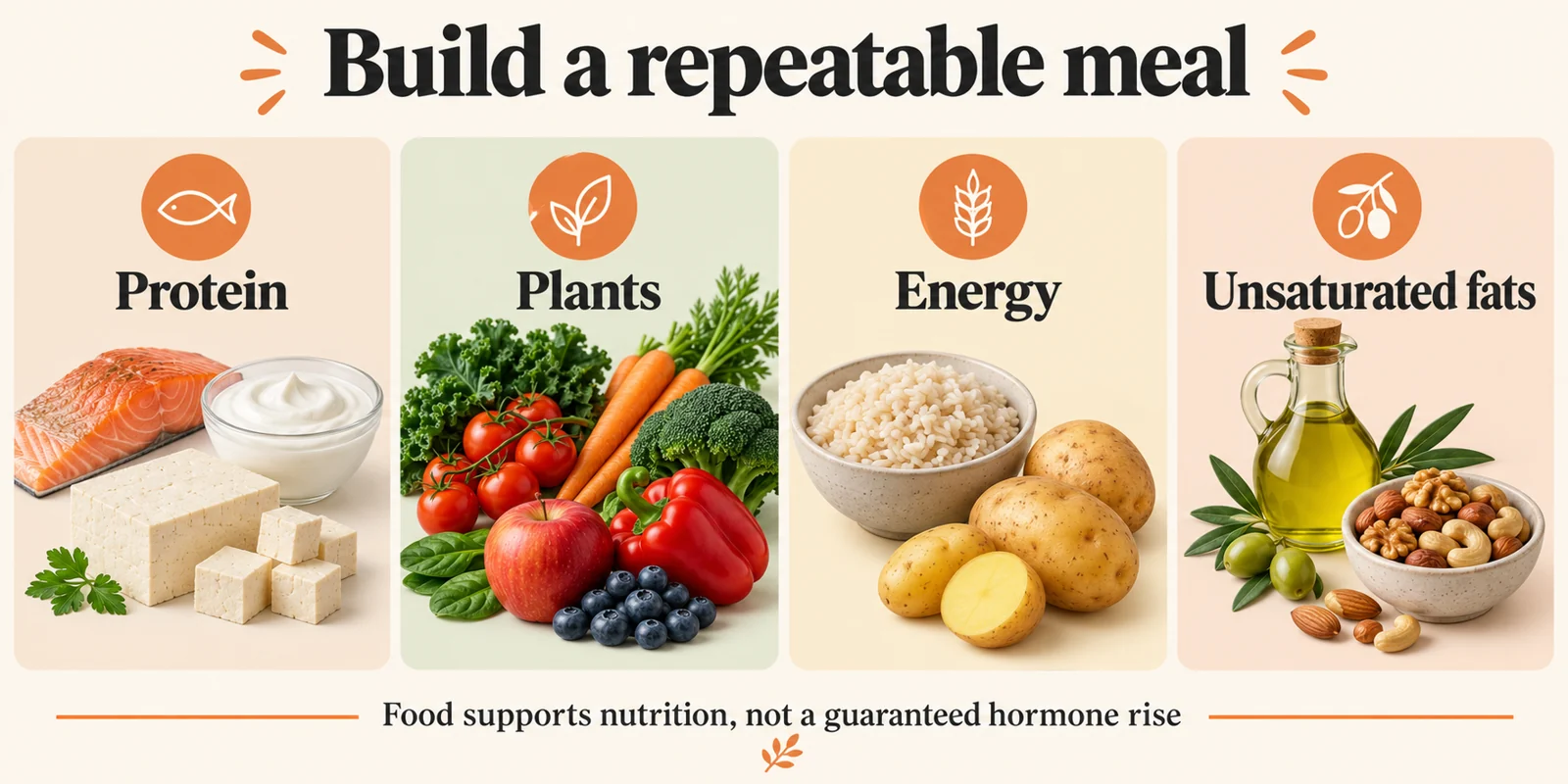
You do not need a visually perfect plate at every meal. A soup, sandwich or breakfast bowl can provide the same components across its ingredients. Use the components to identify an omission you can address, such as lunch containing only a snack.
Assemble a meal from four useful components
Protein, plants, an energy source and unsaturated fats come together as a meal-planning reminder. The schematic contains no calorie proportions or predicted hormone effect.
Silent, 8.5 seconds. Open the animation directly. Playback pauses offscreen; reduced-motion preferences keep playback manual. Essential instructions remain in the article text.
A sample day, with practical swaps
This is an example of meal structure, not a complete nutrient analysis, calorie prescription or tested testosterone plan. Adjust portions and ingredients for appetite, activity, medical dietary needs, allergies and budget. A dietitian can help when adequacy or restrictions are difficult to assess.
| Meal | Example | Swap or preparation check |
|---|---|---|
| Breakfast | Plain yogurt, oats and fruit, with suitable nuts or seeds. | Choose a suitable alternative if dairy or nuts do not fit. Plant-based products vary in protein and fortification; check the label. |
| Lunch | Cooked beans or chicken, whole-grain bread and vegetables, with an olive-oil dressing. | Use safely prepared ingredients. A sandwich or bowl can work; neither format has a special hormone effect. |
| Dinner | Fully cooked fish or prepared tofu, cooked rice or potatoes, vegetables and a suitable fat source. | Use package and food-safety instructions rather than an invented universal cooking time. Change the portion to your needs. |
| Optional snack | Fruit with yogurt, or another suitable snack when needed. | A snack is not mandatory. Its usefulness depends on hunger, timing and your overall eating pattern. |
Three meals you can assemble from prepared components
- Rice bowl: combine safely cooked rice, cooked beans or chicken, vegetables and olive oil. Add flavor you enjoy, such as lemon or herbs, without treating the seasoning as a hormone intervention.
- Potato plate: use fully cooked potatoes, fully cooked fish or package-prepared tofu and vegetables. Keep the meal practical: frozen vegetables or leftovers stored correctly can reduce preparation work.
- Bean sandwich or toast: pair cooked beans with whole-grain bread and vegetables. Add a suitable unsaturated fat source. If the portion is too small for your needs, change it rather than assuming the example is sufficient.
For a drink-based option, see our smoothie guide. A smoothie can be a convenient food choice, but it cannot guarantee a hormone change. If you need a convenient protein option, our protein powder guide addresses selection separately from testosterone claims.
What about zinc, vitamin D and supplements?
Meeting nutrient needs is different from taking large amounts to chase a hormone result. The NIH vitamin D fact sheet describes food sources and variable fortification, including fatty fish and some fortified foods. The actual label matters: not every yogurt or plant beverage contains the same added nutrients.
A restricted diet, absorption problem or suspected deficiency deserves an assessment appropriate to the situation. Do not infer a deficiency from fatigue alone. This guide does not recommend routine hormone or vitamin testing for everyone, and it does not provide a zinc or vitamin D dosing protocol.
The FDA advises consumers to discuss supplement decisions with a qualified health professional. More products do not make a meal plan more complete. Medication interactions, total intake and the reason for supplementation need checking; a supplement stack cannot replace a varied diet or medical care.
Plan preparation and storage before making a large batch
Choose one repeat meal before preparing a week of unfamiliar food. Check how many portions you need, which ingredients you already have, and what must be cooked or chilled. Label stored food so you can identify what it is and when it was prepared.
FoodSafety.gov’s four steps are clean, separate, cook and chill. Use a food thermometer and the relevant safe-temperature guidance when cooking. Refrigerate perishable food promptly; its guidance specifies within two hours, or within one hour when temperatures are above 90°F. A sealed container alone does not make food safe or extend its storage life.
The helper uses ingredients that are already safely prepared. It creates an assembly idea and an ingredient checklist, not a cooking timetable. Follow instructions for each food, particularly rice, fish, poultry and leftovers. If a prescribed diet limits certain foods, make those adjustments before using a generated meal idea.
Build a meal and an ingredient checklist
Choose ready-to-use meal components and a preparation approach. This creates a meal idea and shopping checklist, not calories, a nutrient adequacy assessment or a testosterone estimate.
Combine a suitable protein, vegetables or fruit, rice/potatoes/whole-grain bread and an unsaturated fat such as olive oil. Use portions that fit your needs and any prescribed dietary plan. Keep ingredients safe and record what you can repeat.
The article tables and downloadable worksheet remain available without JavaScript.
Keep your worksheet away from the screen
Download the one-page weekly meal planning sheet (fillable PDF). Its eight editable fields keep the details and questions for this topic together; it also works for handwritten notes. The helper’s print button creates a separate record containing your current selections, notes and checkmarks.
BHF video: diet, exercise and general health
This older British Heart Foundation explainer connects everyday eating and activity with heart health. It provides general context, not evidence that these meals increase testosterone; it does not replace the current sources and food-safety guidance below.
Watch the source video on YouTube if the embed does not play.
Conclusion: keep the first week simple
- Notice the current pattern. Record ordinary meals without awarding yourself a hormone score. Note missed meals, limited variety or practical obstacles you want to discuss.
- Pick one meal. Choose ingredients you tolerate and can buy, then plan preparation and storage.
- Repeat and adjust. Record convenience, hunger and what you enjoyed. These observations improve planning; they do not measure testosterone.
- Address persistent symptoms separately. Bring the concern to a clinician instead of tightening food rules indefinitely.
If training is part of your routine, our home strength guide and home cardio guide offer practical starting templates. Eating and exercise decisions should fit your health and recovery needs. Neither guide turns a routine into a guaranteed hormone intervention.
Optional tools for repeat meals
These tools help with weighing or storing food when that serves your meal plan. They do not affect hormones. Keep suitable tools you already own.
As an Amazon Associate, PrimeForMen earns from qualifying purchases. Check the exact selected version, package, seller and current instructions; prices and offers can change.
Best for: For repeating ingredient weights in a recipe you already use. Skip it if weighing is unnecessary or conflicts with your dietary care plan. Current Amazon listing: Etekcity Food Kitchen Scale, Digital Grams and Ounces, 11lb Best for: For storing prepared ingredients or a lunch that fits the selected container. Skip them if you already have suitable food-safe storage. Current Amazon listing: M MCIRCO 10 Pack,22 oz Glass Food Storage Containers with lids, Gray * As an Amazon Associate, PrimeForMen earns from qualifying purchases.Recommended Products

Etekcity digital kitchen scale
View on Amazon
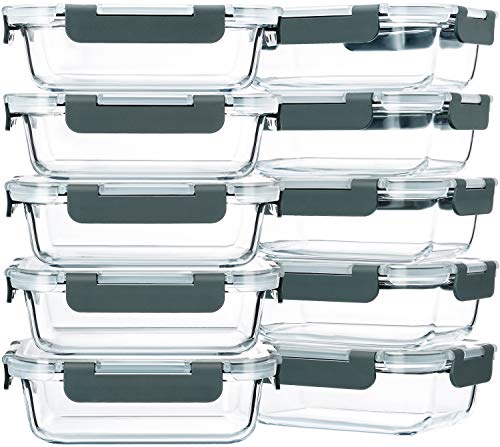
MCIRCO 22 oz glass food containers
View on Amazon
Frequently asked questions
What is the best diet to boost testosterone?
The evidence does not establish one universal diet for every man. Your starting intake, body-weight context, medical needs and ability to maintain the pattern matter. A balanced repeatable meal plan is a practical starting task, not a treatment claim.
Should I cut carbohydrates or eat a high-fat diet?
The small dietary-fat review does not define an optimal ratio or justify extreme restrictions. Rice, potatoes, oats and whole grains can fit a balanced pattern. Adjust intake to your needs and prescribed care rather than a hormone headline.
Can eggs, oysters or a smoothie fix low testosterone?
A food can contribute nutrients without treating a hormone disorder. Ordinary servings cannot be assigned a guaranteed testosterone increase. Persistent symptoms require appropriate assessment.
Do I need zinc, vitamin D or a testosterone booster?
This meal guide does not establish a need for a supplement. Suspected deficiencies, restrictions, medicines and total intake need appropriate review. Do not take large amounts merely because a nutrient appears in a hormone article.
Does the meal builder calculate calories or testosterone?
No. It combines your chosen prepared components into a meal idea and ingredient checklist. It does not assess nutrient adequacy, prescribe portions, diagnose a deficiency or estimate a hormone change.
Medical Disclaimer
This is general nutrition education, not a prescribed medical diet. Adjust meal examples for allergies, restrictions and your needs; persistent symptoms need appropriate evaluation.
Generated editorial imagery and diagrams are illustrative. They do not show measured hormone changes, personal product testing or validated exercise technique.
Equipment suggestions use documented product listings and task fit, not hands-on testing. As an Amazon Associate, PrimeForMen earns from qualifying purchases.
Sources and review scope
Checked October 5, 2026. Research findings, general nutrition guidance and our illustrative meal-planning examples are identified separately. See our editorial policy.
- Weight loss and obesity-associated hypogonadism: systematic review and meta-analysis, 2013
- Low-fat diets and testosterone: systematic review and meta-analysis, 2021
- Harvard Nutrition Source: Healthy Eating Plate
- NIH ODS: vitamin D food sources and guidance
- FoodSafety.gov: clean, separate, cook and chill
- Endocrine Society: clinical assessment of hypogonadism
- FDA: consumer supplement guidance