
Does sex boost testosterone? Compare small human studies, the retracted abstinence claim and what sexual symptoms can tell you.
- Small studies measured short-term changes, with different findings and methods.
- The widely cited seven-day abstinence paper was retracted.
- Sexual frequency is not an established treatment for testosterone deficiency.
Bottom line Choose intimacy around consent and comfort. Check the study's measurement and duration before treating a hormone fluctuation as a lasting benefit.

Does sex boost testosterone? Some small human studies found changes around sexual activity or stimulation, while others found no testosterone response to orgasm. They do not establish that having more sex or following an abstinence schedule reliably raises usual resting testosterone or treats testosterone deficiency.
Check who took part, what activity happened, whether the sample was saliva or blood, and how long researchers followed the result. This guide compares those details, including a retracted study that still appears in abstinence advice.
Quick Summary: Does Sex Boost Testosterone?
- A short-term hormone sample, a change in resting levels and a treatment benefit are different outcomes.
- The frequently cited intercourse study involved only four couples.
- The 2021 masturbation pilot had eight participants and measured free testosterone in saliva, with total testosterone in serum.
- The paper behind the widely shared seven-day abstinence peak is marked as retracted.
- Choose intimacy around consent and comfort. Persistent sexual changes deserve a clinical conversation without assuming a hormonal cause.
The Prime Perspective
A sexual-frequency rule needs evidence that actually tested the rule and its promised benefit. An interesting laboratory response cannot tell you how often to have sex, how long to abstain or whether either choice treats a medical condition.
This is an editorial review of selected human evidence. It is not a clinical assessment or a complete systematic review. Our editorial policy explains how we handle source limitations.
Separate the three research questions
What happened around the activity?
A study can collect samples before and after arousal, intercourse or orgasm. It describes those measured times under those conditions. A difference is not automatically a durable change.
What happened to usual resting levels?
That requires an appropriate follow-up and comparable sampling conditions. A later sample from one evening cannot establish a stable effect across weeks.
Did a treatment improve a condition?
The study must define the clinical problem and measure relevant benefits and harms. A laboratory finding in healthy volunteers does not answer a treatment question in men with confirmed deficiency.
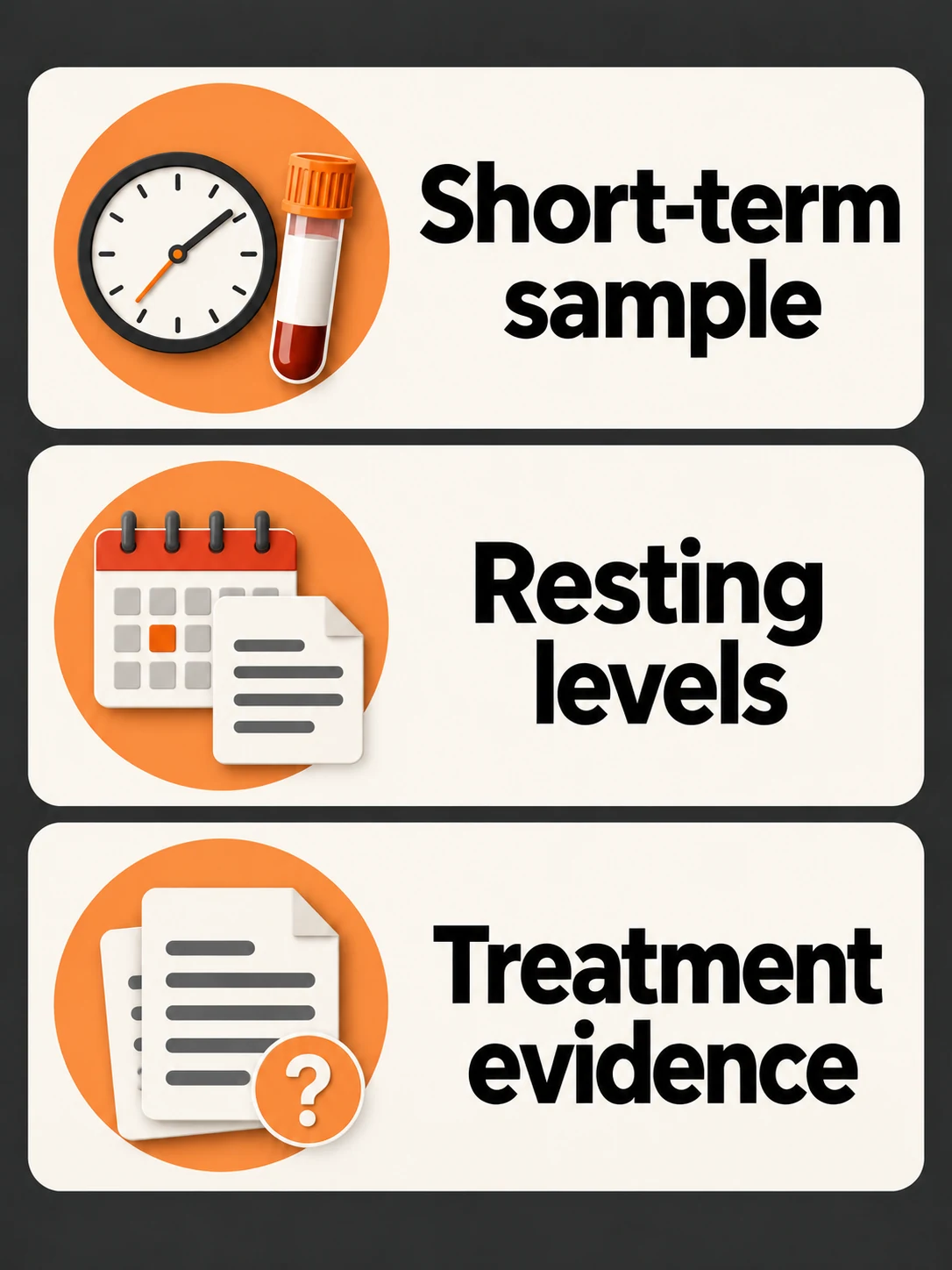
A headline that uses “boost” without a timescale leaves the outcome unclear. Check which result the source actually measured. A rise in a saliva measurement is also not interchangeable with a clinically interpreted blood testosterone result.
What the small human studies measured
| Study | Participants and activity | Measurement and finding | Important limit |
|---|---|---|---|
| Dabbs and Mohammed, 1992 | Four heterosexual couples; 11 intercourse evenings and 11 evenings without intercourse | Salivary testosterone increased across intercourse evenings and decreased across comparison evenings. | Very small sample; it does not establish lasting blood levels, an ideal frequency or a clinical treatment. |
| Exton and colleagues, 2001 | Ten healthy men studied around masturbation-induced orgasm before and after three weeks of abstinence | Plasma testosterone did not change with orgasm. Higher testosterone was observed after the abstinence period. | A small physiological protocol, not proof of a useful abstinence prescription or a lasting symptom benefit. |
| Isenmann and colleagues, 2021 | Eight healthy young male strength athletes; masturbation with a visual stimulus, visual stimulus alone, and a passive condition | Serum total testosterone; salivary free testosterone and cortisol. The active and visual conditions appeared to counter the daily decline in salivary free testosterone. | No corresponding change in the measured hormone ratios; no demonstration of lasting deficiency treatment or better muscle growth. |
The findings are not identical. The protocols, activity and sample types differ, and a small pilot leaves substantial uncertainty. These results do not support a universal “sex raises testosterone” rule.
The 2021 pilot did not measure a blood free-testosterone boost
That distinction is easy to lose in summaries. The paper’s methods state that total testosterone was measured in serum, while free testosterone and cortisol were measured in saliva. The reported free-testosterone finding should keep that sample context attached to it.
The eight participants were young, healthy and experienced strength athletes. The study did not follow older men with diagnosed testosterone deficiency through a treatment course. Its discussion proposes future training research; it reports no muscle-growth result.
Partnered sex and masturbation need separate descriptions
The four-couple study is directly about intercourse. The 2021 pilot is about masturbation and visual stimulation. You can compare them as research on sexual activity, but you should not rename one activity as another when reporting the finding.
For example, if an article links the 2021 paper beneath “Have more sex to raise testosterone,” check whether it explains the actual conditions and measurements. Without that explanation, the citation leaves a gap between the tested activity and the advice.
Different questions
A sample taken around arousal or sexual activity answers a short-term question. It does not establish a lasting change in resting testosterone or prove that sex treats testosterone deficiency.
Silent, 8.5 seconds. Open the animation directly. Playback pauses offscreen; reduced-motion preferences keep playback manual. Essential explanations remain in readable text.
Abstinence claims: the seven-day paper was retracted
The 2003 paper commonly cited for a seventh-day testosterone peak is marked as a retracted publication in PubMed, with a 2021 retraction notice. Its reported peak should not be presented as reliable evidence for a seven-day schedule.
Retraction is a publication-status check, separate from debating whether a number looks plausible. When a page repeats a precise percentage without that status, it omits information you need to assess the claim. You do not need to repeat the percentage to decide that the citation cannot support the advice.
The small 2001 abstinence study in the table is a different paper and should not be described as retracted. It observed higher testosterone after an abstinence period, but it did not establish an ideal schedule, lasting health benefit or treatment for deficiency. Avoid replacing one internet rule with another based on a limited experiment.
You can choose abstinence for personal reasons without presenting it as a proven hormone intervention. The checked evidence does not supply a mandatory sexual schedule.
What about longer-term observations in men with ED?
A 1999 study by Jannini and colleagues reported an association between testosterone and resumed sexual activity after treatment for erectile dysfunction. It is relevant because the literature is not limited to measurements from a single evening.
However, improvement after ED treatment does not isolate sexual activity as the cause of a hormone change. Treatment response and other aspects of the clinical context changed together. These observations cannot establish that prescribing more sex will treat low testosterone in the general population.
A comparison capable of separating sexual activity from treatment and other influences would be needed to test that explanation.
Compare the claim with the study
Choose a claim and one of the studies discussed here. The result compares their scope. It does not assess your sexual health, recommend a frequency or estimate testosterone.
Read the study table: four couples were studied around intercourse; the 2021 pilot tested masturbation and visual stimulation; the 2001 study examined orgasm before and after abstinence. The seven-day paper is retracted. None establishes a sexual-frequency treatment for testosterone deficiency.
Do sex or abstinence improve gym results?
The 2022 systematic review and meta-analysis of sexual activity before physical fitness testing combined nine crossover studies with 133 participants, almost all male. The pooled results did not favor abstinence or sexual activity. The tests involved aerobic fitness, endurance or strength/power; they were not long-term muscle-growth trials or real competition outcomes.
That research does not support a blanket instruction to abstain before training, or a prescription to have sex for better gains. Individual scheduling and comfort still matter. If a late evening cuts short your available sleep, plan around that practical consequence without claiming the study demonstrated a hormone mechanism.
Use a suitable strength-training plan and keep a record of actual work. Our lifting and testosterone guide explains the similar mistake of treating an acute exercise response as a lasting benefit. For scheduling, the recovery guide gives the training context.
Libido, erections and testosterone are not the same measure
Sexual desire describes interest in sexual activity. Erectile function describes the ability to get and keep an erection. Testosterone is a hormone measurement interpreted in context. A change in one does not identify the cause of changes in the others.
NIDDK lists multiple contributors to erectile dysfunction, including vascular disease, diabetes, medicines and psychological factors as well as hormonal conditions. Discuss a persistent change with a healthcare professional; do not stop prescribed medication on your own to test an internet explanation.
If low testosterone is suspected, diagnosis generally combines symptoms with repeat, appropriately collected blood tests. The Endocrine Society patient guide explains this assessment. Neither a libido change nor a single result is a self-diagnosis.
How to describe a change at an appointment
Start with the change and its timeline: “For the past few months, my interest in sex has been different,” or “I am repeatedly having trouble keeping an erection.” Mention whether it is persistent, new or different in particular situations, and bring your current medication list. You can ask what causes should be considered and whether testing would change the next step.
You can discuss the symptom directly. Keep sensitive notes wherever you feel comfortable. The study-reading worksheet below needs no personal sexual details.
Understand the clinical context of testosterone symptoms
In this Mayo Clinic Minute, urologist Gregory Broderick explains why symptoms of testosterone deficiency need professional attention. Watch for the connection with sexual symptoms. The clip does not show that sex or abstinence changes resting testosterone.
Watch this Mayo Clinic clip on YouTube if the embed does not play.
What to do this week
- For a headline you are checking, identify the activity, sample type and timescale. Use the study helper to compare them with the actual source.
- Check the paper’s publication status, especially when advice relies on the seven-day abstinence claim.
- Choose intimacy around mutual consent, comfort and personal preference. Avoid making a partner responsible for achieving a hormone target.
- If a sexual change persists or concerns you, arrange an appropriate clinical discussion and ask what further assessment is needed.
Keep your review with you
The eight-field study-reading sheet records the claim, publication status, sample and outcome. It needs no personal sexual details. Fill and save the PDF, or print and write by hand.
Download my hormone-study reading notes (fillable PDF). The helper print button creates a separate record with your current choices, notes and checkmarks.
Conclusion: keep the finding within its scope
Small studies show varied short-term findings, and limited clinical observations raise further questions. They do not establish a sexual-frequency or abstinence treatment for testosterone deficiency. Read the actual sample and follow-up before accepting a durable-benefit claim.
For related research, compare running and testosterone or use the testosterone evidence hub. The same distinction between a measured response and a clinical benefit applies across those topics.
Frequently asked questions
Does testosterone rise after sex?
A very small intercourse study found an increase in salivary testosterone across the evening. Other protocols have different findings. That result does not establish a lasting blood-testosterone increase.
Does masturbation lower testosterone permanently?
The checked studies do not establish permanent testosterone depletion from masturbation. They also do not establish masturbation as treatment for deficiency. Persistent symptoms should be assessed on their own merits.
Does seven days of abstinence boost testosterone?
The paper widely cited for that precise schedule was retracted. It should not support a seven-day hormone prescription. The separate 2001 study also cannot establish an ideal abstinence schedule.
Should I abstain before lifting weights?
The selected physical-fitness review found no pooled advantage for abstinence or sexual activity. It did not test long-term muscle growth. Choose timing around your comfort and training routine.
Does low libido prove low testosterone?
No. A persistent change can justify assessment, but the symptom does not identify its cause. A clinical diagnosis requires the appropriate symptom and laboratory context.
Medical Disclaimer
This article explains research and does not assess sexual function, diagnose testosterone deficiency or recommend a treatment. Discuss persistent sexual changes or hormone concerns with a qualified healthcare professional. Serious or rapidly worsening symptoms require appropriate urgent care.