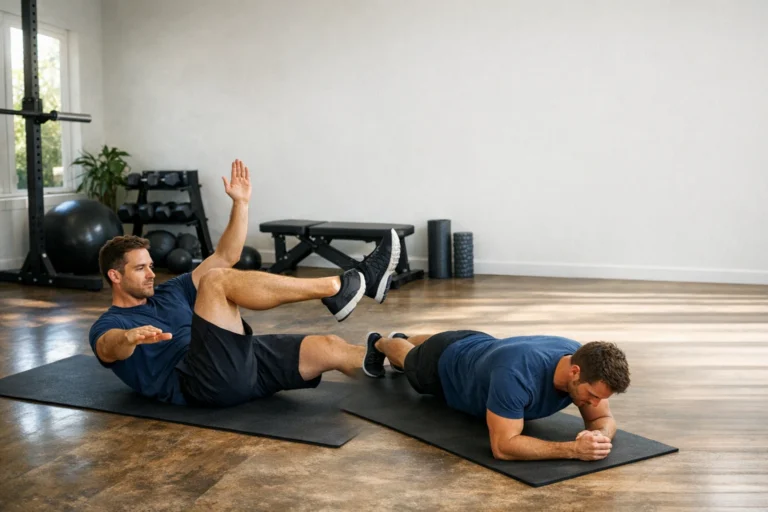


Kettlebells are one of the best tools for strength-endurance, conditioning, and athletic movement when you program them correctly. Most people stay stuck because they only do random swings and never progress load, density, or movement quality.
Pair this with kettlebell complexes, core workouts for men, and resistance band training.
Kettlebells: Programming for Strength and Conditioning
| Goal | Primary Kettlebell Work | Dose | Progression |
|---|---|---|---|
| Strength | Front squat, clean, press | 3-5 sets x 4-8 reps | Load and rep quality |
| Conditioning | Swing intervals, complexes | 10-20 min blocks | Work density |
| Core/transfer | Carries, rotational patterns | 2-4 sets | Distance and control |
General progression principles still apply with kettlebells: clear overload, recovery, and periodization (ACSM progression guidance). For session timing strategy around meals and training blocks, ISSN nutrient timing context is also useful (ISSN position stand).
Kettlebells Weekly Programming: Simple, Hard, and Sustainable
Most kettlebell plans fail because they are either too random or too aggressive. The fix is a clean weekly split with one strength-oriented day, one conditioning day, and one optional skill/recovery day.
| Day | Main Session | Target | Set/Rep Guide | Progression Rule |
|---|---|---|---|---|
| Day 1 | Clean + press, front squat, carry | Strength and trunk stiffness | 4-5 sets x 4-8 reps | Add reps before load |
| Day 2 | Swing intervals + short complexes | Conditioning density | 10-20 min work blocks | More quality work in same time |
| Day 3 (optional) | Get-up, mobility, breathing | Skill and recovery | 20-30 min easy quality | No grind reps |
This gives you enough stimulus without frying recovery. If recovery is poor, drop Day 3 and keep quality high on the first two sessions.
Movement Standards That Protect Your Progress
With kettlebells, technique decides whether your training builds power or just accumulates fatigue.
- Swing: hinge-driven hip snap, neutral spine, packed shoulders.
- Clean: bell path close to body, no hard forearm slam.
- Press: vertical torso, glute and trunk brace, no lumbar overextension.
- Front squat: elbows forward, full-foot pressure, stable knee tracking.
- Carry: stacked ribcage over pelvis, controlled breathing, anti-lean posture.
If one of these breaks down under fatigue, you are past productive volume for that session.
Kettlebell Complexes Without Form Collapse
Complexes are useful when skill is stable. They are not beginner conditioning shortcuts. Keep complexes short and technical:
- Choose 3-4 compatible movements.
- Keep one bell weight that allows clean mechanics.
- Run 3-6 rounds with full control.
- Stop if your hinge turns into a squat-grind pattern.
For dedicated complex ideas, use kettlebell complexes. For spine-friendly core integration, pair sessions with core workouts for men.
Progression Model: 12 Weeks Without Guesswork
| Phase | Weeks | Primary Objective | Load Strategy | Conditioning Strategy |
|---|---|---|---|---|
| Base Build | 1-4 | Pattern mastery and volume tolerance | Conservative load, higher control | Short interval blocks |
| Strength Emphasis | 5-8 | Higher output in major lifts | Heavier bell or lower reps | Moderate density progression |
| Power + Density | 9-11 | Explosive quality under moderate fatigue | Stable load, faster clean reps | More total work in same time |
| Consolidation | 12 | Recover and retain gains | Reduce volume 30-40% | Low stress aerobic finishers |
Track one strength metric and one density metric weekly. If both stall for 2+ weeks, adjust volume before adding more intensity.
Common Kettlebell Errors and Fast Fixes
| Error | What It Looks Like | Why It Happens | Fix |
|---|---|---|---|
| Back-dominant swing | Early lumbar extension | No hinge timing or brace | Practice dead-stop hinge reps first |
| Forearm-banging clean | Bell slaps wrist | Wide bell path | Zip close and rotate hand early |
| Press compensation | Leaning back hard | Poor trunk and shoulder control | Half-kneeling press regressions |
| Random session design | No clear progression | No weekly structure | Use fixed split and logbook |
Recovery and Joint Management for High-Volume Kettlebells
Hands, elbows, and lower back usually report overload first. Keep a minimal recovery routine:
- Grip care and forearm soft-tissue work 3-4 times/week.
- Post-session breathing downshift for 3-5 minutes.
- Hydration and electrolyte consistency on swing-heavy days.
- Weekly low-intensity mobility session to maintain shoulder and hip range.
For recovery support, see hydration supplements and magnesium guidance for active men.
Conclusion
Kettlebells reward technical precision and disciplined progression. Keep the plan simple, measurable, and repeatable.
Next read: effective home workout routines.
The information provided in this article is for educational purposes only and is not intended as a substitute for advice from your physician or other health care professional.
PrimeForMen may earn commissions from qualifying purchases when readers use product links. This does not change our editorial standards for evidence, fit, and safety.