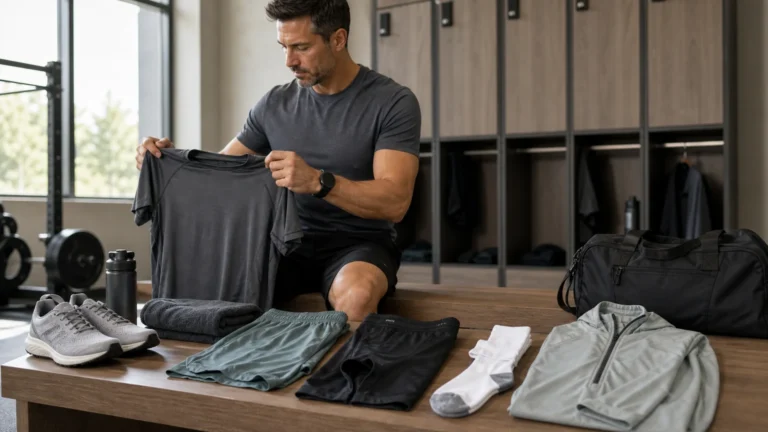
Sportswear buyer guide for men: choose shirts, shorts, compression layers, socks, UPF gear, fabrics, fit, and care by workout type.
- Buy sportswear for the workout you repeat most, not the loudest brand.
- Prioritize sweat control, anti-chafe fit, seams, pockets, UPF, and wash durability.
- Compression is useful for comfort and support, not magic performance or recovery.
Bottom line Good sportswear removes training friction before it tries to look impressive.
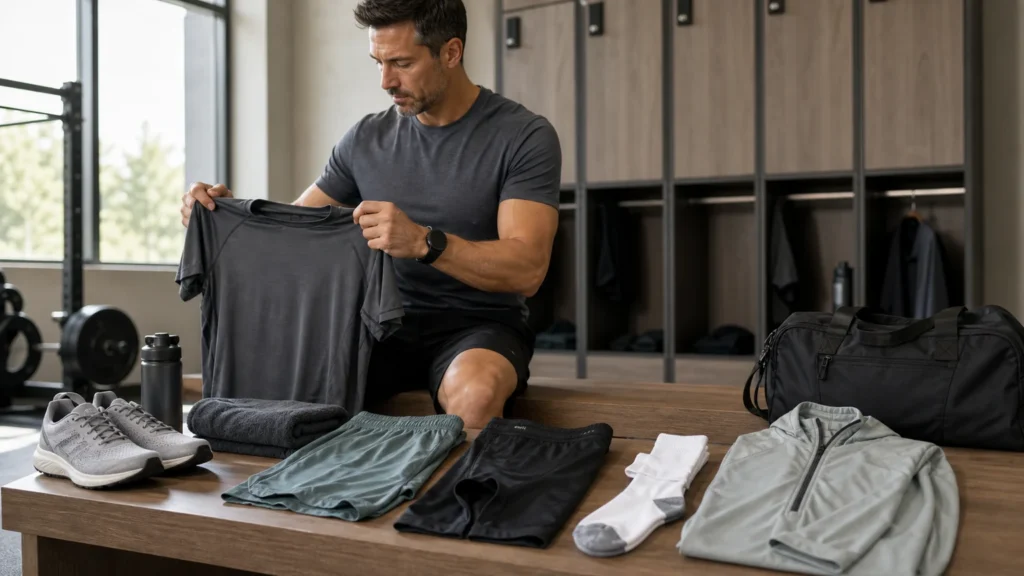
Sportswear should be bought like training equipment. The right shirt, shorts, underwear, socks, or outdoor layer should remove a repeat problem: too much heat, thigh chafe, sweat-soaked cotton, slipping waistbands, bad pockets, or sun exposure.
If a piece does not make training easier to start, easier to repeat, or more comfortable to finish, it is probably not urgent. Buy for the workout you repeat most, then upgrade only where the gear solves a real friction point.
- Start with a moisture-wicking shirt, training shorts, technical socks, and anti-chafe support if needed.
- Use 7-inch shorts as the safest gym all-rounder; go shorter for running and heat, longer only when coverage matters.
- Compression shorts are a comfort tool for chafe and support, not a shortcut for performance or recovery.
- For outdoor training, think UPF, breathability, visibility, cap, sunglasses, and sunscreen.
- Good sportswear should survive washing, movement, sweat, and repeated weekly use.
The Prime Perspective
Sportswear is not about matching sets. It is about removing excuses. The best piece is the one that makes the next workout less annoying: cooler, drier, less abrasive, easier to move in, and easier to wash.
That is why this guide treats sportswear as part of your training system, alongside fitness gear and equipment, essential fitness gear, and the weekly habits that keep you training.
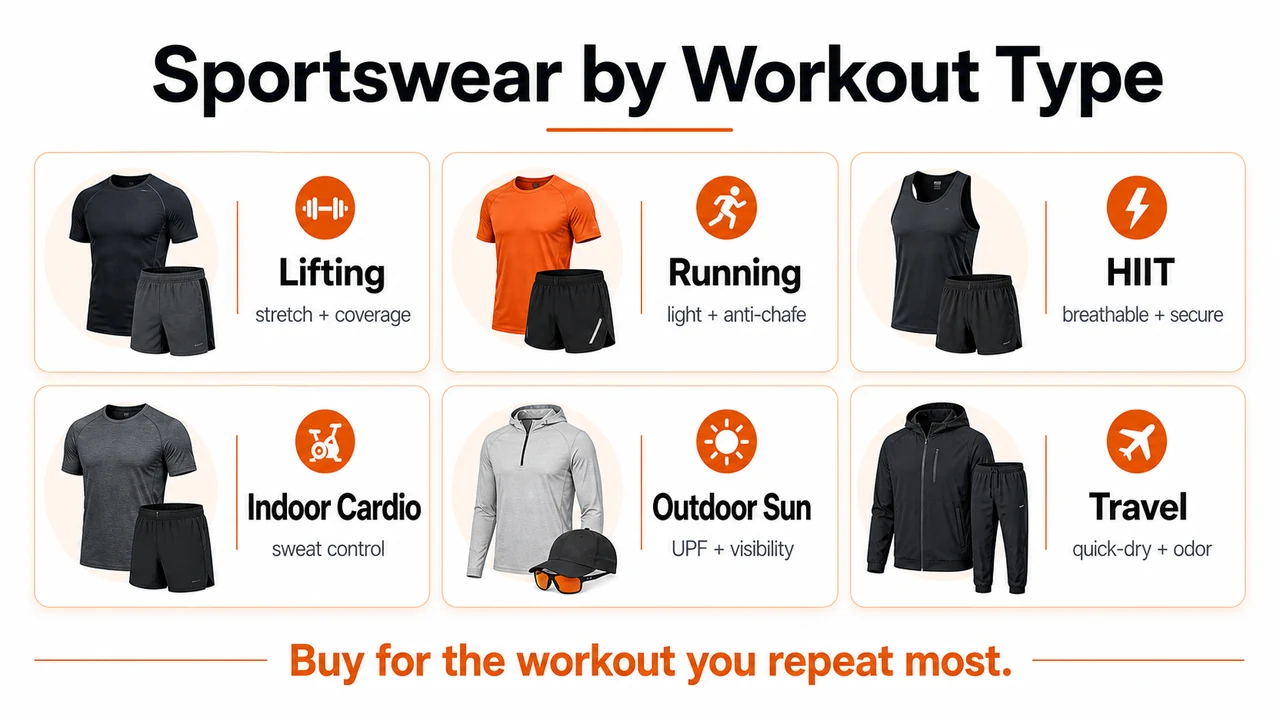
Sportswear by Workout Type
The fastest way to waste money is to buy one outfit for every workout. Lifting, running, rowing, HIIT, outdoor sun, and travel create different problems. Match the fabric, fit, seam, liner, pocket, and layer to the session.
| Workout type | Start with | Key buying criteria | Avoid first |
|---|---|---|---|
| Lifting / gym | Training shirt, 7-inch shorts, technical socks | Shoulder movement, squat room, stable waistband, no distracting pockets | Stiff long shorts and sweat-heavy cotton |
| Running | Light shirt, running shorts, anti-chafe layer, socks | Low friction seams, secure pocket, breathable fabric, visibility | Heavy cotton and loose open pockets |
| HIIT / intervals | Breathable top, secure shorts, compression liner | Ventilation, waistband hold, stretch, sweat control | Thick layers and shirts that cling when soaked |
| Treadmill / indoor cardio | Moisture-wicking shirt, shorts, socks | Heat management, easy washing, low chafe | Hoodies used as sweat gimmicks |
| Outdoor summer | UPF layer, cap, sunglasses, light shorts | Sun coverage, breathability, light colors, visibility | Wet cotton as your only sun layer |
| Travel training | Quick-dry shirt, packable shorts, odor-aware socks | Fast drying, easy sink wash, low bulk | Bulky cotton-only packing |
Best Sportswear Categories by Use Case
Buy when heat, sweat, or wet cotton distracts you. Prioritize quick drying, shoulder movement, and fit that does not cling badly.
Buy for movement, waistband stability, inseam, pockets, and whether you want a liner or your own compression layer.
Buy for chafe control and support. Treat performance and recovery claims carefully.
Buy if thigh rub or liner irritation keeps showing up on runs, walks, rows, or hot gym sessions.
Buy when blisters, soaked cotton, shoe friction, or foot heat are limiting the session.
Buy for sun exposure, long walks, outdoor cardio, hiking, and summer training consistency.
Amazon.com Picks: Sportswear Starter Kit
Disclosure: this guide includes Amazon affiliate links. PrimeForMen may earn from qualifying purchases at no extra cost to you. These are product examples for the main sportswear categories, chosen for workout fit, comfort, fabric behavior, sizing friction, durability signals, and practical training value.

Under Armour Tech 2.0 Training Shirt
Best first shirt if sweat-soaked cotton is the problem and you need a simple training top for gym, treadmill, and travel workouts.
- Better first buy than a fashion shirt when heat and sweat distract you.
- Works across lifting, walking, indoor cardio, and travel training.
- Check size photos and shoulder fit before buying multiples.

Nike Dri-FIT Training Shorts
Best all-purpose shorts category for lifting, treadmill work, walking, and general gym sessions where waistband, pockets, and movement matter.
- A 7-inch style is usually the safest all-rounder for gym use.
- Good choice when you need movement without heavy fabric.
- Check liner, pocket depth, and waistband before checkout.

Under Armour HeatGear Compression Shorts
Best fit when thigh chafe, layered support, or running comfort is the repeat problem, not when you expect magic recovery.
- Useful under unlined shorts for chafe control and support.
- Most valuable for running, HIIT, rowing, and hot indoor cardio.
- Do not buy for exaggerated strength, fat-loss, or recovery claims.

Balega Hidden Comfort Running Socks
Best fit when blisters, foot heat, or cheap cotton socks are the weak link in running, treadmill, walking, or cardio sessions.
- Socks matter when your feet, not your lungs, end the workout.
- A padded technical sock can reduce friction better than basic cotton.
- Match sock thickness to shoe fit before buying several pairs.

BALEAF UPF 50+ Sun Protection Shirt
Best fit for outdoor summer training, long walks, hikes, yard workouts, and sunny cardio sessions where coverage matters.
- Useful when outdoor sun exposure limits training consistency.
- Better than relying on a wet cotton shirt for coverage.
- Check hood, sleeve length, breathability, and fit before buying.
Fabric Guide: Polyester vs Nylon vs Cotton vs Merino
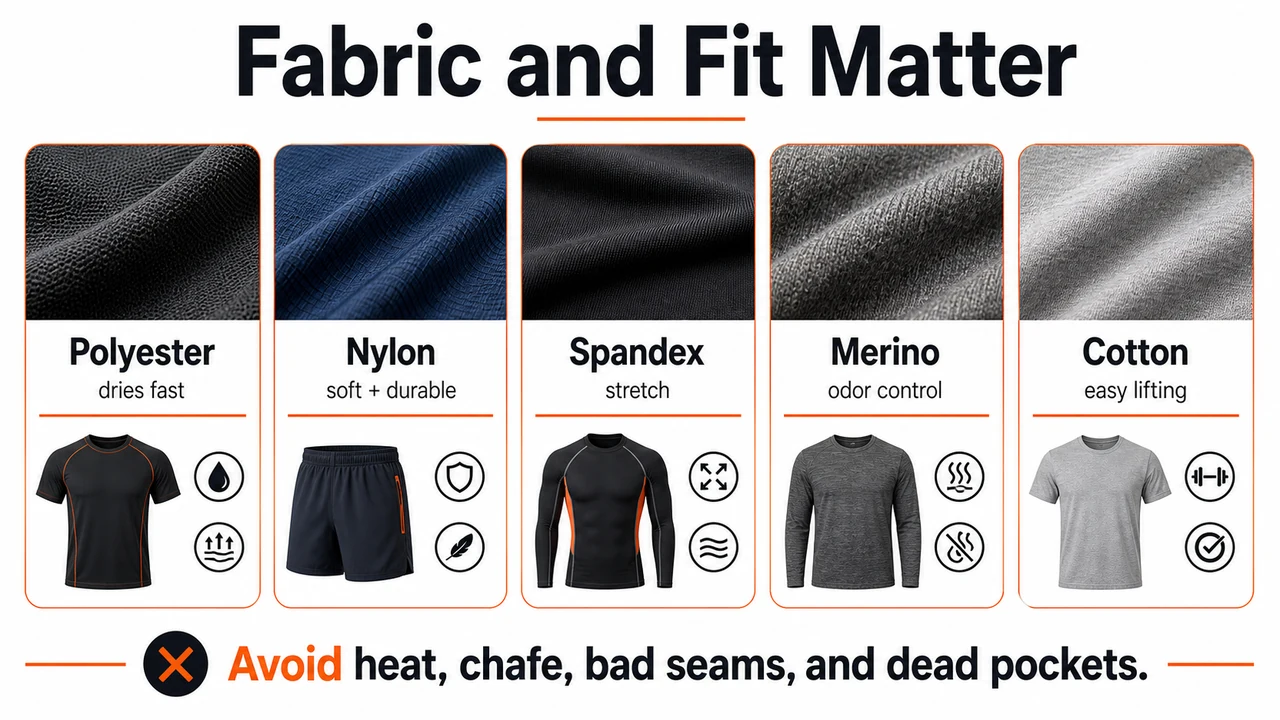
Fabric matters because workouts create heat, sweat, friction, and repeated movement. A review in Sports Medicine – Open discusses how sports clothing can influence thermoregulation, comfort, and performance through material and design. In plain English: the wrong fabric can make a normal workout feel worse than it needs to. Footwear is a separate decision: use the men’s weightlifting-shoe guide when a stable lifting base matters more than all-purpose gym comfort.
| Material | Strength | Weakness | Best use |
|---|---|---|---|
| Polyester | Light, quick drying, common in moisture-wicking shirts | Can hold odor if quality or washing is poor | Shirts, shorts, HIIT, travel |
| Nylon | Soft, durable, often smoother than cheap polyester | Can cost more | Shorts, joggers, premium shirts |
| Spandex / elastane | Stretch, shape retention, movement freedom | Can suffer with heat and fabric softener | Compression, shorts, mobility work |
| Merino wool | Odor control, temperature regulation, travel-friendly | More expensive and more care-sensitive | Travel, base layers, cool weather |
| Cotton | Comfortable, cheap, fine for easy lifting | Holds sweat, dries slowly, can chafe when wet | Low-sweat lifting and casual wear |
| UPF fabrics | Sun protection for outdoor work | Can feel hot if poorly ventilated | Outdoor summer training |
Training Shorts Guide: Inseam, Liner, Pockets, Waistband
Shorts are where many men get sportswear wrong. The wrong inseam bunches during squats. The wrong pocket dumps keys on a treadmill. The wrong liner irritates instead of helping.
| Feature | Best choice | Why it matters |
|---|---|---|
| 5-inch inseam | Running, hot weather, shorter legs | Less fabric and more stride freedom. |
| 7-inch inseam | Gym, treadmill, walking, all-round use | Best balance of coverage and movement for most men. |
| 9-inch inseam | Taller men or more coverage | Can interfere if fabric is stiff or too long. |
| Built-in liner | Running, HIIT, travel | Convenient, but only if the liner fits and washes well. |
| No liner | Lifting and custom underwear/shorts combos | More flexible if you prefer your own compression layer. |
| Zipper pocket | Walking, travel, gym commute | Safer for keys, card, or phone. |
| Gusseted crotch | Squats, lunges, rowing, mobility | Reduces seam stress and binding. |
Compression Shorts: Comfort Tool or Performance Booster?
Buy compression shorts for comfort first, not magic performance. They can help when thigh chafe, layered support, or running comfort is the repeat problem. A PubMed-indexed review on compression garments and running is a useful reminder to keep claims bounded: comfort and perception may matter, but compression is not a shortcut for training, nutrition, sleep, or recovery.
If compression helps you repeat your sessions with less irritation, that is enough value. If you are buying it because an ad promises dramatic performance, slow down.
What Most Sportswear Guides Miss
Most lists rank brands before they define the problem. PrimeForMen does it the other way around. First identify the friction: heat, chafe, odor, pockets, waistband, seams, sun, or laundry. Then buy the least complicated piece that removes that friction.
Outdoor Training: UPF, Heat, and Visibility
For outdoor training, sportswear is also sun management. The CDC sun safety guidance emphasizes shade, clothing, hats, sunglasses, and sunscreen. A breathable UPF layer can make sense for long walks, runs, hikes, yard workouts, and summer cardio.
Lightweight does not automatically mean protective. For sun-heavy training, check UPF rating, breathability, hood or collar coverage, sleeve length, visibility, and whether the piece still feels wearable when sweaty.
Chafing, Sweat, Odor, and Laundry
Sportswear fails when it turns one workout into three days of irritation or permanent odor. Flat seams, tagless collars, a gusset, the right inseam, technical socks, and longer underwear can solve more training problems than a premium logo.
- Air-dry before the hamper: wet gear sitting in a pile makes odor harder to remove.
- Skip fabric softener: it can coat technical fabrics and hurt stretch or moisture behavior.
- Use enough detergent, not too much: residue can trap smell and irritate skin.
- Do not cook elastic: high heat can shorten the life of waistbands, liners, and compression fabric.
How We Chose These Sportswear Picks
We evaluated each category by workout fit, fabric behavior, comfort, movement, durability, practicality, and value. The product cards are editor-researched category examples, not lab-tested rankings.
We also checked affiliate disclosure and link handling against FTC endorsement guidance and Google outbound link guidance. Product structured data should only describe visible, truthful information, so this article uses ItemList and FAQ schema rather than invented ratings.
Common Buying Mistakes
- Buying style before fit: a good-looking shirt that binds overhead is not training gear.
- Ignoring underwear and socks: chafe and blisters often come from the base layer, not the main outfit.
- Using cotton for every workout: cotton can be fine for easy lifting, but it is weak for hot cardio and long sweaty sessions.
- Trusting compression hype: compression is useful when it improves comfort and repeatability, not because it promises shortcuts.
- Forgetting the actual workout: lifting, treadmill workouts, rowing, and elliptical cardio stress clothing differently.
Simple 24-Hour Buying Protocol
- Name the problem: heat, chafe, odor, pockets, sun, cold, or laundry.
- Pick the workout: lifting, running, HIIT, indoor cardio, outdoor, or travel.
- Choose one garment type that solves that problem.
- Check fit photos, size notes, inseam, liner, seams, and return policy.
- After two weeks, keep buying only what you actually used in real sessions.
Conclusion
The best sportswear for men is not the loudest brand or the most expensive set. It is the gear that removes a repeat problem from your training week. Start with a better shirt, useful shorts, anti-chafe support if needed, technical socks, and a UPF layer if outdoor sun is part of your routine.
For the broader setup, continue with home workout routines, fitness on a budget, and heart rate monitors if you also track cardio intensity.
Sources and standards checked: sports clothing and thermoregulation review, compression garments and running review, CDC sun safety, Google product structured data, and Google pros and cons structured data context.
Medical Disclaimer: This article is educational and does not replace medical advice. If clothing, compression, heat, sun exposure, skin irritation, cardiovascular symptoms, pain, or a medical condition affects your training, ask a qualified clinician before changing intensity or equipment use.
Affiliate Disclosure: This post contains Amazon affiliate links. PrimeForMen may earn a commission from qualifying purchases at no extra cost to you. Recommendations are based on category fit, comfort, fabric behavior, sizing friction, durability signals, and practical training value.
Frequently Asked Questions About Sportswear
What are the best workout clothes for men in 2026?
The best workout clothes for men are not a fixed brand list. Start with a moisture-wicking shirt, training shorts, anti-chafe underwear or compression shorts if needed, technical socks, and an outdoor layer if you train in sun or cold.
What should men wear to the gym?
Most men need a breathable training shirt, shorts that do not bind during squats or rows, supportive socks, and shoes that fit the workout. Compression shorts are optional if chafing or layered support is the real issue.
Are 5-inch, 7-inch, or 9-inch shorts better for training?
Five-inch shorts are best for running and heat. Seven-inch shorts are the safest all-rounder for gym, treadmill, and walking. Nine-inch shorts give more coverage but can bunch during squats, rowing, or mobility work.
Are lined workout shorts better than unlined shorts?
Lined shorts are convenient for running, HIIT, and travel because they reduce layers. Unlined shorts are more flexible if you prefer your own compression shorts or underwear.
What fabric is best for sweaty workouts?
Polyester and nylon blends usually dry faster than cotton. Spandex or elastane adds stretch. Merino can help with odor and travel, but it costs more and needs more careful washing.
Is cotton okay for weightlifting?
Cotton is fine for easy lifting in a cool gym if you like the feel. It is weaker for sweaty cardio, outdoor heat, long sessions, or anything where wet fabric causes chafe or discomfort.
What underwear prevents thigh chafing?
Look for longer inseam boxer briefs or compression shorts with flat seams, enough leg length, and a waistband that stays put. The best pair is the one that prevents rub without feeling restrictive.
Are compression shorts good for running?
They can be useful for running when thigh chafe, liner irritation, or support is the repeat problem. Treat them as a comfort tool, not a guaranteed performance upgrade.
Do compression shorts improve performance?
Compression claims should be handled carefully. Some athletes like the feel and support, but compression shorts are not a shortcut for strength, endurance, recovery, sleep, or nutrition.
What should men wear for outdoor summer workouts?
Use a breathable shirt, lightweight shorts, technical socks, a cap, sunglasses, sunscreen, and UPF-rated clothing when sun exposure is high. A wet cotton shirt is not the same as a protective outdoor layer.
How often should workout clothes be washed?
Wash sweaty workout clothes after each session when possible. Let them dry before the hamper, avoid fabric softener on technical fabrics, and follow the care label to protect stretch and odor control.
Why do workout clothes smell after washing?
Odor can remain when sweat, oils, detergent buildup, or bacteria stay trapped in synthetic fabric. Air-dry before washing, avoid overloading the machine, skip fabric softener, and use the right detergent amount.
Are expensive gym clothes worth it?
Premium gym clothes are worth it only when they improve fit, durability, comfort, pockets, seams, or repeat use. If a cheaper piece solves the same problem, buy cheaper.
How many workout outfits does a man need?
Most men need enough outfits to cover training frequency plus laundry timing. Three to five solid sets often beat one expensive matching outfit that is always in the wash.
What sportswear should men over 40 prioritize?
Prioritize comfort, non-restrictive movement, chafe control, breathable fabrics, secure pockets, and clothes that do not make training feel like a performance. The goal is fewer reasons to skip sessions.