
Plate Loading Calculator
Enter a target barbell weight, choose pounds or kilograms, and match the plate inventory available in your gym. The calculator shows the load on each side and flags targets that cannot be built exactly.
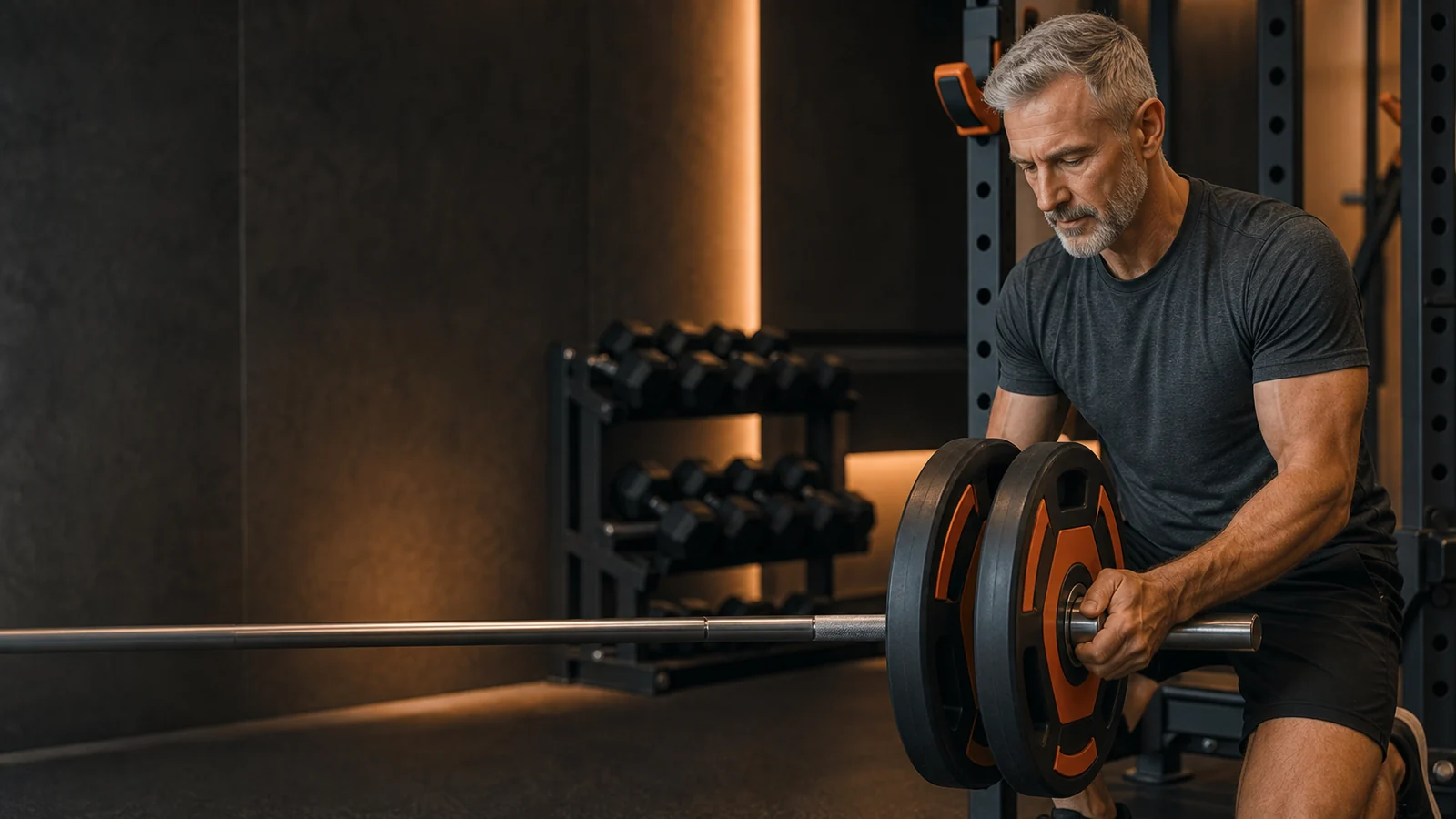
See Every Plate Per Side
Your exact or closest load and every plate per side will appear here.
Example: 135 lb total with a 45 lb bar
With collar weight excluded: 135 − 45 = 90 lb of plates. Divide by two: 45 lb per side. One matching pair of 45 lb plates gives 135 lb total. The result always lists one sleeve; mirror it on the other.
Results use labelled weights, not calibrated measurements. This tool cannot check sleeve space, plate thickness, bar rating or equipment condition. Confirm those separately.
As an Amazon Associate, PrimeForMen earns from qualifying purchases. These links may earn a commission at no extra cost to you.
Small plates and compatible collars
Two relevant options for an actual loading gap. Match the product to your sleeve diameter and inventory; neither changes what you should lift.

Micro Gainz Olympic Fractional Plates
Best for: smaller barbell load changes when your gym permits personal plates.
Current Amazon listing: Micro Gainz Olympic Fractional Weight Plates, 2-Piece, 1LB Black
- This verified listing is a pair of 1 lb plates: 2 lb added to the bar.
- Fits Olympic sleeves; check diameter and usable sleeve length.
- Choose the matching unit and pair count in the loading tool. Skip if your gym already has suitable change plates.

Lock-Jaw OLY 2 Barbell Collars
Best for: securing plates on compatible Olympic sleeves.
Current Amazon listing: Lock-Jaw OLY 2 Barbell Collars & Clamps, 2"/50mm Olympic Bars, Black
- The verified listing is for 2-inch / 50 mm bars.
- Follow the manufacturer’s instructions and inspect the clamp before use.
- Skip for 1-inch standard bars. Collars do not replace safeties, spotting or appropriate training loads.
* As an Amazon Associate, PrimeForMen earns from qualifying purchases.
Use the Closest Load You Can Build Safely
Subtract the bar and included collars, divide the remainder equally, then search combinations within the plate-pair counts you entered. The tool returns an exact load when possible; otherwise it finds the highest achievable load below the target. It prefers fewer plates when combinations produce the same load.
Use the target from the one rep max calculator, then apply the progression rules in progressive overload. The NSCA training load chart provides broader percentage context.
Three Checks Before You Lift
Read the bar
Specialty, technique, trap, and fixed bars may not weigh 45 lb or 20 kg.
Match both sleeves
The output is per side. Load the same plates in the same order on both sleeves.
Round deliberately
When the exact target is unavailable, choose the lower load and preserve technique.
Connect Loading to Progression
Use this calculator with strength training for men over 50, the three-day workout builder, strength training basics, and effective home workout routines.
Frequently Asked Questions About Plate Loading
Does the plate calculator include the bar?
Yes. Enter the full target weight and the actual bar weight. The calculator subtracts the bar before dividing plates across both sides.
Why does it show a lower weight than my target?
Your selected plate inventory may not be able to build the exact number symmetrically. The tool shows the closest lower load and the remaining difference.
Can I use kilograms and pounds?
Yes. The available plate sizes and default bar weight change with the selected unit.
Does the result include collars?
No. Collar weights vary. Add their combined weight to the bar field when you need them included in the total.
Can I use this for a trap bar or Smith machine?
Yes when you know the true unloaded starting weight. Enter that value as the bar weight and verify the machine or bar label first.