
Build strength after 50 with clear exercise choices, worked progression examples, sensible rest and a printable training log.
- Choose repeatable exercises before chasing heavier weights.
- Record each set with the same setup and units.
- Progress from completed work, not your birthday or calendar.
Bottom line Bring your last exercise entry to the next session and change one training variable only when the completed work supports it.

Strength training for men over 50 works best when the exercises are repeatable, the effort is appropriate, and your record tells you what to do next. Turning 50 does not dictate one set count, one recovery interval or a compulsory switch to light weights. Your recent training, current function, health history and goals matter more than an age label.
This guide explains exercise choice, working sets and progression. For complete session instructions and a calendar, use our A/B/C workout plan for men over 50. The numbers below are examples of programming decisions, not a tested prescription for every reader.
Quick Summary: Strength Training for Men Over 50
- Train the major muscle groups regularly with variations you can set up and repeat.
- Record completed repetitions, load units, technique and how demanding the sets felt.
- Add repetitions or a small load step when the work supports it; repeating the same work is a valid decision.
- Stop a painful movement. Persistent symptoms, relevant health conditions or uncertainty about suitability need individual advice.
The Prime Perspective
A useful training record is specific enough to repeat. “Dumbbells, three sets” leaves important questions open. “Supported row, bench at the same height, 20 lb in one hand, 10 and 9 repetitions each side, second set felt demanding” gives the next session a starting point.
We favor familiar exercises, an honest record and small decisions. A session can count without a personal-best attempt. A device, age chart or online readiness score cannot decide whether a symptom is harmless.
What the evidence supports, and what it cannot decide
The CDC adult activity guidelines include muscle-strengthening work for all major muscle groups on at least two days a week. They also include aerobic activity. A strength routine covers one part of the week; it does not replace walking, cycling or other suitable aerobic work.
The ACSM 2026 resistance-training update emphasizes regular participation and tailoring training to the person and goal. Its evidence concerns healthy adults across adulthood, rather than a validated universal program for men aged 50 to 59 with every possible condition. Bands, bodyweight and free weights can all be useful; elaborate programming and training to failure are not necessary starting requirements.
A population guideline tells you what activity to include. It cannot select your first dumbbell, assess a painful shoulder or specify the recovery you need after a particular session. Recent surgery, uncontrolled conditions, unexplained symptoms or an existing restriction require advice appropriate to that situation. If exercise brings chest pain, fainting or severe unusual breathlessness, stop and seek urgent medical care.
Choose movements you can set up consistently
Pick an exercise for the job it needs to do, then check the actual setup. A stable wall press may be easier to organize than a floor push-up. A machine row may make sense in a gym; a supported dumbbell row may fit your home. Neither equipment label guarantees suitable technique.
| Movement task | Possible starting variation | What to check and record |
|---|---|---|
| Stand up and squat | Sit-to-stand from a stable chair; goblet squat when familiar | Chair height, hand assistance, foot position and comfortable depth |
| Hip hinge | Unloaded hip hinge; dumbbell Romanian deadlift after learning the pattern | Range reached with a controlled trunk, load position and any support |
| Push | Wall push-up; incline push-up on a purpose-built stable surface; suitable chest press | Surface height or machine setting, hand position and range |
| Pull | Supported dumbbell row or a properly set up cable/machine row | Support surface, load per hand, side order and range without twisting |
| Carry or hold | Light two-hand carry or stationary hold in a clear area | Load per hand, distance or time, breathing and unobstructed route |
Keep a chair on a level surface, secure it against sliding, and avoid rolling or folding furniture. Check an adjustable bench’s locks before sitting or leaning on it. For bands, inspect damage and follow the manufacturer’s anchoring instructions; an improvised door, towel or railing is not a verified anchor. Our home gym layout guide helps you plan the usable movement area, not just the equipment footprint.
Choose a range you can control. Reaching an arbitrary depth or forcing an overhead position is not a requirement. If you cannot understand the setup from written directions, learn it with a qualified instructor before loading it. Our strength training at home guide gives additional equipment and movement choices.
Optional equipment for your chosen routine
Buy only for a specific exercise or recording need. Existing suitable equipment may be enough. We have not independently tested these products; check the exact selected model and instructions before ordering.
* As an Amazon Associate, PrimeForMen earns from qualifying purchases.
Best for: For adding a selectable external load when its range and steps fit your current exercises. Skip if you need a pair, smaller increments or a range this model does not offer. Current Amazon listing: Amazon Basics Adjustable Dumbbell with 5 Weight Options, 25 lb, Single Dumbbell, Black Best for: For a purpose-built bench when your chosen press or supported row needs one. Skip if your routine uses wall pressing or suitable gym equipment. Current Amazon listing: YOLEO Adjustable Weight Bench, ASTM-Certified 827LBS, 98% Pre-Assembled Best for: For keeping completed sets and next-session decisions on paper. Skip if the free log, an ordinary notebook or your existing app already works. Current Amazon listing: Ultimate Workout Journal - Fitness Training Planner for Men and Women * As an Amazon Associate, PrimeForMen earns from qualifying purchases.Recommended Products
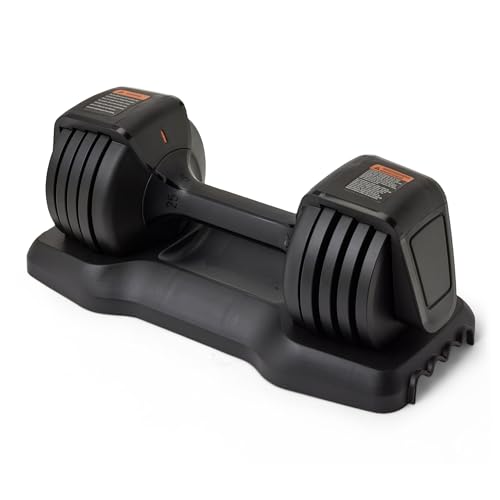
Amazon Basics adjustable dumbbell, 25 lb, single
View on Amazon

YOLEO adjustable weight bench
View on Amazon

Ultimate Workout Journal
View on Amazon
Distinguish practice sets from working sets
A practice set lets you rehearse the exercise and check the setup. A working set is the planned effort you record for progression. Count them separately, so adding two light rehearsals does not silently double your stated workload.
For a familiar exercise, an example starting format is one or two working sets in a manageable repetition range, such as 8 to 12. These numbers organize the examples below; they are not a minimum dose or a universal upper limit. A new lifter may need fewer repetitions while learning. An experienced lifter may use a different range and more work for a specific goal.
Begin with several minutes of easy movement, followed by unloaded or lighter practice of the first exercise. Add further practice when an exercise, machine or load is unfamiliar. Take enough time between sets to regain controlled breathing and repeat the movement. Our worked sessions use 60 to 90 seconds as an initial rest allowance and extend it when necessary. A stopwatch does not require you to start while you are still unsteady or breathless.
What “repetitions in reserve” means here
Repetitions in reserve, or RIR, is your estimate of how many more repetitions you could perform with the same controlled technique. “About two left” is an estimate, not a measurement. New lifters may find this difficult to judge. Stop before you have to strain, hold your breath or change the movement to finish; keep the effort note plain if a number would be a guess.
Use a smooth, repeatable pace and breathe throughout. The Mayo Clinic strength exercise collection demonstrates individual movements and reminds readers to breathe freely. Technique help is useful even when you have lifted before, particularly after a long break or a change in equipment.
See the National Institute on Aging demonstrate upper-body exercises
The National Institute on Aging demonstrates familiar upper-body exercises and controlled movement in this Go4Life video. Watch the setup, breathing and pace. It is an older-adult demonstration, not a test of your technique or proof that our worked progression example suits you.
Watch the original video on YouTube if the embed does not play.
Read the log before deciding to progress
Progressive overload means changing a training demand over time as you adapt. It does not mean adding weight every week. More controlled repetitions at the same load, better execution of the same chosen range, or a small load increase can each be a next step. Changing all three together makes the result harder to interpret.
For the example below, the exercise is a familiar seated dumbbell press, the range is 8 to 12 repetitions, and the record uses pounds per dumbbell. The lifter has already learned a suitable setup. These fictional entries illustrate a decision, not expected progress or advice to start at 20 lb.
| Entry | Completed work | Observation | Possible next decision |
|---|---|---|---|
| First entry | 20 lb each; 10, then 9 reps | Same setup; demanding but controlled | Repeat 20 lb. Do not add load because the first set reached 10. |
| Later entry | 20 lb each; 12, then 12 reps | Controlled; several more seemed possible | Confirm the observation with another suitable exposure. |
| Repeated top-range entry | 20 lb each; 12, then 12 reps again | Same setup and effort; no unresolved concern | Consider the smallest suitable available load step. |
| Possible load step | 22.5 lb each; 9, then 8 reps | Controlled, within the chosen range | Build repetitions at the new load; do not also add sets. |
| Step proved too large | 25 lb each; form changes before 8 reps | The available increment exceeds current control | Stop the set, return to a manageable option and review the increment. |
The entries have no week numbers because progress can take different amounts of time. One person may repeat the same entry several times; another may need to change the exercise. A 2.5 lb increase is only an example. A 5 lb step can be modest for one lift and too large for another. Never infer suitability from the size printed on a dumbbell alone.
Read the completed sets before changing load
The example holds 20 lb per dumbbell while the completed repetitions build. A possible 22.5 lb step comes only after repeated comfortable top-range sets. The numbers illustrate the decision, not a weekly requirement.
Silent, 8.5 seconds. Open the animation directly. Essential instructions remain in the readable text.
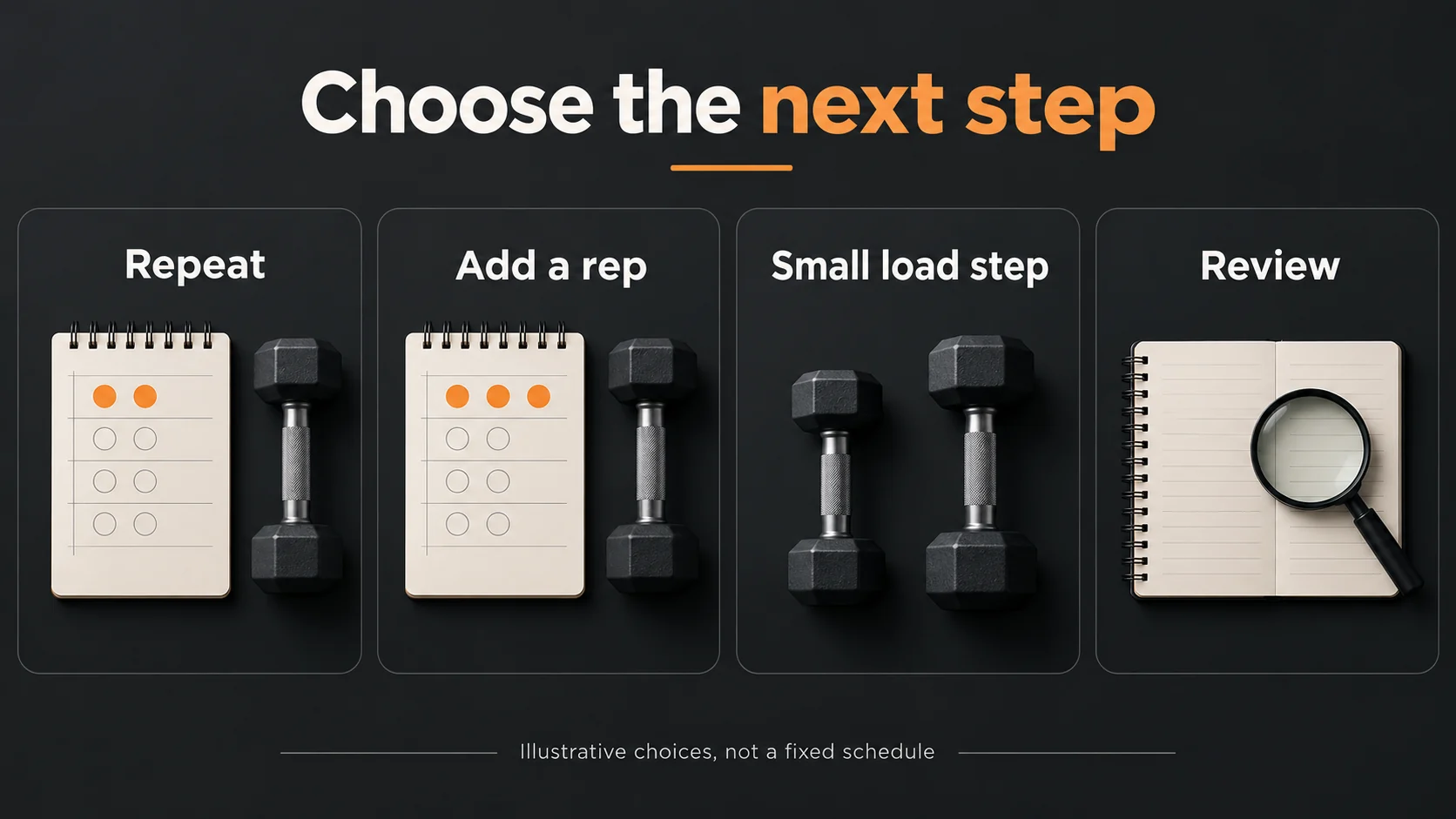
Four next-session decisions
Repeat
Keep the same exercise, setup, load and set count when the work remains useful but you have not reached the chosen range comfortably. Aim to make the entry comparable, rather than manufacture a new challenge.
Add a repetition
When the prior work was controlled and manageable, try a small repetition change within your chosen range. One more repetition in a set can be enough. Stop the set if technique or symptoms change.
Consider a load step
After repeated suitable top-range work, inspect the next increment and its effect on the exercise. Reduce repetitions toward the lower end of the chosen range if needed. Keep the set count unchanged at first.
Review the exercise or workload
Repeated loss of control, a changed schedule or persistent difficulty deserves a review of the setup, rest and workload. Pain or feeling unwell takes priority over progression and may need healthcare advice.
A changed setup creates a new comparison
A deeper squat, lower push-up surface or less hand assistance can increase the demand even when the weight is unchanged. Write that change down. Do not compare the repetitions as if the exercise stayed identical.
Choose a question for your next strength session
Use the completed work, effort and symptom context to organize a next decision. This helper does not select a safe weight, diagnose symptoms or clear exercise.
Stop a painful movement or exercise that makes you unwell. Persistent, worsening or unexplained symptoms need appropriate advice. Chest pain, fainting or severe unusual breathlessness require urgent care. Selecting no concern does not establish exercise suitability. Repeat a suitable setup and completed work before changing one variable.
Use the printable PDF or record the chosen exercises and completed work in an ordinary notebook. The interactive result needs JavaScript.
Adjust workload without an automatic deload calendar
Review a pattern across comparable sessions. A poor set after an unfamiliar shift at work, interrupted sleep or a rushed warm-up does not prove that the program has failed. Note the circumstance, keep the next session manageable and avoid “making up” missed work by doubling it.
When several sessions become harder at the same setup, first check whether you have added sets, cardio, manual work or other demands. You might reduce the number of working sets, use an easier familiar variation or allow more time between demanding sessions. Change one factor where practical and record the result. A fixed percentage reduction every fourth week is not required simply because you are over 50.
Muscle soreness is an observation, not a complete readiness test. Less soreness does not establish recovered performance, and soreness is not proof of an effective session. Our muscle recovery guide separates comfort from function. Persistent, worsening or unexplained pain should not be handled by cycling through recovery products.
Choose the next goal before adding more exercises
For general strength and everyday function, repeat a small selection covering the major movement tasks. If your goal becomes a specific lift, sport or muscle-growth target, the exercise selection and workload may need a more detailed program. Extra isolation exercises can be useful, but adding them without reviewing the total work makes progression harder to follow.
Keep aerobic activity in the week. Our cardio guide for men over 50 explains suitable activity choices and weekly planning. Count demanding hills, intervals and physical work when organizing leg training. They do not all need to be treated as recovery days just because they occur outside the gym.
After a break, start with familiar exercises and manageable practice. Previous best lifts are history, not instructions for the first session back. If you need help selecting variations, our beginner home workout guide is the appropriate next page; this progression guide assumes the exercise is already suitable and understood.
Keep a record beside your exercises
Use the eight-field fillable PDF to record completed repetitions, load units, setup, effort and the next decision. Save a completed copy or print it for handwritten notes. The helper print button creates a separate record with your current choices, notes and checkmarks.
Download the strength progression log (fillable PDF). An ordinary notebook is also sufficient.
Conclusion
Choose a repeatable setup, record the completed work and decide whether the next session calls for repetition, a small change or a review. Bring the last entry with you. If you need the entire session sequence, use the complete A/B/C example week and adapt it to your current routine.
Frequently Asked Questions About Strength Training for Men Over 50
Can I build strength after 50?
Resistance training can improve strength across adulthood. The starting exercise, workload and rate of progress depend on the person. Age alone does not establish a required program or promise a particular gain.
Do I need to lift heavy weights?
You need an appropriate training demand, which may begin with bodyweight, bands, machines or manageable free weights. Heavier loads can serve a specific strength goal, but learning the movement and choosing suitable loads comes first. You do not need to test your one-repetition maximum to use this guide.
When should I add weight?
Consider a small suitable increment after repeated controlled work near the top of your chosen repetition range. Check the available step and any unresolved concerns. If the new load changes technique or makes the work unmanageable, stop the set and review the choice.
Is two or three days better?
Either can organize regular strength work. Choose the schedule you can sustain and review the total demands across the week. Three days are not automatically superior, and missing one day does not justify squeezing two full sessions together.
Should I train through joint pain?
Stop a painful movement rather than using the repetition target to push through it. Persistent, worsening or unexplained symptoms need an appropriate assessment. Urgent warning signs such as chest pain, fainting or severe unusual breathlessness require urgent care.