

Sleep aids guide for men: what helps, what is risky, and when sleep problems need medical attention.
- Start with schedule, light, caffeine, alcohol, bedroom temperature, and training timing before adding a pill.
- Magnesium glycinate and low-dose melatonin may fit some men, but they are not treatments for chronic insomnia or sleep apnea.
- OTC antihistamine sleep aids can cause next-day grogginess and are a poor long-term default for many men.
Bottom line Use sleep aids as a targeted support choice: match the reason, evidence, and safety fit before buying.
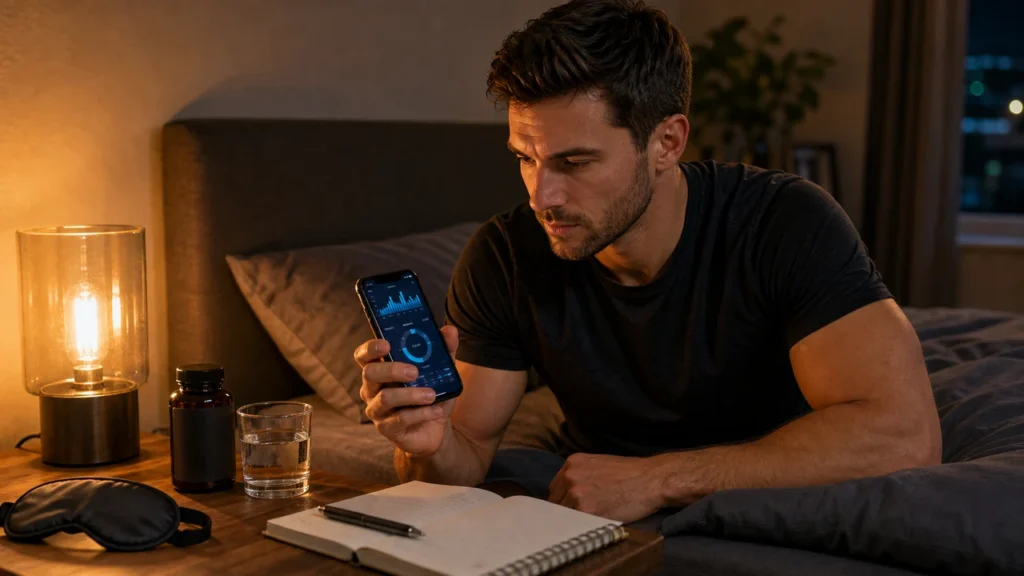
Sleep aids can be useful in a narrow lane, but they are easy to misuse when the real issue is stress, caffeine timing, inconsistent sleep, sleep apnea symptoms, alcohol, anxiety, pain, or a medication side effect. The smarter buyer move is not “stronger.” It is matching the lowest-risk tool to the most likely cause.
This guide separates practical sleep hygiene, magnesium and melatonin, over-the-counter sedating products, prescription options, and the signs that mean you should stop shopping and speak with a clinician.
- Start with schedule, light, caffeine, alcohol, bedroom temperature, and training timing before adding a pill.
- Magnesium glycinate and low-dose melatonin may fit some men, but they are not treatments for chronic insomnia or sleep apnea.
- OTC antihistamine sleep aids can cause next-day grogginess and are a poor long-term default for many men.
- Prescription sleep medicines belong in a clinician-led plan, especially if sleep problems are persistent or tied to mood, breathing, pain, or other medications.
- Snoring with pauses, gasping, chest symptoms, severe daytime sleepiness, or worsening mental health should move you toward medical help, not a supplement cart.
The Prime Perspective
The best sleep aid is the one that removes friction without hiding a bigger problem. For men, sleep often breaks because the day is built against recovery: late caffeine, hard evening training, stress scrolling, alcohol as a shutdown tool, inconsistent wake times, and a bedroom that is too bright or warm.
- Fix the signal first: darkness at night, bright light in the morning, stable wake time, and a repeatable wind-down.
- Use supplements narrowly: melatonin is more about timing than sedation; magnesium is more about filling a plausible gap than forcing sleep.
- Escalate wisely: if breathing, mood, pain, or medication effects are involved, a product-first approach can delay the help that actually matters.
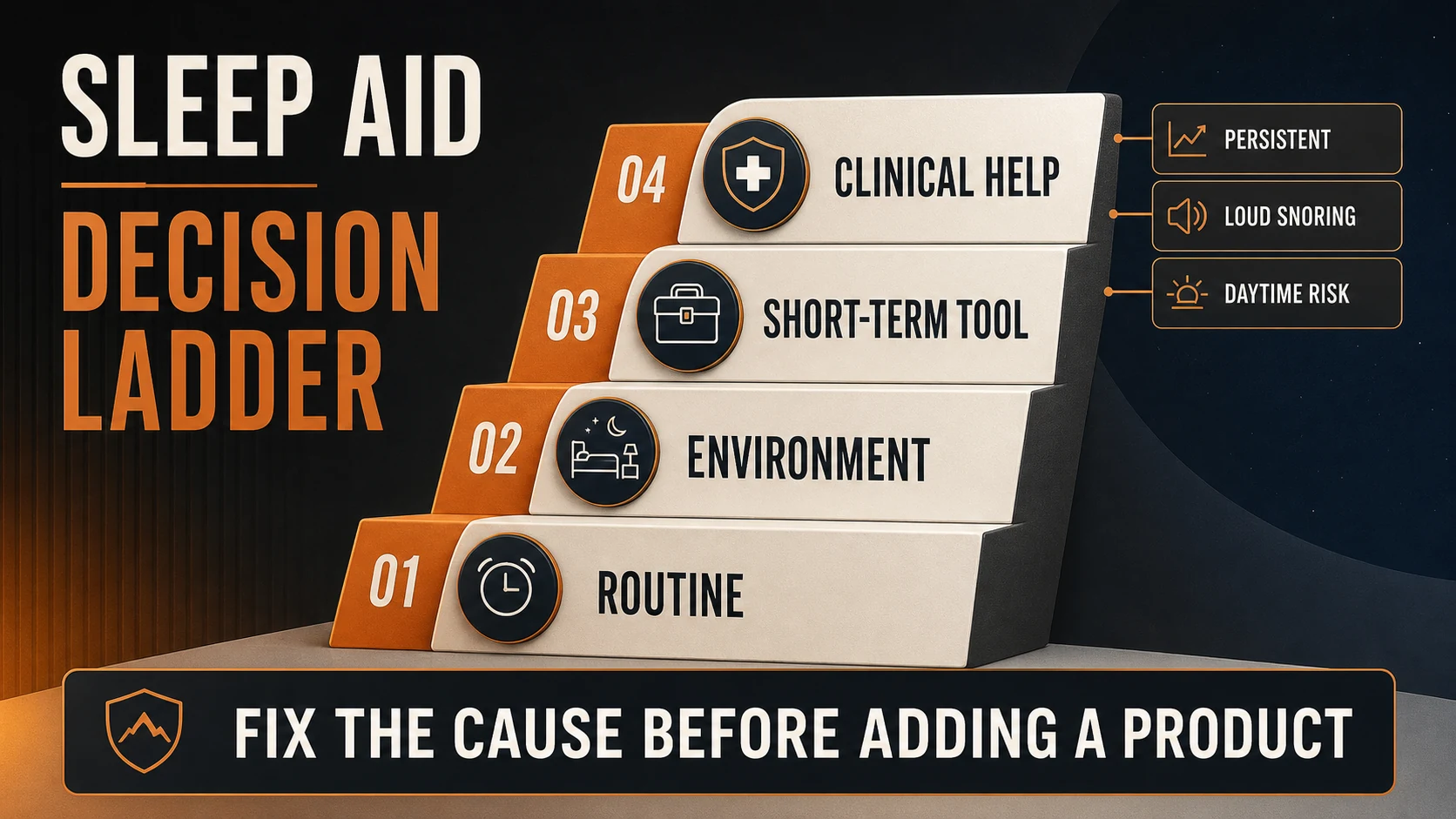
What Men Should Fix Before Buying Sleep Aids
Before you compare capsules, gummies, or nighttime tablets, run the basics for seven to fourteen nights. Not because every problem is behavioral, but because poor inputs can make any sleep aid look weaker, stronger, or riskier than it really is.
Low-Risk Tools Worth Considering First
These products fit the “support the routine” lane. They do not diagnose, cure, or override medical issues, but they can reduce common friction points when the fundamentals are already being addressed.
- Choose tools that make your environment darker, calmer, or more consistent.
- Start low, use one change at a time, and track next-day grogginess.
- Avoid stacking multiple sedating products unless a clinician has reviewed the plan.
Amazon Product Shortlist
These products do not treat insomnia, sleep apnea, anxiety, or medication-related sleep issues. They are practical sleep-routine tools only.

Sleep mask
A focused support option when sleep routine and recovery habits are the real bottleneck.
- Fits best after caffeine timing, light, and routine are addressed.
- Useful for comparing dose and form before buying.
- Should not replace medical care for ongoing sleep problems.

Magnesium glycinate
A focused support option when sleep routine and recovery habits are the real bottleneck.
- Fits best after caffeine timing, light, and routine are addressed.
- Useful for comparing dose and form before buying.
- Should not replace medical care for ongoing sleep problems.

Low-dose melatonin
A focused support option when sleep routine and recovery habits are the real bottleneck.
- Fits best after caffeine timing, light, and routine are addressed.
- Useful for comparing dose and form before buying.
- Should not replace medical care for ongoing sleep problems.
*Affiliate disclosure: PrimeForMen may earn from qualifying purchases. Environmental tools can reduce light, noise, or temperature friction, but they do not diagnose or treat a sleep disorder.
* CTA disclaimer: products do not treat insomnia, sleep apnea, anxiety, or medication-related sleep issues. As an affiliate site, PrimeForMen may earn from qualifying purchases.
Sleep Hygiene vs Supplements vs Medication
The wrong comparison is “natural versus strong.” The useful comparison is risk, fit, and what problem you are trying to solve. NCCIH notes that chronic insomnia guidance has not supported melatonin as a general chronic insomnia treatment, while evidence is more specific for timing-related situations; read their melatonin overview for the safety context.
| Option | Best fit | Main caution | Smart buyer rule |
|---|---|---|---|
| Sleep hygiene | Inconsistent schedule, late screens, caffeine, alcohol, hot room, stress wind-down issues | It takes repetition and may not solve medical causes by itself | Run the basics first so you can judge any product more honestly |
| Magnesium glycinate | Men who want a gentle supplement lane and are not already exceeding magnesium guidance | Too much supplemental magnesium can cause GI issues and may be unsafe in some medical contexts | Check total dose, kidney concerns, and medication interactions before using regularly |
| Low-dose melatonin | Travel, shifted sleep timing, or short-term circadian support | Label accuracy can vary, and long-term safety is less clear | Think timing aid, not knockout pill; avoid casual high-dose stacking |
| OTC antihistamine sleep aids | Occasional short-term use when appropriate for the individual | Next-day sedation, dry mouth, urinary issues, and interactions can matter | Avoid making them your default nightly strategy without medical guidance |
| Prescription sleep medication | Clinician-diagnosed sleep problems where benefits outweigh risks | Dependence, complex sleep behaviors, next-day impairment, interactions, and rebound issues can occur depending on drug class | Use only inside a plan that includes cause, dose, duration, and follow-up |
Sleep-Aid Risk-vs-Fit Meter
Choose the closest pattern. This is a practical sorting tool, not a diagnosis.
How To Think About Melatonin
Melatonin is often marketed like a sedative, but the better mental model is a clock signal. Your brain produces melatonin in response to darkness, and light at night can interfere with that signal. That is why a low-dose product may make more sense for jet lag or delayed timing than for a man whose sleep is broken by alcohol, stress, untreated pain, or possible sleep apnea.
- Consider it only after light, screens, and wake-time consistency are addressed.
- Be cautious with higher-dose products, gummies, and casual long-term use.
- Talk with a clinician first if you take blood thinners, have epilepsy, have complex medical conditions, or use other sedating products.
- Keep it away from children and teenagers; accidental ingestion is a serious safety concern.
Where Magnesium Fits
Magnesium glycinate is popular because it is positioned as gentler than some other forms. Still, the evidence for magnesium as a sleep solution is limited, and more is not better. It is most defensible as a conservative support tool when your total supplemental dose is reasonable and your medical context is straightforward.
If your sleep issues are tied to hard training, soreness, or inconsistent recovery, start with the bigger recovery levers before assuming a mineral is the missing piece. Sleep also interacts with cortisol and conditioning, so the broader recovery picture matters; see cardio and cortisol for that stress-recovery angle.
What Most Sleep Aid Guides Leave Out
Most product guides compare ingredients. They spend less time on the question that protects you: what would make this product the wrong next step?
- If you wake up choking or gasping, a stronger sleep aid can delay sleep apnea evaluation.
- If you use alcohol to fall asleep, the priority is not adding another sedating layer.
- If a medication started around the same time as the sleep problem, the prescriber needs to know.
- If anxiety, panic, depression, or trauma symptoms are driving the sleep problem, a supplement should not become a substitute for care.
OTC Sleep Aids: Occasional Tool, Poor Default
Many OTC nighttime products rely on sedating antihistamines. They can make some people feel sleepy, but that does not mean they improve the quality of sleep or fit long-term use. Next-day fog, dry mouth, constipation, urinary symptoms, and interactions matter, especially as men get older or combine products.
Prescription Sleep Aids Need a Plan
Prescription options can be appropriate, but they should come with a clear reason, dose, duration, risk review, and follow-up. If the problem is chronic insomnia, guideline-backed care often emphasizes behavioral treatment such as CBT-I rather than relying on supplements or sedatives. NCCIH’s broader sleep disorders overview is useful for understanding why insomnia, sleep apnea, and sleep deprivation should not be treated as one generic problem.
This matters for men chasing better testosterone, training, and body composition. Sleep quality is part of the recovery system, but the answer is not always a supplement. If you are already researching hormones, pair this with realistic expectations from how long testosterone boosters take to work and the training context in testosterone for muscle growth.
Red Flags: Stop Shopping and Get Medical Help
- Loud snoring with pauses, choking, gasping, or witnessed breathing interruptions.
- Severe daytime sleepiness, drowsy driving, or falling asleep unintentionally.
- Chest pain, irregular heartbeat symptoms, shortness of breath, or fainting.
- Sleep problems that began after a new medication or dose change.
- Worsening anxiety, panic, depression, suicidal thoughts, or substance reliance to sleep.
- Persistent insomnia symptoms that last several weeks or keep returning despite routine changes.
A Simple Decision Ladder
- Seven-night reset: fixed wake time, morning light, caffeine cutoff, cooler room, darker room, and no alcohol as a sleep strategy.
- Remove friction: sleep mask, earplugs, white noise, better temperature control, and a repeatable wind-down.
- Consider a narrow supplement: magnesium glycinate or low-dose melatonin only when the fit is specific and the risk profile is acceptable.
- Review OTC use: if you are reaching for sedating antihistamines repeatedly, treat that as a signal, not a habit to normalize.
- Escalate: breathing symptoms, mood symptoms, medication-linked sleep problems, or persistent insomnia deserve professional assessment.
For a broader product framework, use PrimeForMen supplement recommendations as a quality filter, not as permission to ignore red flags.
Bottom Line
The safest sleep-aid decision is usually boring: fix the room, fix the schedule, fix the light, fix the caffeine, and stop using products to cover a medical signal. A sleep mask is low risk when darkness is the issue. Magnesium or low-dose melatonin may fit specific situations. OTC sedatives and prescriptions require more caution. If breathing, mood, medication effects, or persistent insomnia are in the picture, the right next step is professional help.
Next Step
If you are choosing supplements around sleep, training, and hormone goals, use the main supplement recommendations page to compare quality filters, risk framing, and buyer priorities before adding more products.
Frequently Asked Questions About Sleep Aids
What is the safest sleep aid to try first?
For most men, the safest first “aid” is environmental: a darker room, a consistent wake time, morning light, a caffeine cutoff, and a cooler bedroom. A sleep mask can be a practical first purchase when light is the obvious problem.
Is melatonin good for insomnia?
Melatonin is better viewed as a timing aid than a general insomnia treatment. It may fit travel or shifted sleep timing, but chronic insomnia should be discussed with a clinician, especially if it persists or affects daytime function.
Is magnesium glycinate better than melatonin?
They serve different purposes. Magnesium is a mineral supplement with limited sleep evidence; melatonin is a hormone signal tied to circadian timing. The better choice depends on the cause, medical context, dose, and next-day effects.
Are OTC sleep aids safe every night?
Nightly OTC sedating products are not a good default without medical guidance. Next-day grogginess, interactions, urinary symptoms, and tolerance-like patterns can matter, especially if you are combining products or alcohol.
When should a man see a doctor for sleep problems?
Get medical help if sleep problems persist for several weeks, impair driving or work, involve snoring pauses or gasping, start after a medication change, or connect with anxiety, depression, substance use, pain, or other health symptoms.