Electrolytes for athletes explained: when water is enough, when sodium matters, and how to avoid overusing hydration supplements.
- Water is enough for many sessions under about an hour, especially in cool conditions with normal meals around training.
- Electrolytes make more sense when heat, heavy sweating, long duration, or repeated sessions raise sodium loss.
- Sodium is the main electrolyte to watch during hard sweating; potassium and magnesium matter, but sodium drives most sports-drink decisions.
Bottom line Electrolytes for athletes are most useful when training is long, hot, sweaty, or repeated enough to create meaningful sodium and fluid losses.
Electrolytes for athletes are useful when sweat losses are high, training runs long, or heat makes hydration harder, but many men do not need them for every workout. For a short lift in an air-conditioned gym, water is usually enough. For a hot 90-minute run, a summer tournament, or back-to-back sessions where your shirt is soaked and salt is crusting on your skin, sodium and fluid planning matter more.
Quick Summary: Electrolytes for athletes
- Water is enough for many sessions under about an hour, especially in cool conditions with normal meals around training.
- Electrolytes make more sense when heat, heavy sweating, long duration, or repeated sessions raise sodium loss.
- Sodium is the main electrolyte to watch during hard sweating; potassium and magnesium matter, but sodium drives most sports-drink decisions.
- Do not force fluids. Overdrinking plain water during long events can be risky, especially when sodium intake is low.
- Use the decision guide: duration, heat, sweat rate, salt marks, body-weight change, and recovery needs.
The Prime Perspective
Electrolytes are not a masculinity test, a shortcut, or a mandatory add-on for every bottle. They are a tool for a specific problem: losing enough fluid and sodium through sweat that plain water no longer covers the job cleanly.
If you are already reviewing hydration supplements, start with the use case instead of the label. A good product can help on long, hot, sweaty days. It can also be unnecessary sugar, sodium, and cost when the workout is short and your normal diet already covers minerals.
Sodium when sweat is high
Duration changes the answer
When Water Is Usually Enough
For most men, water is the default for short training. A 35-minute strength session, an easy walk, or a cool-weather bike ride does not automatically need a flavored electrolyte mix. If you ate normal meals, drank fluids through the day, and did not finish drenched, your body probably has what it needs.
This matters because hydration advice often gets overcomplicated. If every workout becomes a supplement decision, you lose the simple cues: thirst, urine color trend, sweat volume, heat exposure, and how you feel later in the day.
The Simple Water-First Rule
- Under 60 minutes: water is usually enough unless heat or sweat is unusually high.
- Cool indoor training: electrolytes are optional, not required.
- Normal meals nearby: food often covers sodium, potassium, and magnesium better than a drink.
- No heavy sweat signs: no salt crust, soaked clothes, dizziness, or large body-weight drop means no urgent electrolyte case.
When Men Actually Need Electrolytes
Electrolytes become more useful when the session creates a real sweat-loss problem. Heat is the obvious trigger, but duration and repeat exposure matter too. A man who trains outside at noon, plays two games in a day, or runs long enough to lose several pounds of fluid is in a different category than a man doing machines for 45 minutes.
The CDC heat guidance for athletes emphasizes drinking more water than usual in heat and not waiting for thirst. For longer exercise, the ACSM position stand on exercise and fluid replacement supports individualized fluid planning and notes that sweat rate can be estimated with body-weight changes before and after exercise.
| Workout situation | Electrolyte need | What to do | What to avoid |
|---|---|---|---|
| 30-60 minutes, cool indoor gym | Low for most men. | Drink water. Eat normal meals. | Assuming every workout needs a sports drink. |
| 60-90 minutes, moderate sweat | Maybe, depending on heat and sweat rate. | Water may still work; add electrolytes if clothes are soaked or recovery suffers. | Ignoring thirst or waiting until you feel drained. |
| 90+ minutes, heat, heavy sweat | Higher, especially for sodium. | Use a drink or tabs with sodium and plan fluids across the session. | Chugging plain water without sodium during long events. |
| Two-a-days, tournaments, long hikes | Higher because losses stack. | Replace fluid, sodium, and carbohydrates across the day. | Trying to fix all hydration after the last session. |
Electrolyte Gear That Fits This Decision Guide
Why these categories here? They match the practical scenarios in this article: mixable sodium support for long sessions, portable tablets for travel or games, and a bottle that keeps fluids drinkable in heat.
- Choose products with clear sodium per serving instead of vague “mineral blend” copy.
- Pick low-sugar or carb-containing options based on session length and fueling needs.
- Use one product at a time so you can tell what actually helps.
- Keep water available even when you use an electrolyte product.
Amazon Product Shortlist
These are practical product starting points, not medical or performance guarantees. Use the images, sizing, labels, reviews, and return policy to compare the real item before buying.

Electrolyte Powder for Athletes
Best when sweat, heat, session length, or low-carb phases make plain water feel insufficient.
- Supports sodium/fluid replacement during sweaty sessions.
- More useful for long or hot training than casual sipping.
- Powder or tablets make dosing easier to adjust.

Electrolyte Tablets for Athletes
Best when sweat, heat, session length, or low-carb phases make plain water feel insufficient.
- Supports sodium/fluid replacement during sweaty sessions.
- More useful for long or hot training than casual sipping.
- Powder or tablets make dosing easier to adjust.

Insulated Water Bottle for Athletes
A simple adherence tool when hydration depends on having cold water within reach.
- Helps keep fluids visible during work, travel, or cardio.
- Insulation matters during hot gyms and outdoor sessions.
- Works without making hydration more complicated.
*Affiliate disclosure: PrimeForMen may earn from qualifying purchases. Product images are loaded from Amazon media URLs and product availability can change.
*Affiliate note: PrimeForMen may earn a commission from qualifying purchases. Product fit, sodium level, and training context matter more than buying anything today.
The Sodium Question: Why Sweat Changes the Answer
When athletes talk about electrolytes, they often mention potassium, magnesium, calcium, and chloride. In real workout decisions, sodium usually carries the most weight because it is lost in sweat and helps the body retain fluid. If you are a salty sweater, you may see white marks on shirts, hats, or skin after a hot session.
That does not mean you should take salt blindly. Men with high blood pressure, kidney disease, heart disease, or sodium-restricted diets should be more cautious and follow medical guidance. For healthy athletes, the practical question is whether the workout creates enough sweat loss to justify replacing sodium during or soon after training.
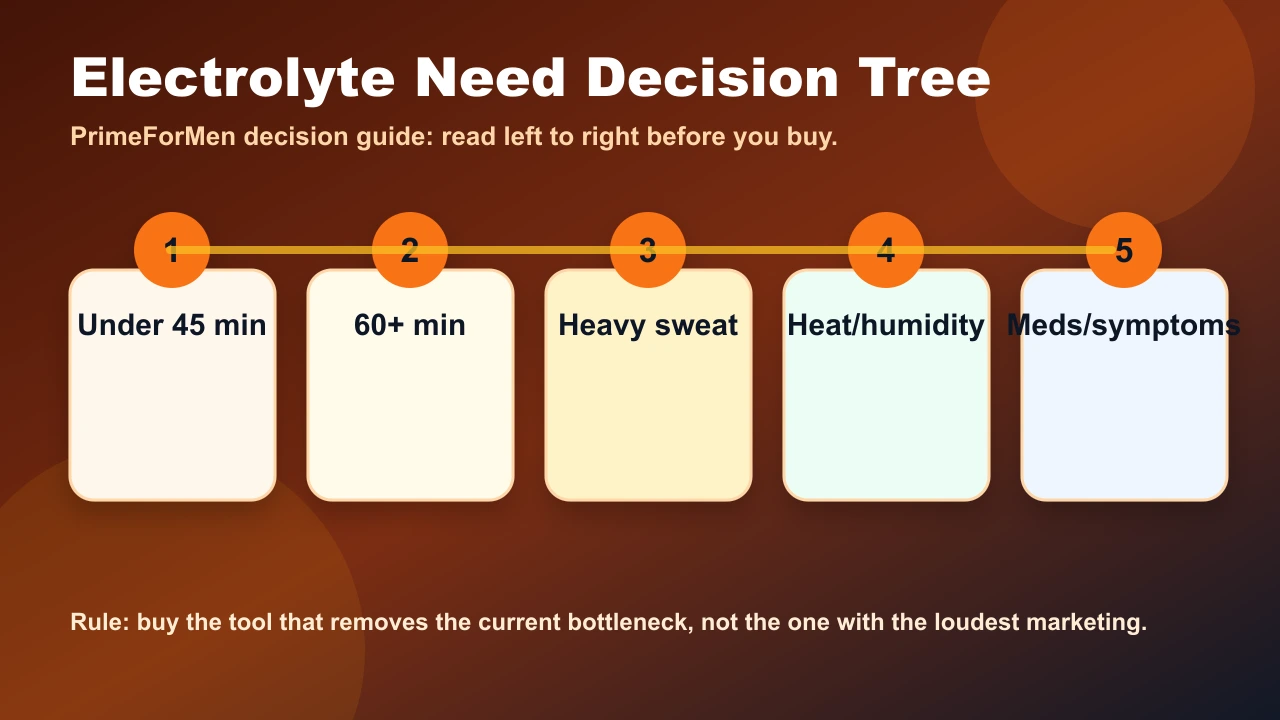
Animated Sweat-Loss Need Meter
Use this as a mental model: electrolyte need rises when duration, heat, sweat rate, and salt loss stack together. One factor alone may not be enough. Several together change the decision.
Watch sweat signs
Electrolytes likely useful
High need usually means long duration plus heat plus heavy sweat, not simply “I exercised today.”
The Knowledge Gap: More Fluid Is Not Always Better
Hydration Is a Balance, Not a Chugging Contest
The shallow version of hydration advice says, “Drink more.” The better version says, “Replace what the session is actually costing you.” Too little fluid can hurt performance and heat tolerance. Too much plain water during long events can dilute blood sodium, especially when sweat losses are high and sodium replacement is low.
That is why endurance athletes, field-sport players, and heavy sweaters need a plan instead of a slogan. Estimate your sweat rate occasionally, notice salt marks, and adjust based on conditions rather than copying someone else’s bottle mix.
Short session, cool conditions, normal meals, moderate sweat, no cramping pattern, no big weight drop.
Workout approaches 90 minutes, clothes are soaked, heat is rising, or you have another session soon.
Long heat exposure, heavy salty sweat, repeated sessions, dizziness, large fluid loss, or poor recovery after sweating hard.
How to Build a Practical Hydration Plan
Start with the workout, not the product. A hard conditioning day from your cardio workouts plan may need a different bottle than a short strength session. A long outdoor run in July may need more sodium than a winter treadmill session at the same pace.
A 4-Step Plan for Men Who Sweat Hard
- Before: show up normally hydrated; do not start a hot session already behind.
- During: drink to thirst and conditions; add sodium if the session is long, hot, or sweat-heavy.
- After: replace fluid gradually and include salty food or an electrolyte drink when losses were high.
- Next day: judge recovery, not just the workout. Poor sleep, headache, low appetite, and unusually flat training can signal a hydration miss.
Where Electrolytes Fit With Recovery Nutrition
Electrolytes are one part of recovery, not the whole system. After long or hot training, you still need calories, protein, carbohydrates, and sleep. If your post-session routine is inconsistent, review your broader post-workout supplements choices and your protein timing after 40 before blaming hydration alone.
For men training hard several days per week, hydration also connects to soreness and readiness. Use electrolytes when they solve a real sweat-loss problem, then pair them with the basics covered in muscle recovery techniques: sleep, nutrition, lower-intensity movement, and smart load management.
Conclusion
Electrolytes for athletes are most useful when training is long, hot, sweaty, or repeated enough to create meaningful sodium and fluid losses. They are much less important for short, cool sessions where normal water and meals do the job. The best decision is not brand-driven. It is based on duration, heat, sweat rate, salt signs, recovery, and your health context.
Next Step: Upgrade Your Hydration Stack Carefully
If this helped you separate real electrolyte needs from marketing, the logical next read is the PrimeForMen guide to hydration supplements. Use it to compare product types after you know what your training actually demands.
Medical Disclaimer: This article is for editorial education only and does not diagnose, treat, or replace medical advice. Men with heart disease, kidney disease, high blood pressure, heat illness symptoms, medication concerns, or sodium restrictions should speak with a qualified healthcare professional about hydration and electrolyte use.
Affiliate Disclosure: This article includes Amazon affiliate links. PrimeForMen may earn a commission from qualifying purchases at no extra cost to you. Recommendations are based on practical category fit, not a requirement to buy.
Frequently Asked Questions About Electrolytes for Athletes
Do athletes need electrolytes every day?
No. Many athletes get enough electrolytes from normal meals and only need water for short or cool workouts. Daily electrolyte drinks make more sense when sweat losses, heat, or repeated sessions are consistently high.
What is the most important electrolyte for sweaty workouts?
Sodium is usually the main electrolyte to consider during heavy sweating because it is lost in sweat and helps retain fluid. Potassium, magnesium, and calcium matter too, but sodium usually drives the workout-hydration decision.
Are electrolytes better than water for short gym sessions?
Usually not. For a short indoor lift or easy cardio session, water is typically enough if you ate and drank normally. Electrolytes become more useful as duration, heat, and sweat loss increase.
How can I tell if I am a salty sweater?
Common signs include white salt marks on dark clothes, gritty skin after training, stinging sweat, or feeling unusually depleted after hot sessions. These signs do not prove an exact sodium need, but they suggest you should pay closer attention.
Can drinking too much water be a problem during endurance events?
Yes. Drinking far beyond thirst during long events, especially without sodium, can contribute to dangerously low blood sodium. Long, hot, sweat-heavy events need a balanced fluid plan rather than forced water intake.