Compare lifting straps for men by style, material, wrist comfort, security and the lifts you actually perform.
- Use straps when grip limits the target lift.
- Loop straps are the versatile default.
- Keep dedicated grip work in the program.
Bottom line Most lifters need a simple cotton or nylon loop strap; figure-eight straps trade fast release for maximum connection.
The best lifting straps for men are ordinary loop straps for most rows, Romanian deadlifts and high-volume pulling. Cotton feels predictable, nylon is thinner and more durable, leather breaks in slowly, figure-eight straps create a very secure deadlift connection, and hooks are convenient but depend heavily on hand and bar fit. Straps should extend a set—not hide pain or replace grip training.
Choose a durable loop strap you can release quickly.
Figure-eight straps maximize connection but reduce quick release.
Prioritize width, edge finish and padding without bulky bunching.
Best lifting straps for men should solve a defined training or ownership problem without adding avoidable risk, maintenance or clutter. PrimeForMen compared current product formats, published specifications, live retail listings and authoritative guidance; we did not personally test every model. Our editorial policy explains that distinction.
Quick Summary: Best Lifting Straps for Men
- General pulling: Choose a durable loop strap you can release quickly.
- Heavy deadlifts: Figure-eight straps maximize connection but reduce quick release.
- Sensitive wrists: Prioritize width, edge finish and padding without bulky bunching.
- Small hands: Thinner material is easier to wrap around a standard bar.
- Grip development: Do warm-ups and selected work sets without straps.
The Prime Perspective
Straps are a load-management tool. They are useful when your back or hamstrings still need work after the hands fatigue. They become counterproductive when every warm-up is strapped, setup is sloppy or numbness and wrist pain are ignored.
Which Type Fits Your Use?
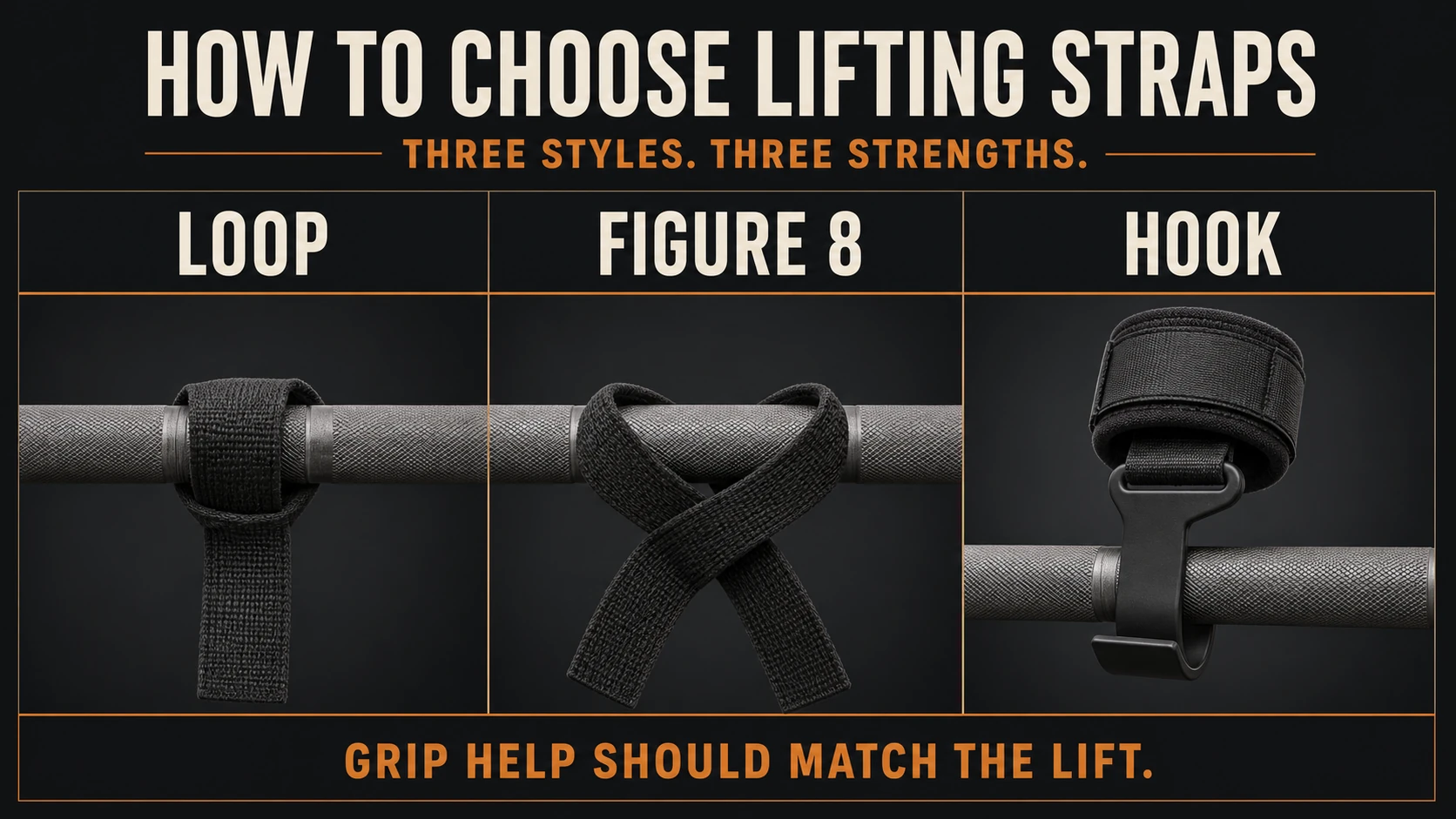
| Format | Best for | Main advantage | Main limitation |
|---|---|---|---|
| Loop | Rows, RDLs, pulldowns | Versatile and releasable | Takes practice to wrap |
| Figure 8 | Heavy deadlift sets | Very secure connection | Slow emergency release |
| Hook | Machines and simple pulls | Fast to put on | Bar diameter and fit sensitive |
| Leather loop | Lifters who like firm feel | Durable after break-in | Bulkier and slower to soften |
Our Buying-Criteria Priority
This chart is not a product score. It shows how heavily we weight each factor when screening a purchase for real home use. A high number means the criterion can veto an otherwise attractive option.
92
88
83
76
68
Fit the use
Start with the person, movement and room. A feature has value only when it solves that use.
Check ownership
Include setup, cleaning, storage, parts, returns and the realistic frequency of use.
Control risk
Favor stable fit, conservative progression and clear manufacturer instructions over dramatic claims.
Compare Current Options on Amazon
Availability, variant details and seller terms can change. Confirm size, dimensions, included parts, warranty and return conditions on the current listing.

Gymreapers Padded Loop Straps
For lifters who want a familiar cotton loop with light wrist cushioning.
- Practice the wrap with an empty bar.
- Keep both tails the same length.
- Inspect stitching and neoprene regularly.

Harbinger Padded Cotton Straps
For longer wraps and a broad padded wrist contact area.
- Confirm the length suits your hand size.
- Do not overtighten around the wrist.
- Wash and dry according to the label.

Frelaxy Leather Lifting Straps
For lifters who prefer a firmer leather feel and gradual break-in.
- Expect a less flexible first session.
- Check edge comfort before heavy sets.
- Keep leather dry between workouts.
Affiliate disclosure: PrimeForMen may earn a commission from qualifying purchases at no extra cost to you.
Choose by Lift, Not Ego
Loop straps suit the largest number of exercises because you control how tightly they wrap and can let go quickly. Figure-eight straps make sense for heavy deadlifts or strongman-style pulls when the goal is maximum connection. Hooks can be convenient on pulldowns but may change the feel of the bar. Select the least restrictive option that solves the actual grip limitation.
Cotton, Nylon and Leather
Cotton is forgiving and easy to learn. Nylon is usually thinner and slides around the bar quickly but can feel sharper at the wrist. Leather develops a firm, tactile wrap after break-in and needs basic care. Material claims matter less than stitching, edge finish and the amount of fabric that must fit between your palm and the knurling.
For the surrounding setup, compare our powerlifting basics and strength training for men over 50.
Wrist Fit and Wrap Direction
The loop belongs around the wrist without compressing nerves or folding into a hard edge. Feed the tail so it runs in the same direction as your fingers close around the bar, then tighten by rolling the bar—not by yanking the wrist. A secure wrap should reduce finger effort while leaving the hand and wrist in a neutral position.
When Straps Help Programming
Use them on the sets where the target muscles would otherwise be undertrained: high-rep rows, heavy RDLs, shrugs or final deadlift volume. Keep warm-ups and selected accessory work strap-free when grip is a goal. That split preserves grip exposure while allowing the larger pulling muscles to receive enough volume.
Keep the purchase inside a complete plan with the strength training basics and lifting belt guide.
What Most Strap Guides Miss
Competition rules and emergency release matter. Straps are not permitted in standard powerlifting competition, and a highly locked figure-eight connection is a poor choice for movements where dropping the bar quickly may be necessary. Straps also do not make a painful hand or wrist safe. Stop if you feel numbness, tingling or sharp pressure.
Care, Inspection and Replacement
Sweat degrades stitching and padding. Air straps after each session, wash only as instructed and inspect the wrist loop, tail and attachment points. Replace any strap with torn webbing, hardened edges or loose structural stitching. The cost is small compared with losing control of a loaded bar.
What Most Buying Guides Miss
The best strap is not the one that makes the hands irrelevant. It is the one that solves a specific pulling bottleneck while keeping setup and release under control.
Five-Step Pre-Purchase Check
- Learn the wrap with an empty bar.
- Use the same tail length on both sides.
- Tighten by rolling the bar toward the fingers.
- Keep selected grip work strap-free.
- Stop for numbness, pain or damaged stitching.
Evidence and Source Check
We used the 2026 IPF Technical Rulebook Changes for the current competition-equipment context for powerlifting. Product specifications and availability can change, so confirm the live manual and listing before purchase. Evidence about a category does not validate every consumer product or marketing claim.
Who Should Skip This Purchase?
Skip it when the item has no defined role, the room or body fit is uncertain, or the routine depends on motivation rather than a repeatable schedule. Borrow, try a gym version or choose a simpler substitute when the expected use is occasional. A good return policy helps with fit; it does not make an unsuitable category valuable.
Calculate the Real Ownership Cost
The checkout price is only the first line. Add delivery, assembly, floor protection, accessories, replacement wear parts, cleaning supplies, batteries or electricity where relevant. Then divide that realistic total by the number of sessions you expect during the first year. This is not a promise that cost per use will become low; it is a way to expose a purchase that has no credible schedule. Also confirm who pays return freight, whether opened fitness equipment can be returned and which components the warranty excludes.
Make a One-Page Decision Before Checkout
Write down the primary user, primary exercise or use, room location, minimum acceptable fit, three veto criteria and the exact model or variant. Save the current manual, dimension diagram and warranty rather than relying on a marketplace title. Photograph the measured space and keep the packaging until fit, function and condition have been checked. Finally, schedule the first four uses. If you cannot describe when and how the product enters the routine, the strongest decision is to wait rather than let a limited-time discount decide.
Conclusion
For most men, start with a well-finished loop strap and learn to wrap it correctly. Move to figure-eight straps only when a highly secure deadlift connection is truly useful. Keep grip training in the program and replace damaged straps early.
Place This Purchase Inside the Full Training Plan
A product decision works better when it connects to your room, program and recovery priorities. Use the pillar that matches the constraint you are solving next.
Frequently Asked Questions About Best Lifting Straps for Men
Should men use lifting straps for deadlifts?
Use them when grip limits planned back or posterior-chain work, especially volume sets. Keep some strap-free practice if grip strength or powerlifting competition matters.
Are figure-eight straps better than loop straps?
They are more secure but less versatile and slower to release. Loop straps are the better first choice for most gym training.
Do lifting straps weaken grip?
They can reduce grip exposure if used for every set. Warm up without them and train grip separately when that quality matters.
How tight should lifting straps be?
Secure enough to transfer load, not so tight that they create numbness, tingling or painful wrist pressure.
Can I use straps with dumbbells?
Some loop straps work, but the handle and setup may feel awkward. Hooks or grips can be more convenient; practice with light weight first.
Follow the current manufacturer instructions, inspect equipment before use, progress conservatively and stop for pain, dizziness, numbness or loss of control.
Some links are affiliate links. PrimeForMen may earn a commission from qualifying purchases at no additional cost to you.