Choose the right rowing machine for home cardio: compare magnetic, air and water rowers, rail length, monitor metrics, safety and workouts.
- Match the rower to noise, space, resistance feel, monitor data, and rail fit.
- Use clean technique before chasing hard intervals or faster stroke rates.
- Premium rowers still need boring checks: mat, heart-rate feedback, storage, and recalls.
Bottom line Buy the rower that removes your real training friction, not the one with the loudest feature list.
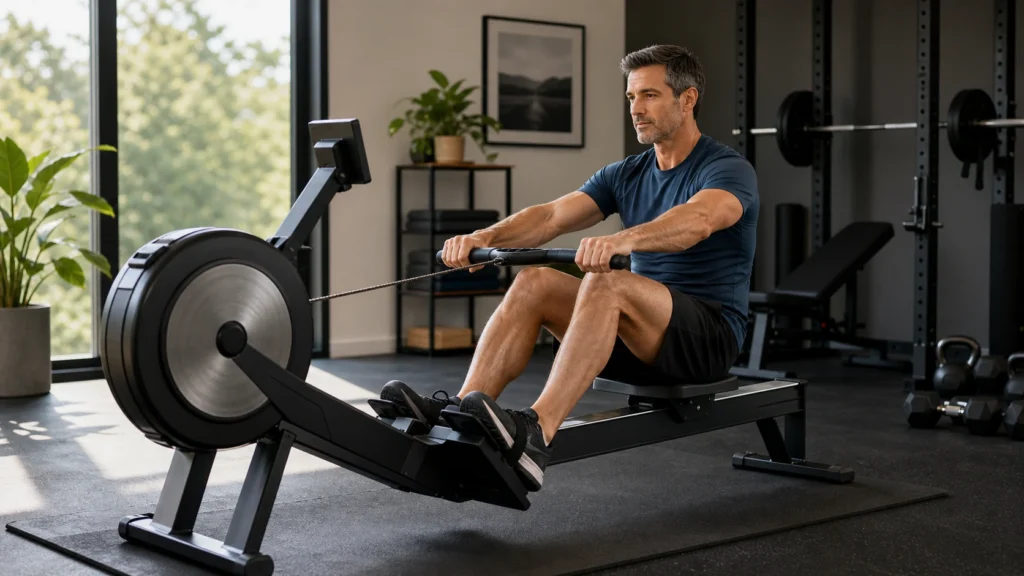
Rowing machines can be one of the best full-body cardio tools for a home gym, but only when the machine fits your room, body, noise tolerance, technique, and weekly plan. Do not buy the rower with the most dramatic product photo. Buy the rower that helps you repeat clean sessions without turning cardio into another ignored machine.
Quick Summary: Rowing machines
- Magnetic rowers usually win for quiet home cardio and apartments.
- Air rowers usually win for performance feel, intervals, and training data.
- Water rowers usually win for smooth stroke feel and room-friendly design.
- Technique matters before intensity: drive with legs, body, arms; recover arms, body, legs.
- Monitor quality, rail length, floor setup, and recall checks matter more than feature count.
A rowing machine is not a magic fat-loss machine. It is a repeatability tool. The right one makes low-impact cardio easier to do consistently, gives you useful feedback, and leaves enough recovery for strength training basics, mobility, and real life.
The wrong one is usually wrong for boring reasons: it is too loud, too cramped, too awkward to store, too vague on metrics, or too uncomfortable to use twice a week.
Rowing Machine Buyer Scorecard: What Actually Matters
Score rowing machines by the workouts they must survive: easy cardio, intervals, technique practice, rowing-specific training, recovery rows, or general conditioning. Feature count comes later.
| Criterion | Weight | Why it matters |
|---|---|---|
| Use-case fit | 25% | Recovery rows, Zone 2, intervals, and rowing-specific training need different setups. |
| Resistance type | 20% | Magnetic, air, water, hydraulic, and smart rowers feel and sound different. |
| Rail length and user fit | 15% | Taller users need enough slide to avoid cramped technique. |
| Monitor quality | 15% | Time, distance, stroke rate, 500m split, watts, intervals, and heart rate turn rowing into training. |
| Noise and vibration | 10% | Critical for apartments, shared homes, and early or late sessions. |
| Storage and service | 10% | Folding, vertical storage, wheels, warranty, parts, and support decide long-term use. |
| Floor protection | 5% | A mat protects floors, reduces movement, and makes cleanup easier. |
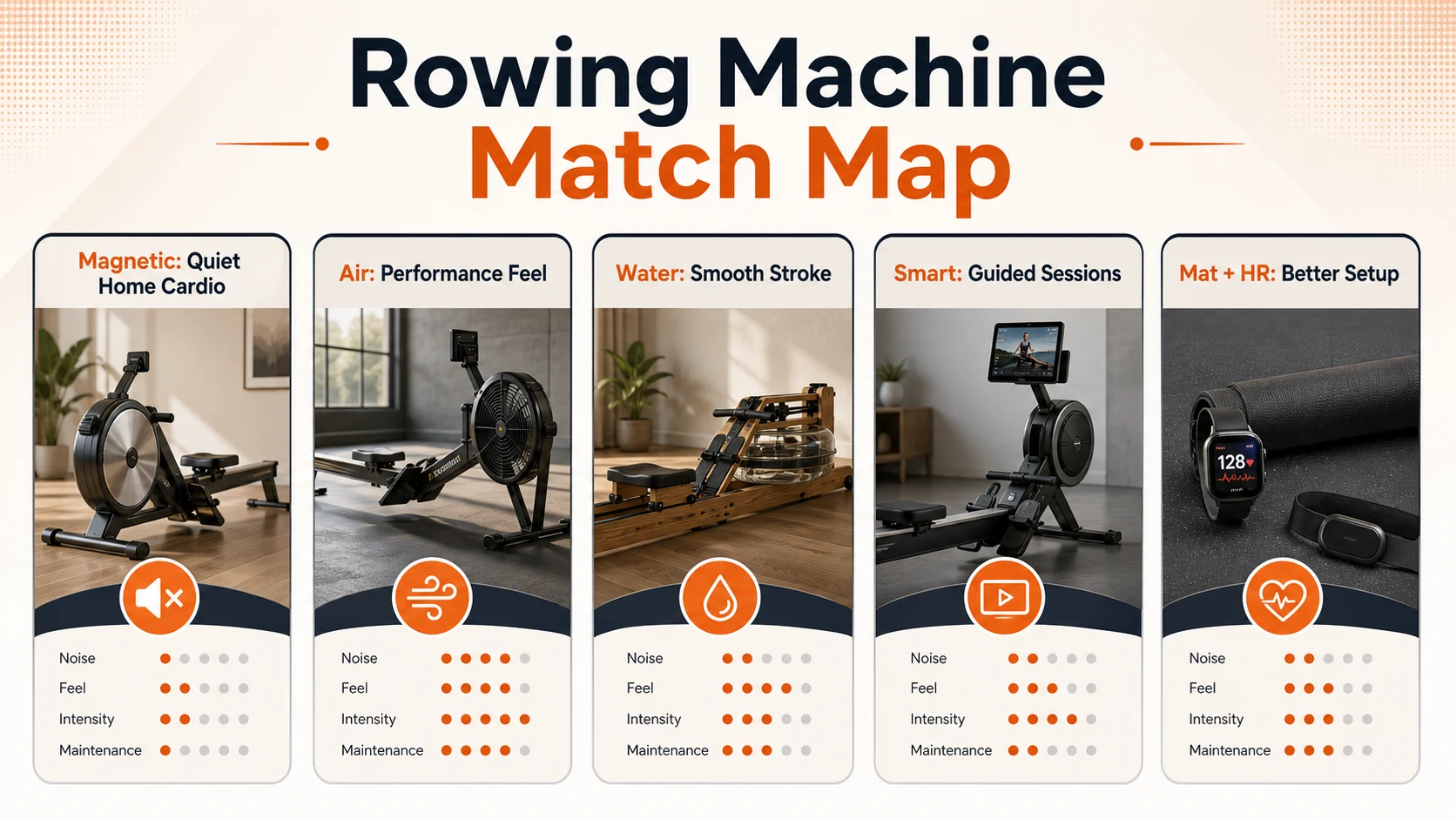
Magnetic vs Air vs Water vs Hydraulic Rowers
The best resistance type depends on your constraint. Magnetic rowers solve noise. Air rowers solve performance feel. Water rowers solve smooth stroke feel. Hydraulic rowers solve price and footprint, but often compromise stroke mechanics.
| Rower type | Best for | Tradeoff | PrimeForMen verdict |
|---|---|---|---|
| Magnetic rower | Quiet home cardio, apartments, beginners | Less sport feel than many air rowers | Best default for noise-sensitive homes |
| Air rower | Performance, intervals, rowing feel, data | Louder fan resistance | Best if noise is acceptable |
| Water rower | Smooth feel, aesthetics, moderate cardio | Maintenance, price, and storage need checking | Best when feel and room fit matter |
| Hydraulic rower | Small budget, very tight spaces | Stroke path and durability can be limited | Only for light occasional use |
| Smart rower | Guided classes, motivation, app accountability | Subscription and platform lock-in | Buy only if coaching changes behavior |
Premium Rowing Setup Shortlist
These are direct product CTAs, not random categories. Choose the product that fixes your real constraint: performance feel, quiet guided sessions, smooth stroke, heart-rate pacing, or floor setup.
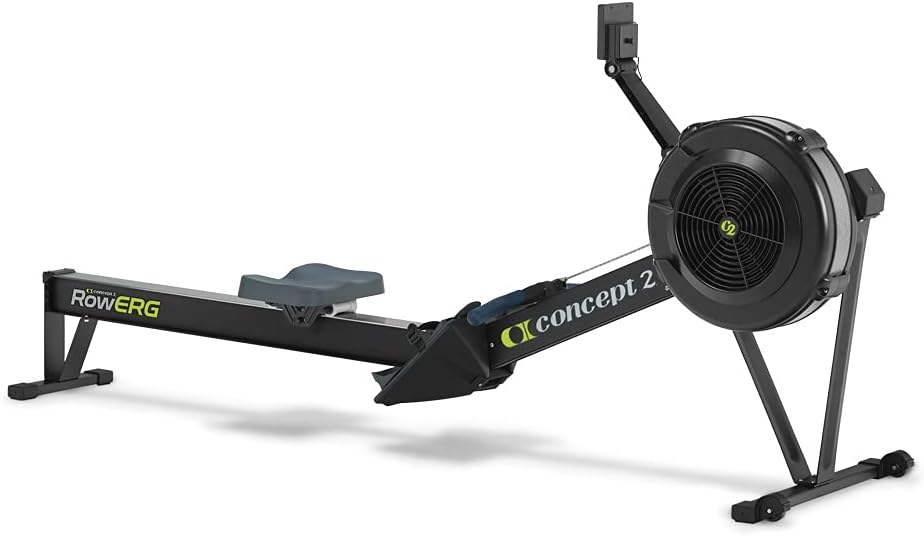
Concept2 RowErg
Best when you want durable training data, responsive resistance, and intervals without a subscription.
- Strong choice for 500m split, stroke rate, distance, and repeatable interval work.
- Air resistance feels more performance-oriented than most quiet magnetic machines.
- Easy vertical storage helps if the training room doubles as living space.

Hydrow Wave
Best when coaching, classes, and app accountability are the reason you will row more often.
- Connected workouts make sense if structure and coaching improve adherence.
- Quieter resistance profile fits shared homes better than most air rowers.
- Buy only if the subscription model is a feature for you, not friction.

WaterRower Shadow
Best when stroke feel, low visual clutter, and a furniture-friendly home setup matter.
- Smooth water resistance feels less mechanical than many budget rowers.
- Good option when the rower must live visibly in a room, not only a garage.
- Check maintenance, storage angle, and monitor needs before choosing feel first.

Polar H10 Chest Strap
Best when you want easy rows to stay easy and interval days to stay controlled.
- Helps separate Zone 2 cardio from hard conditioning instead of guessing.
- Useful if your rower monitor pairs with Bluetooth or ANT+ sensors.
- Better for pacing consistency than chasing calorie estimates on the console.

Powr Labs Rowing Machine Mat
Best when the rower sits on hardwood, carpet, apartment flooring, or a shared training space.
- Protects the full slide path from sweat, rail pressure, and machine movement.
- Makes cleanup easier when short rows become a frequent weekly habit.
- Measure mat length against the rower in use, not only folded dimensions.
* As an Amazon Associate, PrimeForMen earns from qualifying purchases. Product availability, pricing, and model details can change; verify the current listing before buying.
How to Choose the Right Starting Point
Start with a quiet magnetic or smart rower, a full-length mat, and realistic storage. Air rowers can be excellent, but fan noise is the dealbreaker for many shared spaces.
Start with an air rower and a monitor that gives stroke rate, pace, distance, intervals, and heart-rate pairing. Then use beginner and interval rowing workouts instead of guessing.
Look at water rowers, but do not buy only by appearance. Check maintenance, monitor expectations, rail length, and where the machine will actually live.
Cheap rowers can work for short easy sessions, but avoid a machine that compromises handle path, rail length, or stability. For broader setup decisions, compare with fitness on a budget.
Rowing Technique Before Rowing Intensity
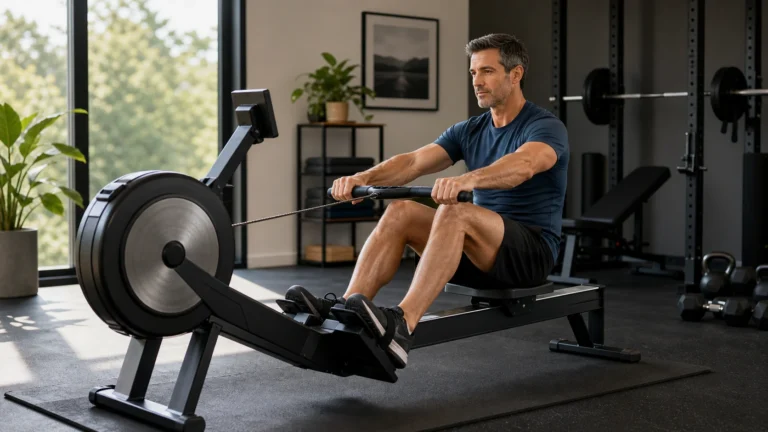
Technique is the safety filter. Concept2’s rowing technique guidance describes the stroke as a sequence, not a tug-of-war with the handle. Drive with legs, body, arms. Recover arms, body, legs.
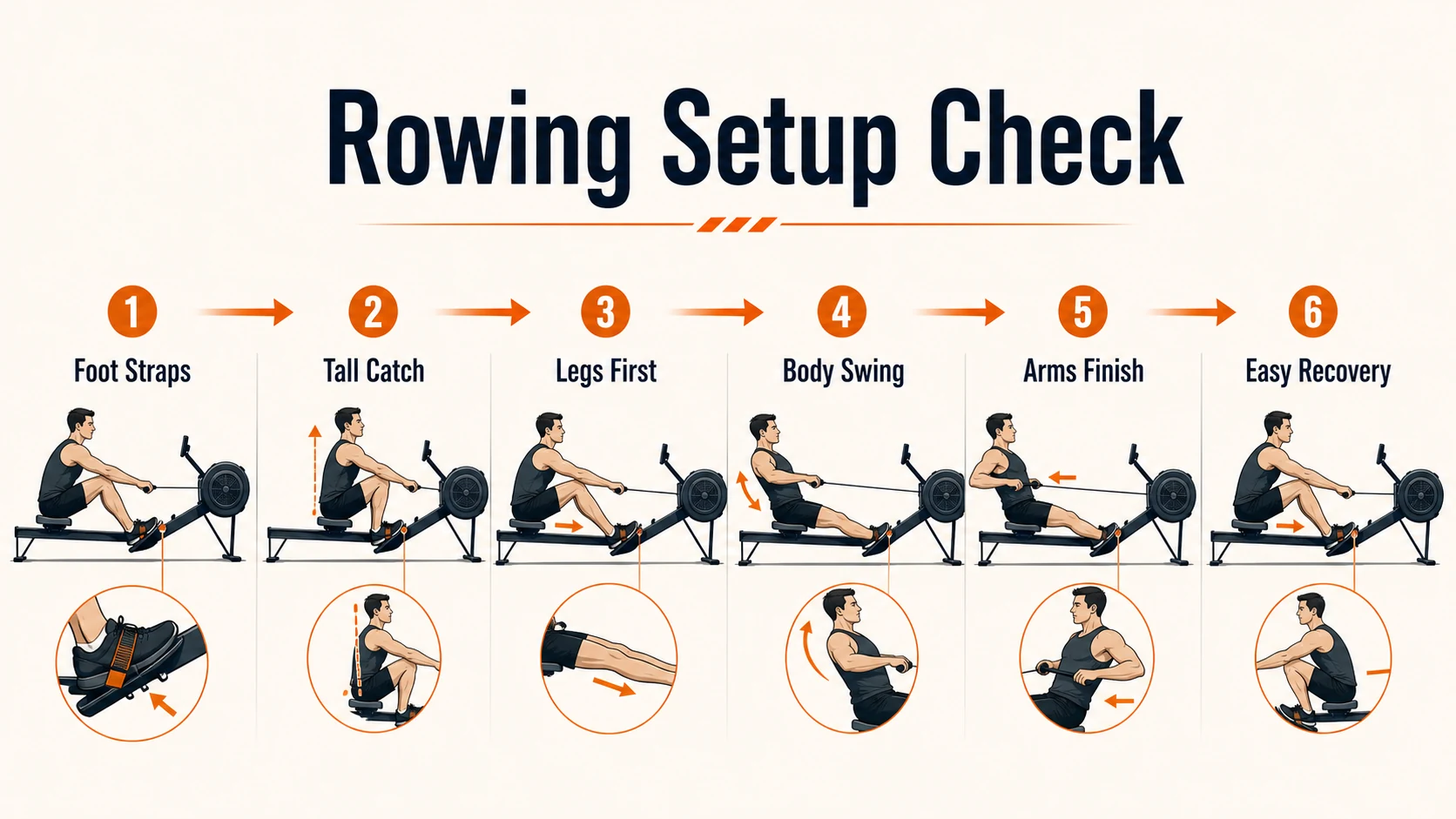
| Phase | Cue | Common mistake |
|---|---|---|
| Catch | Shins near vertical, arms straight, tall posture | Overreaching or rounding the back |
| Drive 1 | Push with the legs first | Pulling with arms too early |
| Drive 2 | Body swings after the legs start | Yanking the handle with the low back |
| Drive 3 | Arms finish last, handle below ribs | Shrugging or overleaning |
| Recovery | Arms away, body forward, legs compress | Rushing the slide and crashing into the catch |
Rowing Machines for Men Over 40
For men over 40, rowing is strongest as repeatable low-impact cardio. ACE describes rowing as an impact-free total-body cardiovascular workout, which is why it can fit men who want conditioning without more pounding on knees, ankles, or Achilles tendons.
The weekly baseline still matters. The CDC adult physical activity guidance points adults toward 150 minutes of moderate activity or 75 minutes of vigorous activity, plus muscle-strengthening work on two days per week. A rower can help fill the cardio side, but it should not erase lifting, mobility, or recovery.
Use easy rows, Zone 2 work, and short repeatable sessions.
Keep the sequence clean; do not turn every session into max intervals.
Row easy enough to finish better than you started. See when rowing should stay easy.
Rowing should support your lifting week, not wreck your legs and back before training.
Most rowing machine guides overrate screens, discounts, and feature lists. They underrate rail length, monitor clarity, service path, storage friction, floor setup, stroke order, heart-rate control, and whether the machine fits a real weekly training plan.
Rowing Machine Workouts by Goal
The first rowing workout should be too easy to brag about. Start with clean technique and one useful metric. Add time before intensity, and use harder sessions only when form survives fatigue.
Rowing Metrics: SPM, 500m Split, Watts, Heart Rate, Time and Distance
A good monitor should help you pace, not distract you. Concept2’s PM5 explanation highlights current pace, time, distance, average pace, stroke rate, and heart rate with compatible sensors. Their stroke-rate guidance also makes the key point: more SPM does not automatically mean better intensity.
| Metric | Good use | Risk |
|---|---|---|
| Time | Best beginner metric | Adding duration before technique is ready |
| Distance | Simple progression marker | Sacrificing stroke quality for meters |
| SPM | Rhythm and control | Confusing faster strokes with better rowing |
| 500m split | Pace control and intervals | Chasing speed before technique |
| Watts | Power output once form is stable | Only useful if the machine measures consistently |
| Heart rate | Zone 2, recovery, and interval control | Pairing issues or ignoring recovery context |
Fit and Space: Rail Length, Storage, Clearance and Floor Mat
Measure the rower in the position you will actually use, not only the stored position. Rail length, footplates, seat travel, monitor angle, floor mat, ceiling clearance, wheels, and storage friction decide whether it stays in the weekly routine. For broader comparisons, use fitness gear and equipment and home gym equipment as context.
Tall users need full slide travel; cramped machines can change technique.
Foot position affects catch comfort, drive pressure, and knee angle.
Use dimensions matter more than folded dimensions. Leave room to mount, row, and store safely.
Cover the rail and sweat zone. A small treadmill mat may not fit the rower you choose.
Rowing Machine Safety: Technique, Recalls, Power, Kids and Pets
A rowing machine is safer when setup is boring: clear rail path, stable mat, controlled handle return, secure foot straps, recall check, no children or pets near the rail, and no overheating electronics. The CPSC has published a NordicTrack rowing machine fire-hazard recall, and HealthyChildren/AAP warns that home exercise equipment can create serious risks for small children.
| Safety check | Why it matters |
|---|---|
| Technique first | Bad stroke mechanics can irritate the low back, shoulders, or ribs. |
| Rail path clear | No loose objects, pets, or children near the slide and handle path. |
| Power and console safety | Smart rowers need cord, heat, update, and manufacturer-warning checks. |
| Recall check | Search model name plus CPSC or manufacturer recall before buying used or discounted machines. |
| Storage lock | Vertical storage must be stable, especially in shared households. |
| Stop signs | Chest pain, fainting, unusual shortness of breath, numbness, or persistent pain need medical guidance. |
Common Buying Mistakes
A screen is useful only if it changes adherence. Monitor quality and app lock-in are different decisions.
An air rower can be excellent, but not if it makes you skip early or late sessions.
Floor protection feels optional until sweat, movement, and rail pressure mark the room.
Rowing is cardio with muscular demand. It does not replace progressive lifting, core work, or mobility.
Rowing Machine vs Treadmill, Bike or Jump Rope
Compared with treadmills, rowers usually reduce impact but demand more technique. Compared with bikes, they involve more upper-body and trunk coordination. Compared with jump ropes, they are easier to scale for low-impact sessions but require more space and money.
If you want a full cardio decision tree, compare rowers against the best cardio machine for home and then match the tool to your body, floor, schedule, and recovery.
Conclusion: Buy the Rower You Will Actually Repeat
The best rowing machine is not always the most intense, most connected, or most expensive. It is the machine that fits your space, keeps technique clean, gives useful metrics, stays safe in your home, and supports your weekly training instead of competing with it.
Start with the buyer scorecard. Pick the resistance type that solves your constraint. Add a mat and heart-rate feedback if they make consistency easier. Then use simple workouts until the rower becomes a reliable part of the week.
FAQ
What is the best rowing machine for home use?
The best rowing machine for home use is the one that fits your room, body, noise tolerance, monitor needs, and weekly plan. Magnetic rowers usually win for quiet homes, air rowers for performance feedback, and water rowers for smooth feel.
Is a magnetic rower better than an air rower?
A magnetic rower is often better for apartments and quiet cardio. An air rower is usually better for sport feel, intervals, and performance metrics. Pick by use case, not by which type sounds more advanced.
Are water rowers worth it?
Water rowers can be worth it if you value smooth resistance, lower visual clutter, and a more furniture-like machine. They are less ideal if you want the simplest monitor ecosystem, minimal maintenance, or the lowest price.
What rowing machine metrics matter most?
Beginners should start with time and stroke rate. General fitness users can add heart rate. Performance-focused users can track 500m split, watts, distance, and intervals once technique stays consistent.
Is rowing good for men over 40?
Rowing can be excellent for men over 40 when intensity is controlled and technique stays clean. It works best as repeatable low-impact cardio that supports strength training, not as a punishment session every time.
Can rowing bother the lower back?
Yes. Rowing can irritate the lower back when the stroke turns into a back pull, the catch is rounded, or fatigue ruins position. Reduce intensity, relearn the sequence, and get medical guidance for persistent or unusual pain.
Do I need a mat under a rowing machine?
A mat is usually smart for floor protection, sweat control, vibration, and machine stability. Measure the full in-use footprint, including rail travel, before buying one.
How often should beginners row?
Two or three short sessions per week is enough at first. Start with 10 to 20 minutes, keep the stroke smooth, and add duration before you add hard intervals.
- CDC adult physical activity guidelines: weekly cardio and strength baselines.
- Concept2 rowing technique and monitor education: stroke sequence, PM5 metrics, and stroke rate context.
- ACE rowing benefits: impact-free total-body cardio framing.
- CPSC and AAP/HealthyChildren safety references: rowing machine recall example and home exercise equipment safety.