Learn landing checks, a small four-week jump-training example and how to account for sport workload, with a free landing practice log.
- Learn controlled landings before repeated or higher jumps.
- Start with a small practice block and full resets.
- Count sport practice as part of the impact workload.
Bottom line Check whether jumping fits your situation, then rehearse the landing position before attempting the smallest jump.
Plyometric training uses rapid loading and force production, often through jumps and hops. A sensible entry point is learning to land and reset with control, rather than collecting as many contacts as possible. This guide separates a small learning block from advanced power training.
Quick Summary: Plyometric Training
- Learn controlled landings before repeated or higher jumps.
- Start with a small practice block and full resets.
- Count sport practice as part of the impact workload.
The Prime Perspective
More jump contacts do not automatically mean better power training. The first useful outcome is repeatable execution. For a returning exerciser, deciding to stay with grounded practice can be the right progression decision.
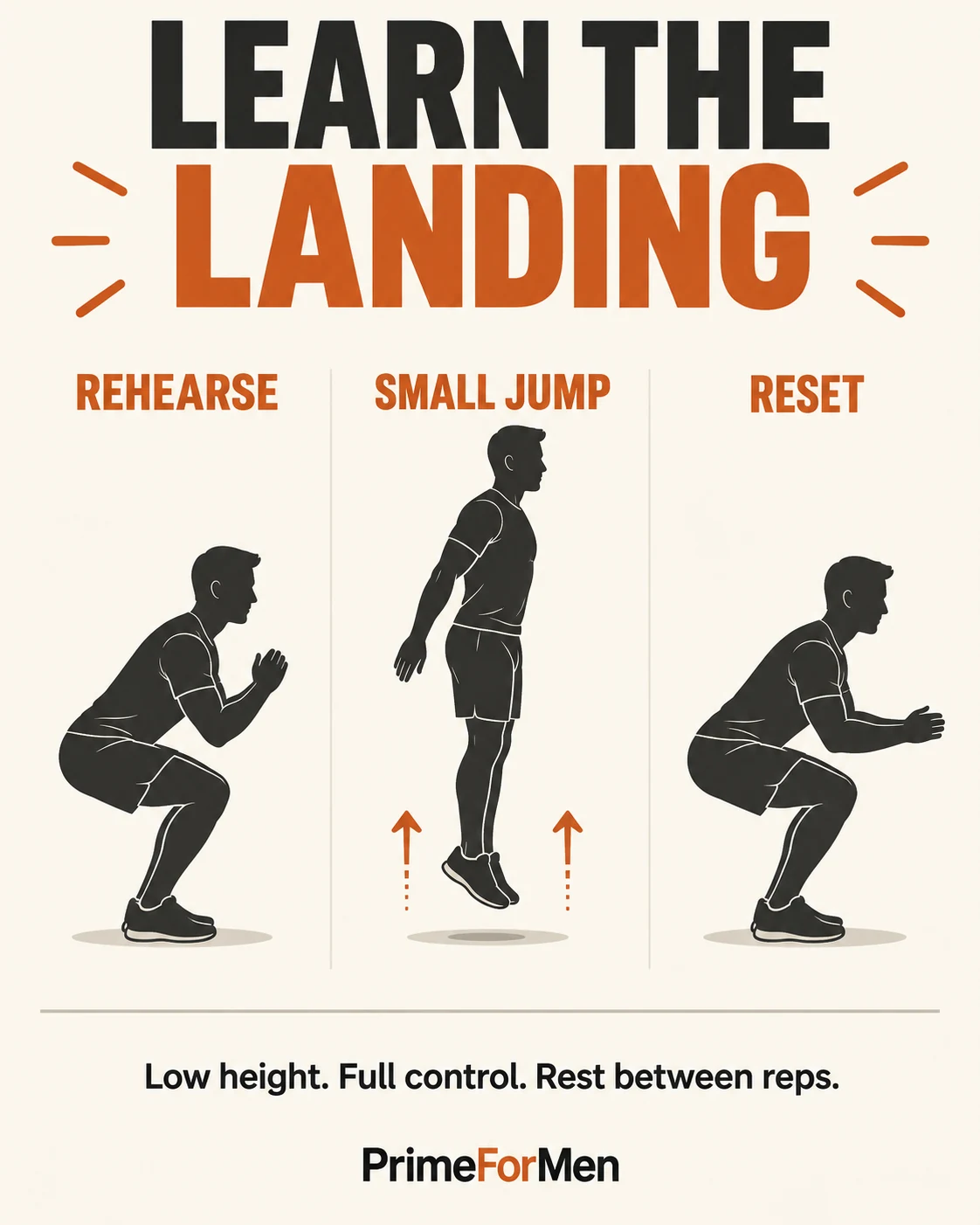
Start With Competence, Not a Jump-Height Target
Plyometric training involves rapid force production and landing demands. It is not an obligatory step for every exerciser, and age alone does not determine readiness. This starter example is for adults who already tolerate ordinary strength work and can move comfortably. It is not a return-to-sport protocol after injury.
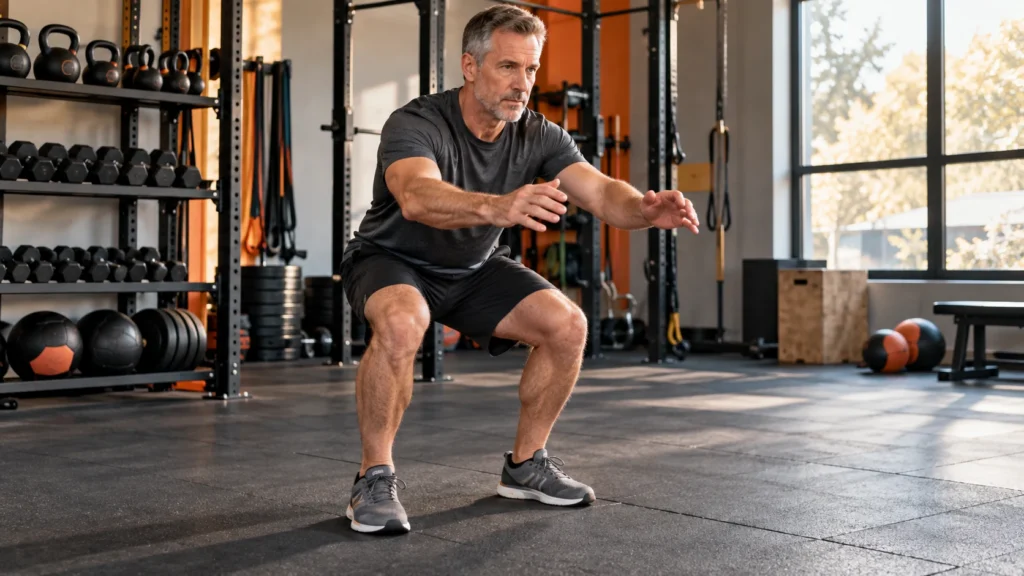
Before adding jumps, practice a controlled squat and a shallow landing position with both feet remaining on the floor. Check that you can keep balance and stand back up without pain. These observations help choose a starting task; they are not a validated medical clearance test. If you have unresolved injury, pain, balance difficulty or relevant medical restrictions, get individualized advice.
The NSCA discussion of plyometric programming emphasizes mastering a small exercise selection and considering existing sport loads. A basketball or volleyball practice already contains many jumps. Adding a generic contact target without counting that workload can be inappropriate.
Learn a Small Jump and a Controlled Landing
- Set the environment. Use a clear, level, suitable training surface and footwear with dependable grip. Avoid concrete, unstable cushions and low ceilings. Leave room to regain balance without hitting equipment.
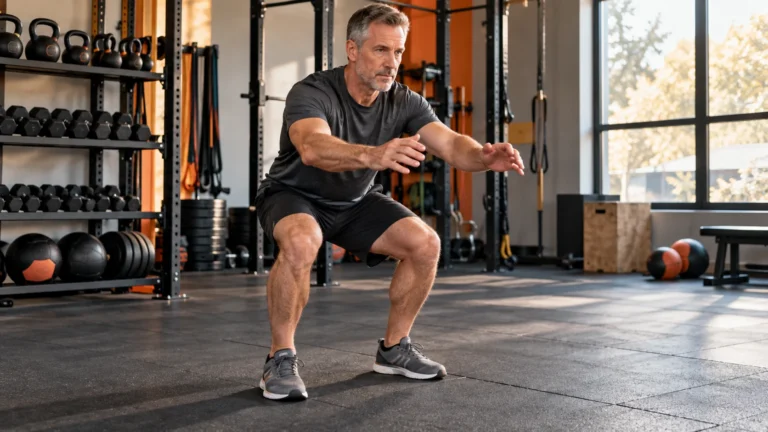
- Rehearse without leaving the ground. Stand comfortably, soften the hips and knees into a shallow athletic position, then stand tall. Keep feet planted. This is landing-position practice, not a plyometric jump.
- Add a small two-foot jump only when appropriate. Use a modest upward movement. Land on both feet with hips and knees bending naturally to absorb the landing.
- Hold and reset. Regain a steady position before the next repetition. If you stumble, repeatedly lose alignment or cannot stop comfortably, reduce the task.
- Stop before fatigue changes the movement. Do not chase a timer, calorie count or maximum jump height.
A quiet landing can be useful feedback, but sound is affected by surface, footwear and technique. It does not prove that forces are safe. Film a few repetitions from a useful angle if you want coaching feedback; a qualified coach can interpret what the camera shows better than a volume meter.
For a detailed professional demonstration, see Loren Landow’s NSCA landing-mechanics session. It includes progressions beyond this starter block. Watching advanced examples is not an instruction to perform them.
A Conservative Four-Week Learning Block
This is an editorial example, not an NSCA-issued protocol. Start with one short session per week, after a warm-up and before fatiguing lower-body work. Keep at least 48 hours between any demanding jump sessions and allow longer if needed. Sport practice may already make additional jumping unnecessary.
On small screens, swipe the table sideways to see every column.
| Week | Practice | Decision |
|---|---|---|
| 1 | Grounded landing-position rehearsal: 2 × 3. If appropriate, small jump-and-stick: 2 × 3. | Keep the jump low and repeatable. Skip jumping if the rehearsal is not comfortable. |
| 2 | Repeat the same practice. | Review both immediate response and how normal movement feels afterward. |
| 3 | If the previous sessions were controlled, try 3 × 3 small jump-and-stick repetitions. | Change volume only; do not also add height or single-leg landings. |
| 4 | Repeat a manageable dose and review. | Stay here or seek coaching for a next step. A maximum jump test is optional, not required. |
Rest approximately 60–90 seconds between sets, with a full reset between individual jumps. Take longer when needed to keep quality. In this worksheet, one two-foot jump followed by a landing is logged as one repetition: 2 × 3 is six jumps. Other programs may define foot contacts differently, so state the counting convention rather than comparing unexplained totals.
What Comes Later—and What Does Not Need to Come at All
Repeated hops, lateral bounds and single-leg landings change the demands substantially. Depth jumps add another progression and are not a default destination for recreational exercisers. Do not advance only because four calendar weeks have passed. Select the next drill for a sport or performance reason and use appropriate coaching.
Medicine-ball throws are a separate power option, not a direct substitute for learning lower-body landing mechanics. Use a suitable ball and a wall or open area approved for throws; never assume an apartment wall is appropriate. Choose the exercise environment before buying equipment.
Record the drill, sets, repetitions, surface, rest, other sport work and next-day response. If normal walking changes, pain develops or symptoms worsen, stop and arrange appropriate assessment. Reducing jump count does not turn an injury into a safe training problem. Link this block to athlete strength planning so jumps and lifting are considered together.
Power Practice Is Different From a Conditioning Circuit
A jump can appear in a power session, a sport drill or a conditioning circuit, but the intent and fatigue are different. This starter block is about learning controlled execution with full resets. It is not a test of how long you can keep jumping.
On small screens, swipe the table sideways to see every column.
| Session | What you are trying to preserve | Reason to change course |
|---|---|---|
| Landing rehearsal | Balance, alignment and a repeatable stop. | You cannot hold the position comfortably. |
| Small jump and stick | A controlled takeoff and stable landing each time. | Landings get noisy, rushed or unstable. |
| Advanced reactive work | A coach-selected combination of speed, contact and force. | You lack the preparation or supervision for the task. |
| General conditioning | A sustainable effort suited to the aerobic goal. | Jump quality deteriorates merely to maintain the timer. |
Do not use jump height as the first success measure. A higher box can encourage pulling the knees upward without showing a greater jump capacity, and stepping off adds another landing demand. Boxes, depth jumps and repeated bounds are not required to complete the learning block in this article.
Fit Jumping Around the Rest of the Week
Basketball, volleyball, running drills and field-sport practice may already contain demanding contacts. Those contacts still matter even when they do not appear in your gym log. Ask the coach how this block fits rather than treating a short gym session as free extra work.
For athletes following the SBD program example, optional jumps belong only where the overall week supports them. The football training guide and off-season baseball guide should likewise be adapted to practice and competition demands, not stacked together as separate obligations.
For someone rebuilding a general fitness base, the beginner strength routine may be the more useful starting point. You can work on strength, coordination and consistency without jumping. An apartment-friendly workout is also a better choice when the surface, noise constraints or available landing space are unsuitable.
What to put in the log
Write down completed jumps, rest and a short execution note. “Six jumps, full resets, last landing unsteady” tells you more than “easy session.” If execution worsens, stop the jump portion and review the setup next time. Do not add repetitions to make up for a poor landing.
Also record the response later and the next day. Persistent discomfort or unusual fatigue should change the next decision. An easy recovery day is not clearance to resume impact, and temporary relief does not establish that a problem has resolved.
Download the Practical Worksheet
Use the one-page reference and three fillable fields to record your setup, what you completed and the next decision. Print it or save a filled copy using a PDF reader that supports forms. Read the full instructions and adaptations above before using the summary.
Conclusion: Make the Next Session Clear
Check whether jumping fits your situation, then rehearse the landing position before attempting the smallest jump. Use the worksheet to make that decision visible. Repeating a manageable session is a valid choice; the calendar alone does not require a harder workout.
Frequently Asked Questions
Do I need box jumps to start?
No. The learning block uses grounded rehearsal and, when appropriate, a tiny jump followed by a stable landing. A box changes the task and is not a required progression milestone.
How many contacts should a beginner do?
There is no single appropriate number for every beginner. This article uses a deliberately small example of two sets of three jumps after rehearsal, with optional later progression. Sport practice and other impact work must also be considered.
Can I use this as a fat-loss finisher?
That is not the purpose of this block. It prioritizes controlled execution and full resets. If fatigue degrades landings, more repetitions undermine the intended practice. Choose a suitable conditioning activity separately.
Is waiting 48 hours enough?
Not necessarily. It is a minimum planning buffer in this example, not a recovery guarantee. Your other training, response and individual circumstances can require a different schedule or no jumping at all.
What if I cannot land steadily?
Stay with appropriate grounded practice or a simpler strength routine and get coaching where needed. Do not increase jump height to solve a landing problem. Pain, loss of balance or concerning symptoms are reasons to stop and reassess.
Medical Disclaimer
This is general fitness education, not diagnosis, rehabilitation or an individualized exercise prescription. Choose movements appropriate to your situation. Stop for pain, dizziness or unusual symptoms and seek appropriate guidance. New or severe concerning symptoms warrant prompt medical assessment.
Our editorial policy explains our approach to sources and commercial independence. Exercise examples and illustrations do not represent individual coaching or product testing.