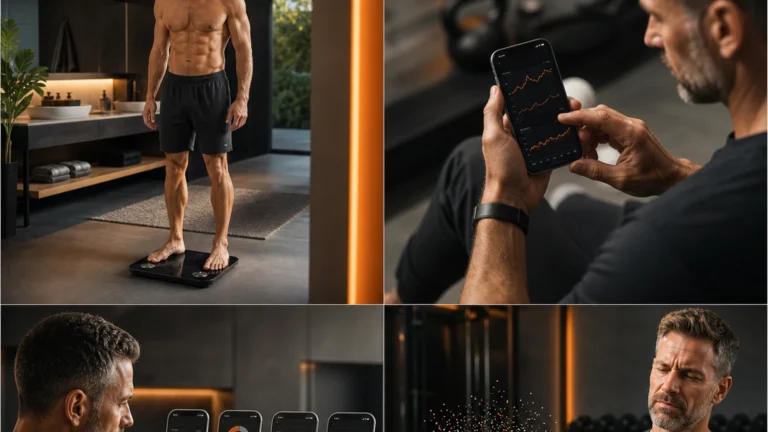
Compare smart scales by weight consistency, app fit, privacy, profiles and realistic limits of body-fat estimates.
- Trust repeatable weight trends before body-fat estimates.
- Choose the ecosystem before chasing extra metrics.
- Measure under similar conditions to reduce noise.
Bottom line The best smart scale is the one that records a consistent trend in the app you will keep using.
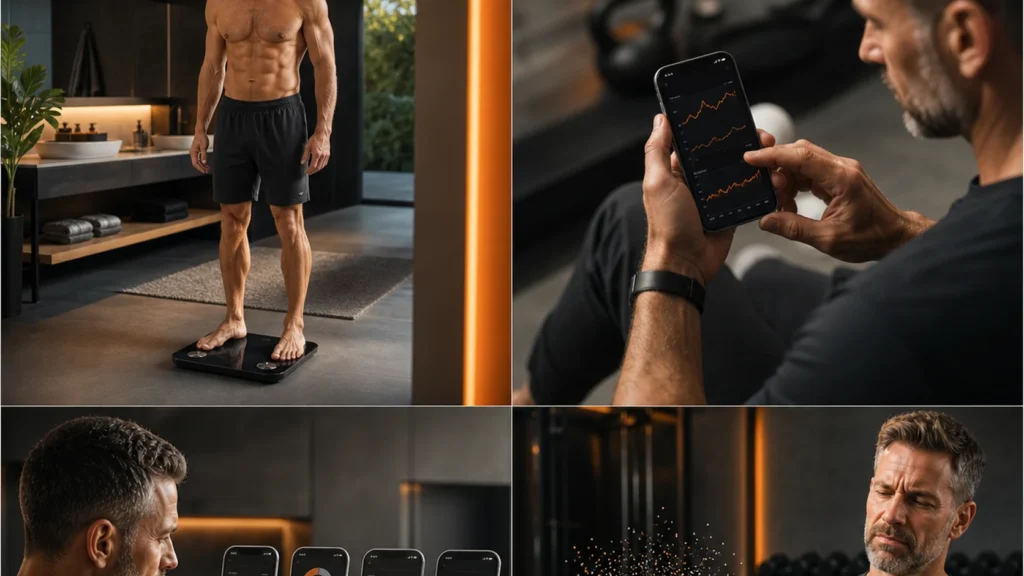
The best smart scale for men is a repeatable weight scale that syncs reliably with the health app you already use. Treat body-fat, muscle, water, and visceral-fat readings as rough estimates rather than diagnoses. Withings suits broad health tracking, Garmin fits its own training ecosystem, and Etekcity offers a lower-cost app-based route.
Withings ecosystem.
Index S2.
Etekcity app scale.
Best smart scales for men should reduce logging friction and make long-term weight change easier to see. Extra metrics only help when their limitations are clear. This guide compares current product families and published specifications; PrimeForMen did not perform a clinical validation study. Our editorial policy explains how researched recommendations are presented.
Quick Summary: Best Smart Scale for Men
- Best broad health platform: Withings Body Smart for Wi-Fi syncing and a mature health-app ecosystem.
- Best Garmin integration: Index S2 for users already committed to Garmin Connect.
- Best value route: Etekcity for inexpensive weight trends and multiple app connections.
- Most important metric: repeatable body weight under consistent conditions.
- Treat cautiously: home-scale body-fat and muscle estimates, especially day-to-day changes.
The Prime Perspective
A smart scale is a logging tool, not a verdict on your body. Weekly and monthly trends can guide decisions. A single body-fat percentage after a salty meal, hard workout, poor sleep, or dehydration should not change the plan.
Smart-Scale Shortlist by Ecosystem
| Scale family | Best for | Useful strength | Main caution |
|---|---|---|---|
| Withings Body Smart | General health tracking | Wi-Fi sync, multiple profiles, broad platform links | Premium cost; composition remains estimated |
| Garmin Index S2 | Garmin watch users | Direct Garmin Connect integration | Best value only inside that ecosystem |
| Etekcity smart scale | Budget-conscious tracking | Low entry cost and app-based history | Feature and integration depth varies by model |
| Basic digital scale | Privacy and simplicity | No account, no app dependency | Manual logging if trend charts are wanted |
Compare Smart Scales on Amazon
Confirm current app compatibility, Wi-Fi or Bluetooth requirements, user limits, privacy terms, and warranty before buying.

Withings Body Smart
For households that want automatic syncing and a broad health-tracking ecosystem.
- Check support for your preferred health app.
- Review account and data-sharing settings.
- Use composition values as trends, not diagnoses.

Garmin Index S2
For Garmin Connect users who want weight data beside watch and training metrics.
- Choose it primarily for Garmin integration.
- Confirm household profile requirements.
- Compare trends under consistent conditions.

Etekcity Smart Scale
For a lower-cost path to app-based weight history and household profiles.
- Verify the exact model’s app integrations.
- Place it on a hard level floor.
- Disable metrics you find distracting.
*Affiliate disclosure: PrimeForMen may earn a commission from qualifying purchases at no extra cost to you.
Weight Accuracy Versus Body-Composition Accuracy
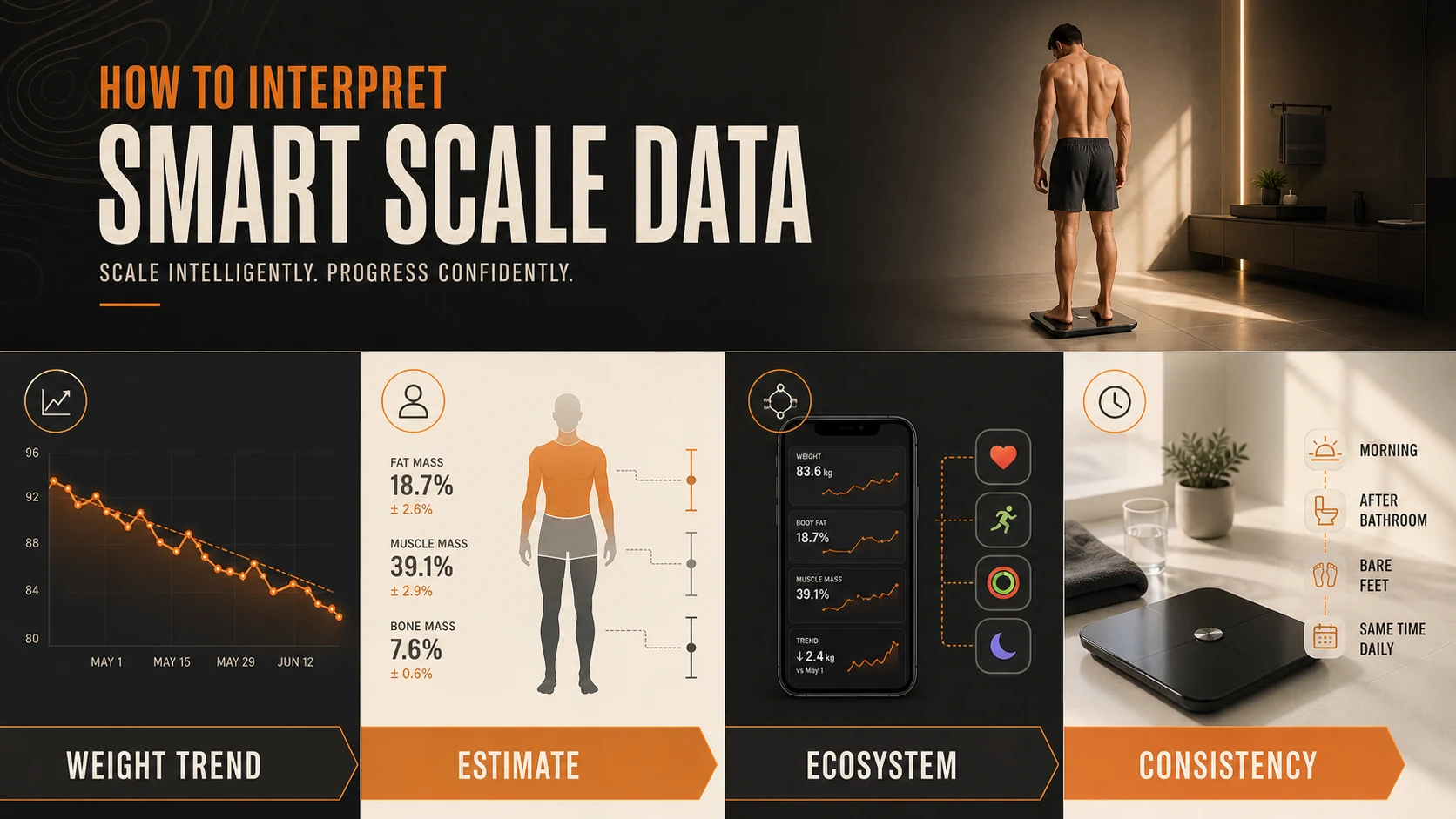
Digital weight measurement and bioelectrical impedance analysis are different tasks. A scale may produce consistent body weight while its estimated body-fat percentage differs substantially from a reference method. Home BIA sends a small current through the lower body and applies population equations. Hydration, food intake, skin temperature, recent training, foot contact, and the selected user mode can all change the estimate.
A peer-reviewed evaluation available through PubMed Central found that commercially available smart scales were reasonably accurate for body weight but not body composition compared with a reference assessment. That is the right evidence boundary for everyday use.
How to Measure Consistently
- Place the scale on the same hard, level surface.
- Measure at a similar time, preferably after waking and using the bathroom.
- Use bare, dry feet when composition readings are enabled.
- Avoid comparing a post-workout reading with a rested morning reading.
- Review a seven-day average or longer trend instead of one number.
- Keep normal hydration; do not manipulate water intake to improve a reading.
Link the result to an actionable habit in a fitness app or simple log, rather than collecting metrics without decisions.
Wi-Fi, Bluetooth, and App Lock-In
Wi-Fi can sync without a phone nearby, which is convenient for households. Bluetooth may require the app to be open or close to the scale. Check whether the company supports Apple Health, Google Health Connect, Fitbit, Garmin, or another platform you already use. Also check export options: a decade of health history is more valuable when it can move with you.
Multiple users
Automatic recognition works best when household members’ weights are sufficiently different. Similar users may need confirmation.
Guest mode
Useful when visitors should not be added to a profile or cloud account.
Offline value
The scale should still display weight even if the service, app, or Wi-Fi is unavailable.
Privacy Questions to Ask
Body weight is personal health data. Read what is collected, whether data is used for advertising, which third parties receive it, how to delete the account, and whether two-factor authentication is supported. Create only the profiles you need. If cloud storage adds anxiety or risk without useful benefit, buy a reliable basic scale and log manually.
What Most Smart-Scale Guides Miss
More measurements can make decision-making worse. Bone mass, metabolic age, protein percentage, and visceral-fat scores may look precise while remaining model-based estimates. Hide any metric that encourages daily overreaction. One trustworthy weight trend plus waist measurement and performance markers may tell you more.
Athlete Mode and Special Situations
Athlete mode changes the equation based on assumptions about training and body composition; it does not make the current more accurate. Use it only when the manufacturer’s criteria genuinely apply, then keep the setting consistent. People with implanted electronic medical devices should follow the device and scale manufacturer’s guidance before using BIA features. Pregnancy and edema can also make composition estimates less meaningful.
Match the Scale to the Goal
For fat loss, focus on multi-week body-weight and waist trends. For muscle gain, combine slow weight change with training performance and measurements. For general health, share relevant trends with a clinician rather than treating consumer metrics as lab results. See our fitness guide for men over 50, fitness tracker guide, and smartwatch guide for the larger measurement system.
Tom’s Guide’s current smart-scale comparison is useful for checking ecosystem features and household usability; use its scores as product guidance, not clinical validation.
Conclusion
The best smart scale for men delivers repeatable weight readings, reliable syncing, and an app you will keep. Choose Withings for broad health integration, Garmin for Garmin Connect, Etekcity for value, or a basic digital scale for privacy. Treat body-composition numbers as noisy estimates and make decisions from longer trends.
Frequently Asked Questions About Smart Scales for Men
Are smart scales accurate?
Many are reasonably consistent for body weight on a hard level floor. Body-fat and other composition estimates are much less reliable and should be treated as rough trends.
What is the best time to use a smart scale?
Use it under repeatable conditions, commonly after waking and using the bathroom, before food, drinks, or training.
Do I need Wi-Fi on a smart scale?
No. Wi-Fi makes automatic syncing convenient. Bluetooth or manual logging is enough if you do not need cloud-based background updates.
Can several people use one smart scale?
Most leading models support multiple profiles, but automatic recognition can confuse users with similar weights. Check profile and guest-mode behavior.
Should I use athlete mode?
Only if you meet the manufacturer’s criteria. It changes the estimation equation and should remain consistent; it is not a clinical accuracy switch.
Consumer scales do not diagnose body composition or disease. Discuss meaningful unexplained weight changes and medical-device compatibility with a qualified clinician.
Some links are affiliate links. PrimeForMen may earn a commission from qualifying purchases at no additional cost to you.