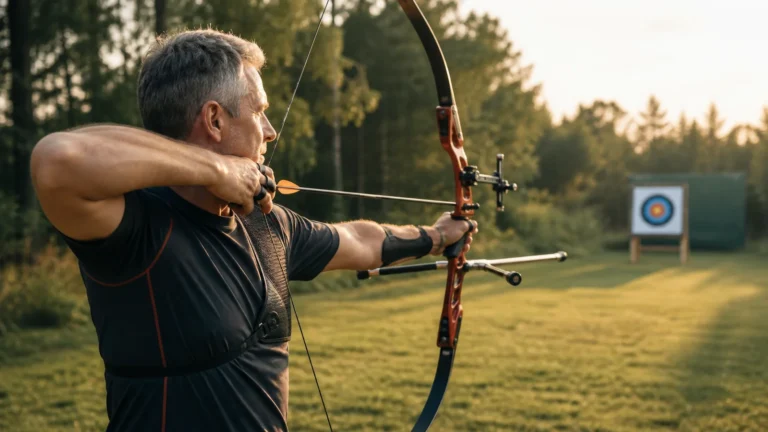
Archery strength training: build scapular control, draw strength, shoulder endurance, anti-rotation, and a practical two-day program around shooting.
- Accuracy depends on repeatable positioning, not maximum gym strength.
- Lower-trapezius and shoulder-girdle control are central to the aiming phase.
- More draw weight is not a substitute for cleaner technique.
Bottom line Train the shoulder blades, pulling chain, bow-arm stability, and trunk—then let shooting practice convert that capacity into repeatable form.
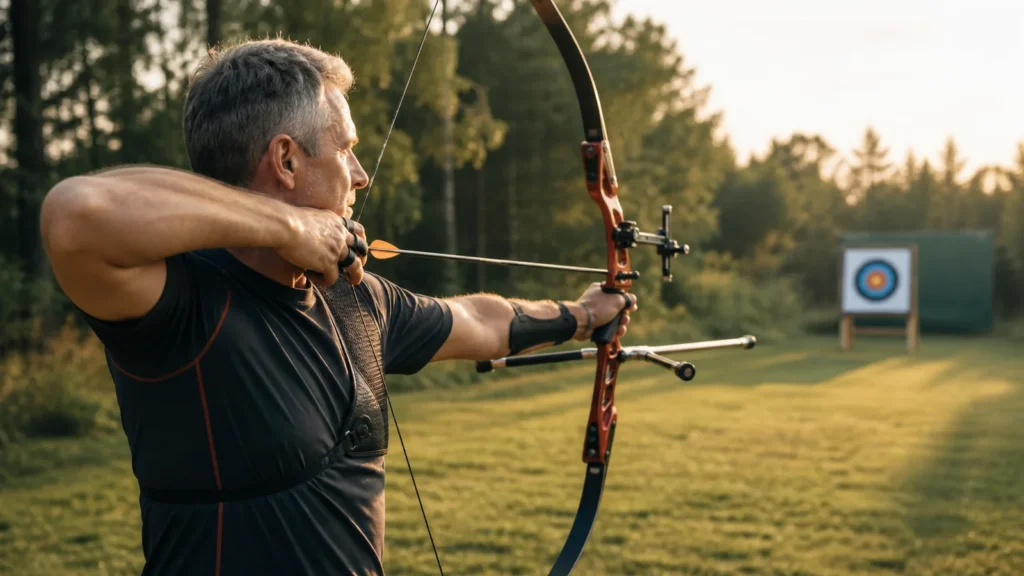
Archery Strength Training works when every session has a defined job and the weekly load remains recoverable. The plan below separates technique, endurance, speed, strength, and recovery so effort produces adaptation instead of random fatigue.
This is a general training framework, not an individualized medical or coaching prescription. Adjust it for your sport history, current capacity, equipment, and competition calendar.
Quick Summary: Archery Strength Training
- Archery repeatedly loads both shoulders in different roles: the drawing side pulls while the bow arm stabilizes.
- Elite-archer research highlights shoulder-girdle muscle characteristics and lower-trapezius activity, but it does not prove one perfect routine.
- Rows, external rotation, face pulls, carries, and anti-rotation work support the movement without mimicking every shot.
- Increase shooting arrows, draw weight, or gym stress one variable at a time.
- Persistent shoulder pain, weakness, numbness, night pain, or sudden loss of control requires qualified assessment.
The Prime Perspective
The goal is not to make a light bow feel heavy in the gym. It is to make your actual bow feel predictable at arrow 60, with the same shoulder position you had at arrow 6.
Archery strength training builds the shoulder-girdle control, pulling strength, bow-arm stability, grip, and trunk stiffness needed to repeat a technically sound shot. It supports form; it does not replace coaching or justify excessive draw weight.
Understand the Two Different Shoulder Jobs
The drawing side produces and controls horizontal pulling force. The bow side must remain stable while force travels through the hand, shoulder blade, trunk, and stance. Both sides need strength, coordination, and endurance, but they do not perform identical tasks.
| Capacity | Archery role | Useful exercises | Programming cue |
|---|---|---|---|
| Scapular retraction and depression | Stable drawing-side finish | Rows, face pulls, prone raises | Do not shrug into the neck |
| External rotation | Shoulder control | Band or cable external rotation | Use light controlled loads |
| Serratus and bow-arm stability | Manage forward arm position | Push-up plus, landmine press | Reach without collapsing |
| Trunk anti-rotation | Transfer force without twisting | Pallof press, suitcase carry | Keep ribs and pelvis stacked |
| Lower body | Stable stance and fatigue resistance | Split squat, hinge, calf work | Train both sides |
| Grip and forearm | Manage bow and release demands | Carries, wrist extensor work | Avoid constant maximal gripping |
Amazon Product Shortlist
These tools can support controlled strength and warm-up work. PrimeForMen has not independently tested them. Inspect every band and never release stretched equipment toward the face.

SAS Archery Bow Training Band
For low-load draw-path rehearsal and warm-ups away from the range after proper technique instruction.
- Archery-specific stretch-band format.
- Portable for warm-up practice.
- Never release a band toward the face.

HPYGN Resistance Bands With Handles
For rows, face pulls, presses, and external-rotation variations with a secure anchor.
- Multiple stackable resistance tubes.
- Includes handles and door anchor.
- Inspect tubes, clips, and stitching before use.
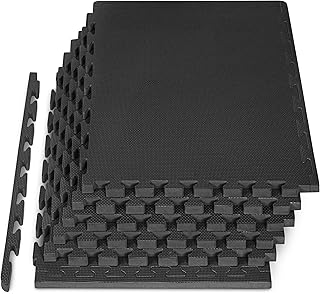
ProsourceFit One-Inch Exercise Mat
For a defined floor area for half-kneeling presses, side planks, and mobility work.
- One-inch interlocking EVA tiles.
- Creates a stable home training area.
- Floor padding does not make unsafe drills appropriate.
*As an Amazon Associate, PrimeForMen earns from qualifying purchases. Availability and prices can change.
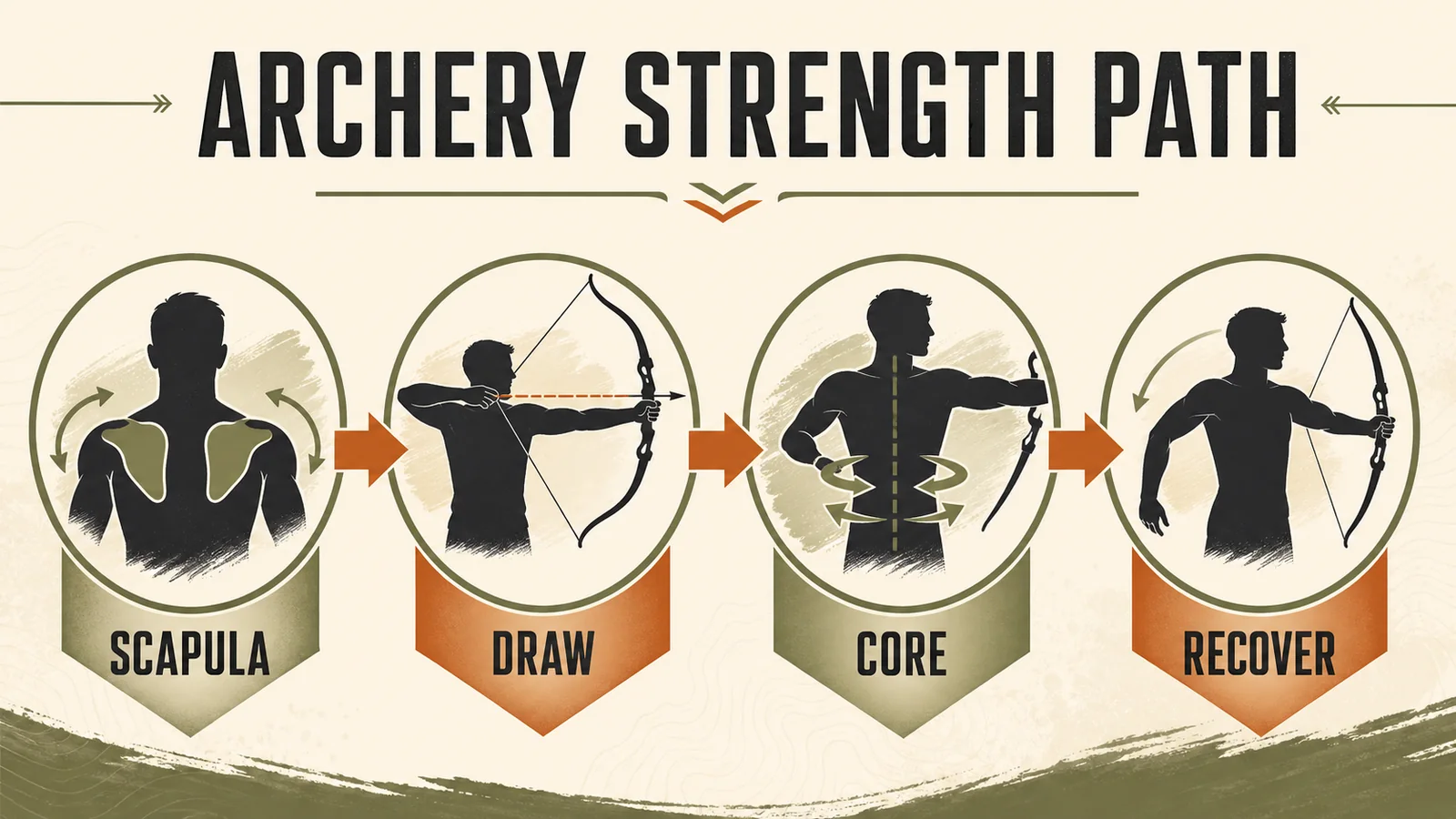
Archery relies on the lower and middle trapezius, rhomboids, posterior deltoid, rotator cuff, lats, serratus anterior, forearms, and trunk. The goal is coordinated shoulder-blade control, not simply bigger biceps or a heavier row.
A study comparing male archers of different skill levels found higher lower-trapezius activity and lower biceps and triceps activity in elite archers during stabilization. See the archery muscle-activity study. It supports efficient scapular control as a training target, but it does not prove that copying one activation pattern creates elite accuracy.
Research on shoulder characteristics in elite archers also highlights the relevance of shoulder adductor and extensor capacity. Use that evidence to justify balanced pulling and stabilization work—not an arm-only program.
A Two-Day Archery Strength Program
Day A — Draw-side capacity
- Chest-supported row: 4 x 6–10
- Half-kneeling single-arm pulldown: 3 x 8–12 per side
- Split squat: 3 x 6–10 per side
- Band external rotation: 2–3 x 12–15
- Suitcase carry: 3 x 20–30 yards per side
- Wrist extensor work: 2 x 12–20
Day B — Bow-arm stability
- Landmine press or incline push-up plus: 3 x 6–10
- One-arm cable row: 3 x 8–12 per side
- Romanian deadlift: 3 x 6–10
- Face pull: 3 x 10–15
- Pallof press: 3 x 8–12 per side
- Farmer carry: 3 controlled trips
Keep two or three repetitions in reserve. Place the harder session after shooting or at least a day before a high-volume technical session.
Warm Up Without Fatiguing the Shot
- Raise body temperature for three to five minutes.
- Move the thoracic spine and shoulders through comfortable ranges.
- Perform one or two light sets of rows, external rotation, and push-up plus.
- Use an archery band for slow draw-path rehearsals.
- Shoot close-range blank-bale arrows before normal distance and intensity.
A warm-up should sharpen position and confidence. If the bands create a pump or shaking before the first arrow, the dose is too high.
Track gym sets, arrow count, draw weight, and symptoms on one calendar. Increase only one major demand at a time. Hold progression when late-session shoulder position, release quality, or grouping deteriorates materially.
Progress Draw Weight Conservatively
Earn heavier draw weight through stable mechanics at the current weight. You should be able to set the shoulder blades, draw smoothly, hold without visible collapse, and finish planned arrow volume without pain. Use lighter limbs or a training band when learning a new technique.
A review of injuries in elite archers found many overuse complaints in the shoulder, particularly the drawing arm, and emphasized technique, adequate strength, and trunk stability; see the archery overuse-injury study. The sample does not predict an individual recreational archer's risk, but it reinforces gradual load.
Separate Strength From Shot Simulation
Rows and presses build general capacity. Band draws rehearse a movement. Actual shooting integrates visual attention, alignment, anchor, release, and feedback. Do not turn every gym exercise into a distorted bow imitation; use the best exercise for each physical quality, then practice the shot with a coach.
Manage Pain and Asymmetry
Some side-to-side difference is expected in an asymmetric sport. The useful question is whether the difference is worsening, painful, or changing control. Train both sides, but give additional technical attention to the exact weak link identified by a qualified coach or clinician.
- Stop for sharp pain, instability, numbness, or sudden weakness.
- Do not shoot through night pain or progressive loss of range.
- Reduce arrow volume before adding passive treatment or random corrective drills.
- Check bow fit and draw weight with a knowledgeable technician or coach.
The bow is already resistance training. Your gym plan must account for arrow volume and holding time, not pretend shooting has no muscular cost. More sets are not automatically more preparation.
Build a Stronger Foundation
Use resistance-band training, core workouts, unilateral training, strength basics, recovery-tool guidance, and rest and recovery.
What to Do This Week
- Film several shots from safe, useful angles with a coach.
- Complete two strength sessions focused on rows, shoulder control, and trunk stability.
- Keep two or three repetitions in reserve on shoulder work.
- Track arrow count and gym volume together.
- Do not increase draw weight during the same week you sharply increase arrows.
Conclusion
Train the shoulder blades, pulling chain, bow-arm stability, and trunk—then let shooting practice convert that capacity into repeatable form.
Next Step: Build the Full Sports-Specific System
Connect this program to the PrimeForMen sports-specific training guide so skill, strength, conditioning, and recovery support the same goal.
Archery Strength Training: Frequently Asked Questions
What muscles should archers strengthen?
Prioritize the lower and middle trapezius, rhomboids, rear deltoids, rotator cuff, lats, serratus anterior, grip, and trunk while maintaining balanced pressing and lower-body strength.
How often should archers strength train?
Two sessions per week work well for many recreational archers. Reduce volume before important shoots and avoid exhausting the drawing shoulder immediately before technical practice.
Are resistance bands good for archery training?
Yes for warm-ups, external rotation, rows, face pulls, and controlled draw rehearsal. Standardize tension and inspect the band; it cannot replace shooting technique or progressive loading.
Should archers train both sides?
Yes. Shooting is asymmetric, but general strength work should train both sides to preserve capacity and expose meaningful differences rather than reinforcing one-sided weakness.
When should I increase draw weight?
Increase only after you can complete planned arrow volume with stable shoulder position, smooth control, no pain, and no major late-session loss of accuracy.
This article is educational and does not replace individualized medical advice, diagnosis, or treatment. Discuss persistent symptoms, hormone concerns, cardiovascular risk, digestive problems, medications, or exercise restrictions with a qualified clinician.
Some links are affiliate links. PrimeForMen may earn a commission at no extra cost to you. Product inclusion does not override evidence, fit, or safety.