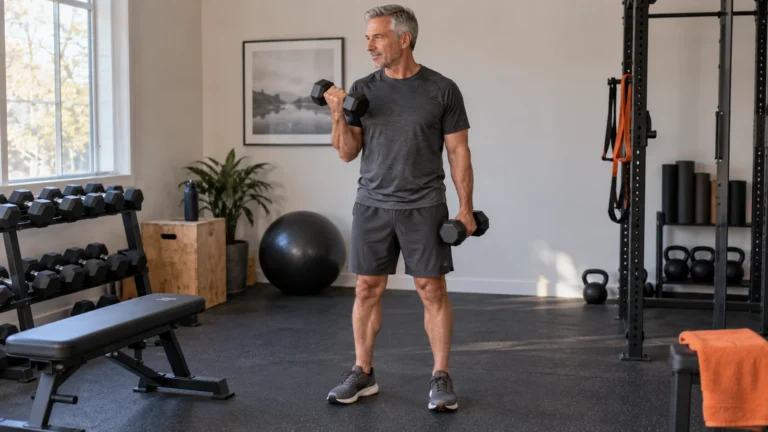
Train biceps and triceps with a dumbbell arm workout that fits your week. Compare curl and extension options, log both sides and avoid doubling sets.
- Curls and extensions cover different elbow actions.
- Rows and presses belong in your workload record.
- A short arm block can replace extra accessory work.
Bottom line Choose one curl and one suitable triceps movement, then record the work you actually complete on both sides.

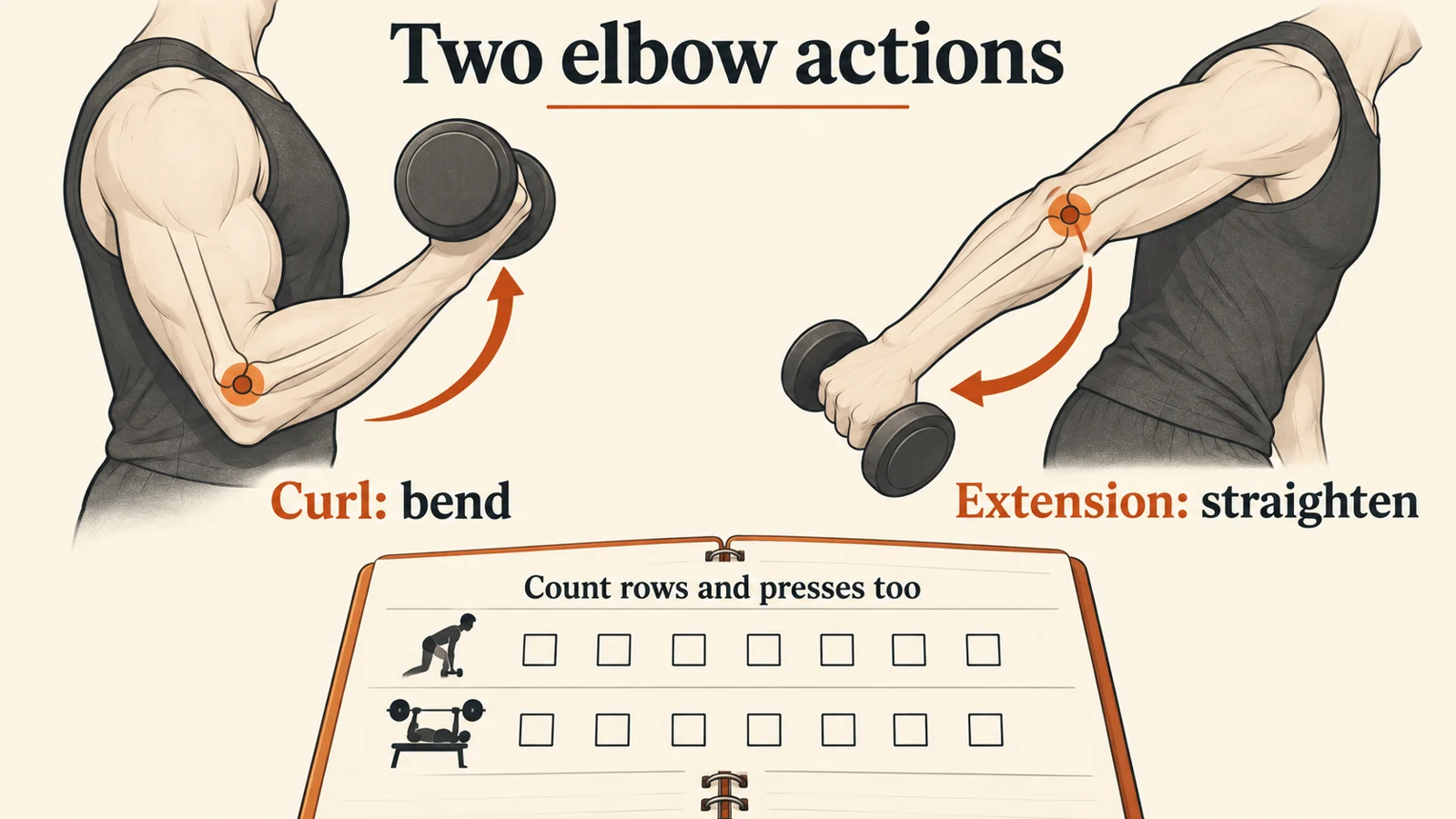
A dumbbell arm workout can start with one curl and one triceps movement. The curl bends the elbow; the triceps exercise straightens it. Choose versions you can repeat and fit them around the rows and presses already in your week.
Quick Summary: Dumbbell Arm Workout
- Curls and extensions cover different elbow actions.
- Rows and presses belong in your workload record.
- A short arm block can replace extra accessory work.
The Prime Perspective
A short arm block is easier to record and fit around the rest of your training. Choose direct work that serves a gap in your present routine.
Start from the complete dumbbell week if you do not yet have a balanced routine. This guide provides accessory sessions, not a replacement for lower-body training, pulling, pressing or your cardio plan.
Choose a curl and a suitable triceps option
A palm-up curl and a neutral-grip hammer curl are two choices for elbow-flexion work. You can alternate them between sessions without doing every variation at once. A supported kickback is one triceps option; a familiar close-grip floor press provides compound pressing when that setup suits you.
These movements have different loading demands. A curl weight may be too heavy for a strict kickback. Record the setting separately, even when both exercises use the same dumbbell. For an adjustable model, follow its locking and handling instructions before every change.
| Choice | Setup | Practical limit |
|---|---|---|
| Standing or supported seated curl | Secure grip, quiet torso, comfortable wrist position | Avoid leaning backward to finish. |
| Hammer curl | Palms face inward during the repetition | It is a different grip, not a guarantee of pain relief. |
| Supported kickback | Stable hand support or a familiar thigh-supported hinge | Keep the upper arm steady; use a load that allows elbow control. |
| Familiar close-grip floor press | Comfortable floor transfer and manageable two-dumbbell setup | This is compound pressing and also adds chest and shoulder work. |
Optional equipment for this setup
Use the equipment you already have when it meets the plan. We have not hands-on tested these models. The current catalog and product images were checked on October 7, 2026; specifications and variants can change.
As an Amazon Associate, PrimeForMen earns from qualifying purchases. The links below are affiliate links. Check the selected variant and current instructions before buying.

PowerBlock Elite EXP Stage 1 pair
A selectable pair for recording the same load on repeated sessions.
- The catalog lists two dumbbells with 5–50 lb settings per hand.
- Check the exact edition and selector instructions before handling weights.
- Compare the minimum load and increments with your lightest exercise.
Skip it: Keep your current dumbbells if their load and increments already suit the movements.

YOLEO adjustable bench
An optional support for the bench-based variations in this guide.
- Read the exact manual for permitted positions, locks and loading.
- Check stability, floor contact and space around the moving weight.
- A catalog load headline does not establish suitability for every supported exercise.
Skip it: Skip a bench purchase when the floor, standing or suitable existing support option meets your plan.

Ultimate Workout Journal
A paper record for loads, repetitions and the setup that produced them.
- Record the exact movement and load unit rather than a vague workout score.
- Keep left and right results separate when the movement is unilateral.
- Use a new page to compare repeated conditions and planned changes.
Skip it: An ordinary notebook or the free worksheet below does the same recording job.
Two arm sessions to alternate
Use one session at a time. These editorial examples are for adults already comfortable with the chosen movements. Begin with several minutes of easy movement and very light rehearsal sets. If returning after a break, start with one set of each movement before using the full block.
For one-sided work, perform the repetitions on each side, reset your stance and then take the main rest. Rest 60–90 seconds after both sides, or longer when technique or breathing needs it. Leave about two or three controlled repetitions available. Allow roughly 15–25 minutes with warm-up and side changes.
| Session | Curl work | Triceps work |
|---|---|---|
| A | Palm-up curl: 2 × 8–12 each side | Supported kickback: 2 × 10–15 each side. |
| B | Hammer curl: 2 × 8–12 each side | Same suitable kickback: 2 × 10–15 each side. |
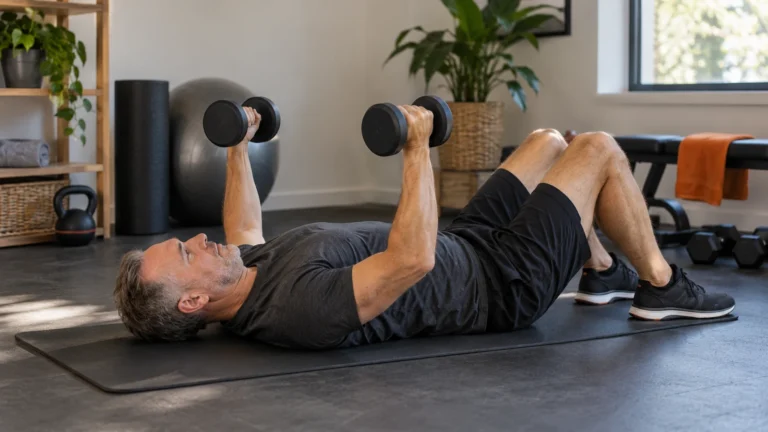
| Floor-press alternative | Keep the selected curl | Replace the kickback with a familiar close-grip floor press: 2 × 8–12, resting 90–120 seconds. |
The floor-press alternative replaces the kickback. Do not add it automatically on top of the two sessions and all your existing chest work. If neither triceps setup is comfortable or familiar, practice the curl only and leave the unresolved movement out of the plan.
Curl with a steady upper body
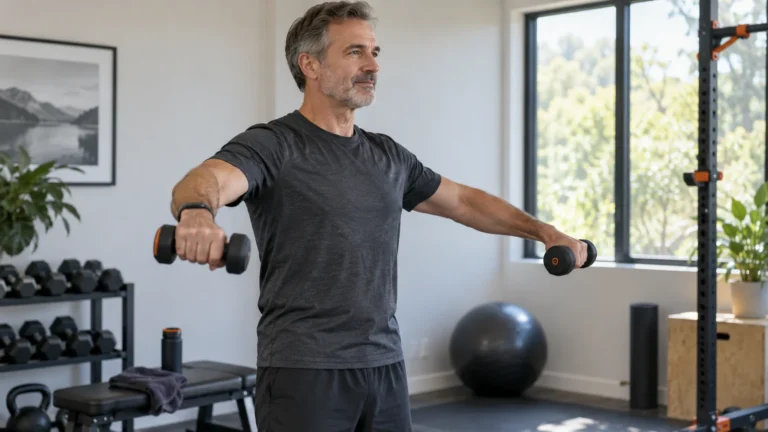
Stand on firm footing with the weights by your sides, or sit on a stable suitable seat if that position is familiar. Keep the wrists aligned with the forearms. Bend the elbows to bring the weights upward through a comfortable range, then lower without dropping or swinging them.
A little natural movement is different from using the hips to throw the dumbbell upward. If every repetition becomes a backward lean, lower the load. For alternating curls, one repetition on the left plus one on the right is one repetition per side, not two per side.
The ACE seated curl instructions describe supported positioning and wrist alignment. You do not need to force the handles against your thighs if your anatomy makes that position uncomfortable. Keep the version repeatable rather than chasing a rigid visual template.
Use the elbow action in a supported kickback
Establish a familiar stable hinge and hand support before lifting the dumbbell into the working position. Keep the upper arm close to the torso. From a bent elbow, straighten it under control, then return without swinging the shoulder or arching the back to lift the weight.
A light load is often more workable here than the weight you use for a curl. If holding the torso or upper arm becomes the main struggle, stop and adjust the setup while unloaded. The ACE kickback reference illustrates a thigh-supported version. A purpose-built bench is another support option when its shape and stability fit the movement.
You do not have to add an overhead extension to cover the triceps in this starting block. Overhead handling and shoulder position create another task to learn. If you already use that movement comfortably, treat it as an alternative with its own load and record rather than an automatic extra exercise.
Two elbow actions, one arm session
Abstract hinges show elbow flexion in a curl and elbow extension in triceps work. This is a movement concept, not an exercise-form demonstration.
Silent 8.5-second schematic. Motion pauses outside the viewport. Reduced-motion settings keep manual playback. Open the MP4 directly.
Direct arm sets and compound sets are not interchangeable
Rows involve elbow flexion and presses involve elbow extension, so both belong in the workload record. That does not mean one row set is exactly equal to one curl set for every person or goal. Avoid a calculator that converts them into a precise universal arm-volume score.
For example, a week with three row sessions and three pressing sessions already contains repeated arm involvement. Begin by replacing existing curls and extensions with one of these blocks. Adding two full arm days immediately may create more work than you intended. Keep the row routine and pressing routine visible alongside the direct sets.
If grip, elbow or shoulder fatigue affects the next main session, reduce the accessory demand and review timing. Keep at least a recovery day between demanding sessions for the same movements as a starting arrangement, then adjust to your response and any professional plan.
Progress each exercise from its own log
An illustrative curl record might be left 10/10 and right 10/9. Repeat the setup and aim for controlled repetitions within the prescribed range. When the selected sets reach the upper end on repeated comfortable exposures, consider the smallest usable increase.
Keep the kickback progression separate. More weight with a swinging upper arm is a changed movement, not clear evidence that elbow-extension strength improved. When the next setting is too large, keep the present weight, record the limitation and compare equipment only if it becomes a persistent obstacle. The progression guide includes examples of large load jumps.
A pump, soreness or the circumference of an arm immediately after training does not establish lasting muscle growth. Judge the training process through comparable performance and a manageable week. Visible change also depends on factors this short accessory routine does not control.
Technique demonstration: NASM dumbbell hammer curl
NASM demonstrates the neutral-grip hammer curl used in Session B. The clip does not demonstrate the kickback or prescribe the whole arm workout.
Keep the smaller session when it serves the week
A single curl set and a single extension set can be a reasonable learning block for someone returning to training. The larger example is an option to build toward, not an entry requirement. Use the short-workout guide when time is the main constraint.
Stop for sharp or worsening elbow, wrist or shoulder pain, tingling, unusual weakness or loss of control. Persistent or injury-related symptoms need qualified assessment. Changing to a hammer grip may change the movement, but it cannot diagnose or resolve a tendon or nerve problem.
When discomfort or declining performance affects several sessions, review recovery and workload before adding more sets or buying a grip accessory. The log is useful evidence to bring to a qualified coach or clinician; it is not a diagnosis.
Curl and extension record
This helper organizes your choices; it cannot assess technique, symptoms, equipment safety or personal suitability. Entries stay in this page’s memory and are not saved or sent. Print the current record before leaving.
Record your selected setup, loads, repetitions, rest and other work in a notebook or the blank PDF below. For unilateral work, three sets of eight on each side means 24 left and 24 right repetitions. Keep unknown attachment or handling details unresolved until checked.
The helper printout includes current choices and notes. The downloadable PDF is a separate blank fillable record and does not import your entries.
Download the fillable training record
The one-page PDF has eight editable fields for your setup, work and next session. It starts blank; it does not receive the helper entries. Save a copy after filling it in a PDF reader, or print it and write by hand.
What a workout table cannot decide
The repetitions describe an example session. They cannot establish whether a movement, load or attachment suits you. Record the unresolved detail, reduce the task when needed and get qualified help for persistent symptoms or an unfamiliar setup.
Your next session
Use this dumbbell arm workout guide to choose a repeatable setup and a manageable amount of work. Choose one curl and one suitable triceps movement, then record the work you actually complete on both sides.
The 2026 ACSM resistance-training overview supports regular work across the major muscle groups and gradual progression. The detailed sessions on this page are editorial examples; they are not ACSM protocols or individually prescribed plans.
Frequently asked questions
Are two exercises enough for an arm session?
One suitable curl and one triceps movement make a focused starting block. The amount you use should account for training history and the rows and presses in your week.
Should the curl and kickback use the same weight?
Choose separately. The position and lever differ, so a curl load may be too heavy for a controlled kickback.
Do rows count as biceps sets?
Rows involve the elbow flexors and belong in the workload record. There is no precise universal conversion from a row set to a direct curl set.
Is a hammer curl better if my elbow hurts?
A different grip changes the movement, but it does not diagnose or treat the cause of pain. Stop when symptoms change technique and seek assessment for persistent or injury-related problems.
Can I train arms every day?
Daily hard direct work is unnecessary for these examples and can interfere with other sessions. Start with a manageable arrangement and recovery between demanding exposures rather than chasing a daily pump.
General fitness education for adults, not a diagnosis, rehabilitation plan or medical clearance. Follow any restrictions from your clinician. Stop for sharp or worsening pain, dizziness, unusual breathlessness or loss of control. Seek urgent care for severe or sudden symptoms.