Compare hybrid gyms by access, coaching and total cost. Use the budget calculator, home-session checklist and printable membership review.
- Separate access, videos and personal feedback
- Plan a home alternative before you need it
- Compare fees against realistic use
Bottom line Test the arrangement with a normal week and a full cost list before adding equipment or subscriptions.
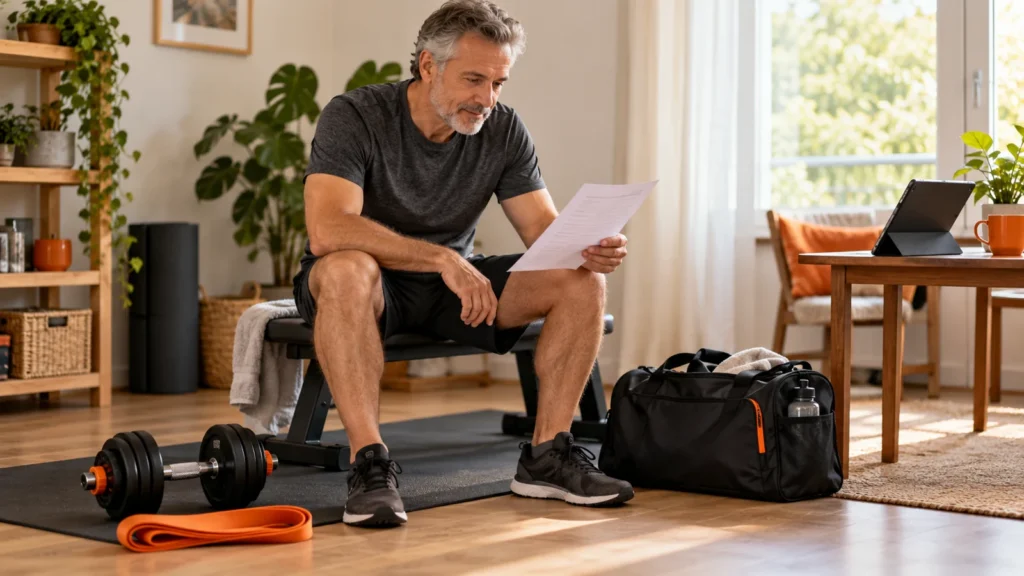
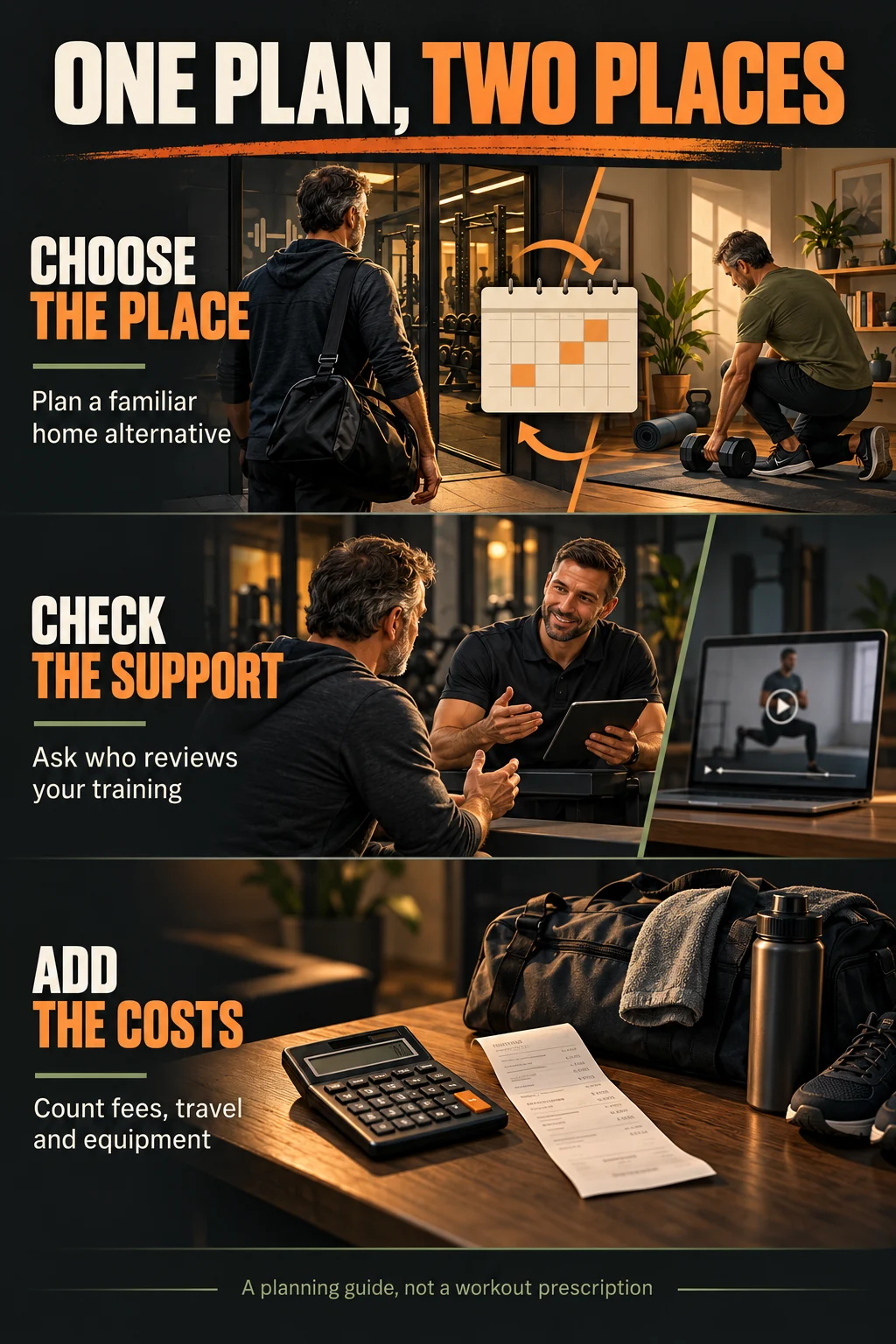
Hybrid gyms combine access to a physical training space with options you can use elsewhere, such as home workouts, an app or remote coaching. A useful arrangement gives each part a clear job: equipment or feedback at the gym, a familiar alternative at home and one record of what you actually did.
Quick Summary: Hybrid Gyms
- Check what the membership includes: facility access, videos and personal feedback are separate services.
- Plan a suitable home alternative for a disrupted gym day.
- Compare fees, travel and equipment against visits you can realistically make.
- Try the arrangement before committing to extra subscriptions or equipment.
What does a hybrid gym membership include?
The term describes several arrangements. A club may bundle online classes with its membership, a coach may combine appointments with remote programming, or you may build your own mix of gym access and home training. “Hybrid training” can also mean combining strength and endurance; this guide focuses on where and how you access training.
| Arrangement | Potential use | Verify before paying |
|---|---|---|
| Club + video library | Access to the facility and demonstrations or classes elsewhere | Whether videos are included and whether anyone reviews your work |
| Coach + remote plan | Appointments plus instructions between visits | Who updates the plan, feedback method and response time |
| Gym + your own home setup | A familiar alternative when a visit falls through | Which exercises you can perform and what equipment they actually need |
| Digital-only membership | Online content or support without a facility commute | Whether physical access is excluded and which services cost extra |
For a current example, Life Time lists digital access among its club-membership benefits. That inclusion is not a promise of ongoing one-to-one coaching. In the UK, Better distinguishes its standalone digital option from physical facility access. These illustrate different packages, not a ranking or a price comparison. Confirm the terms for your location and chosen tier.
Choose the problem you want the membership to solve
Review a recent ordinary week. Where did your plan break: getting to the facility, knowing what to do, performing an exercise confidently or finding support? Choose the service that addresses that problem. An app cannot supply a missing cable machine, and an equipment room does not automatically include a coach’s attention.
If technique is uncertain, ask about an induction or individual session and the coach’s relevant qualifications and experience. For remote feedback, ask how you submit video, which camera angles are needed, who responds and how you handle an exercise that causes difficulty. A prerecorded class cannot observe you. Live video can provide feedback, but its usefulness depends on what the coach can see and on the service agreed.
If the problem is planning, request a sample session with exercises, intended effort, sets or duration, rest and a progression method. A class library provides content; check separately for individual programming and feedback. Our guides to fitness apps and fitness streaming platforms can help you compare those uses.
Keep evidence about apps in its proper context
A 2023 review of personalized exercise-video apps found low-quality evidence of improvements in function and confidence. It covered rehabilitation programs prescribed by health professionals, and all included studies had high overall risk of bias. Effects on exercise adherence were uncertain. It does not establish that a consumer hybrid membership, a generic video library or the equipment below improves your results.
Optional equipment for a defined home session
Affiliate disclosure: As an Amazon Associate, PrimeForMen earns from qualifying purchases through these links.
Check your planned activity and existing equipment first. These products address different tasks; buying all three is unnecessary. Recommendations use current catalog information, not independent hands-on testing. Confirm the current listing and instructions before ordering.

THERABAND non-latex beginner band set
Best for: Portable resistance for familiar band exercises when the resistance range suits your plan.
Who should skip: Skip it if you need heavier loading or already have suitable bands. A non-latex label does not guarantee suitability for every sensitivity.
- The selected set contains yellow, red and green flat non-latex bands.
- Each band is listed as 5 feet long and 4 inches wide.
- Inspect for wear and follow the instructions; a band is not a substitute for every gym exercise.
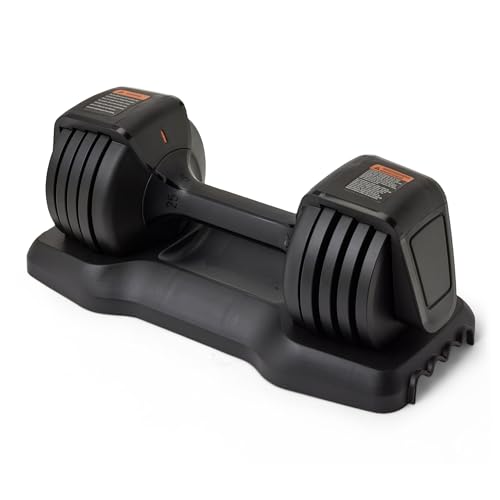
Amazon Basics adjustable dumbbell, single 25 lb unit
Best for: A compact adjustable weight for exercises you already know how to perform safely.
Who should skip: Skip it if the load range or 5 lb steps do not suit your exercises. The selected listing is one dumbbell, not a pair.
- Five settings: 5, 10, 15, 20 and 25 lb on one dumbbell.
- The catalog includes a storage tray and handle-based adjustment.
- Check the locking setup before each lift and follow the manufacturer’s instructions.

UGREEN adjustable desktop tablet stand
Best for: Keeping a compatible device visible on a stable surface outside your movement area.
Who should skip: Skip it if your existing stand or television works, or the device and case exceed its limits. It is not a floor tripod.
- The catalog specifies devices from 4 to 11 inches, up to 0.55 inches thick including a case.
- The viewing angle adjusts and the stand folds for storage.
- Check stability and camera framing before a session; the stand does not provide coaching.
Make the gym and home sessions part of one plan
Choose the gym sessions you can usually attend, then decide what happens when one becomes impractical. Agree on a familiar home alternative before the busy evening arrives. Keep the purpose clear, and write down any difference in exercise, load, repetitions or duration.
A home alternative can replace the planned activity for that slot without providing the same training stimulus. Light bands do not reproduce every machine or heavy lifting task. If your main goal depends on equipment unavailable at home, rescheduling the gym session may be more appropriate. Do not automatically add both sessions later to make up a missed visit.
| Usual plan | Disruption | Alternative to agree on |
|---|---|---|
| Familiar gym strength session | Cannot reach the gym | Adapt familiar movements to available resistance, or reschedule if the equipment is essential |
| Class at a fixed time | Work runs late | A suitable recorded class you have previewed, with space and time to prepare |
| Technique appointment | Cannot attend in person | Ask whether live video can serve the purpose; do not assume an unsupervised substitute will |
| Recovery or rest | A new workout appears in the app | Keep the planned easier day when that remains appropriate |
The CDC’s general adult activity guidance calls for at least 150 minutes of moderate aerobic activity, or 75 minutes vigorous or an equivalent mix, plus muscle-strengthening activity on at least two days covering all major muscle groups. This is a public-health reference, not a requirement to start at that amount immediately. Build appropriate activity around current ability and restrictions; some activity is better than none.
Choose suitable activity for your current ability; a membership package cannot determine the dose. Use strength training basics for general principles and account for the rest of your week using our rest and recovery guide.
Watch: change the place, keep the plan connected
One calendar slot changes from an unavailable gym visit to a home alternative. The record stays with the plan, so you can note the activity you actually completed. The illustration does not add a second session or imply the two options provide equal training.
Silent 8.5-second planning illustration. Open the MP4 directly. Playback pauses offscreen; reduced-motion preferences keep playback manual.
Check that the home option works in your room
Preview the session before buying equipment. Check that you have room for the intended movements, a clear floor, stable footing and a screen position you can see without twisting during an exercise. Keep equipment, children and pets outside the movement area. A camera view for feedback may require more clear space than simply watching a video.
Use familiar movements and resistance you can control. Inspect bands for damage, follow their instructions and keep them away from sharp edges. Do not improvise a door or furniture anchor. Check adjustable weights are secured according to their instructions before lifting. Choose equipment after you know which activity you will do.
Our strength training at home guide covers broader training choices. For a larger setup, start with the space and equipment decisions in home gym equipment.
Watch: what a home band demonstration looks like
British Heart Foundation exercise physiologist Hara Markos demonstrates resistance-band movements with standing and seated options. Preview the instruction, space and equipment needed before choosing an appropriate activity. The approximately seven-and-a-half-minute video does not replace individual advice or establish equivalence to a gym workout. Follow existing restrictions and seek advice if suitability is uncertain.
Watch on YouTube or read BHF’s accompanying guidance. This is an exercise demonstration, not an endorsement of the products above.
Compare the full cost of the arrangement
Ask for the full price in writing. Include the facility membership, paid digital or coaching add-ons, joining and annual fees, home equipment, and travel or parking. Check whether an app is already included before paying for overlapping content elsewhere.
Use the same time basis. An annual fee can be divided by 12 for a monthly average. A charge every four weeks is not a calendar-month charge: a 52-week illustration contains 13 four-week periods, so its approximate monthly equivalent is the charge multiplied by 13 and divided by 12. Actual billing dates and contract terms still matter.
| Item | Assumption | Calculation |
|---|---|---|
| Facility + digital | $60 + $10 per month | $70 per month |
| Travel | 8 facility visits at $4 round trip | $32 per month |
| Recurring spend | Same costs and visits for 12 months | $102 monthly; $1,224 yearly |
| Joining + equipment | $30 + $120, with $0 annual fee | $150 in the first year |
| First-year total | $1,224 + $150 | $1,374 |
| Planned sessions | 8 facility + 4 home each month | 144 per year; $9.54 per planned session |
The final figure spreads the whole arrangement’s first-year cost across all planned sessions. It is not a drop-in gym price, a comparison of equal workouts or a measure of health value. Counting more home sessions lowers it mathematically without proving you will do them or benefit from them. Replace assumptions with attendance records when reviewing the arrangement.
Build a first-year budget card
Enter illustrative or quoted costs in USD. Use calendar-month amounts and mutually exclusive session counts. Results assume the same spending and attendance plan for 12 months; they do not predict actual attendance or training results.
Start with the full cost and a realistic week
The worked example costs $102 per month, plus $150 in one-time costs: $1,374 for the first year. Twelve planned sessions per month give $9.54 per planned session.
Choose the service that addresses the reason your current plan breaks down.
Without JavaScript, use the worked example and downloadable review. Formula: 12 × (monthly facility + monthly add-on + round-trip cost × monthly facility visits) + annual fee + joining fee + home equipment.
Per-session figures divide the whole first-year cost by all planned facility and home sessions. They do not compare equal workouts or establish savings, health value or exercise suitability.
Questions to ask before signing up
Ask to try the facility at the time you would actually visit. Check access hours, booking limits, class availability, equipment queues and whether you need a separate appointment for coaching. Test one digital session on your own device and connection.
For the agreement, check the minimum commitment, renewal date, notice period, cancellation route and any joining, annual, freeze or reactivation fees. Ask whether cancellation of gym access also ends paid digital services, and whether your training log or purchased content remains available. Use these questions to check the agreement; this guide does not explain your legal rights.
For personal information, ask what is recorded, who can see it, whether video uploads are stored, and how to export or delete your data. Check whether optional wearable connections can be declined. Avoid entering unnecessary health details in an app merely to unlock a feature.
Does wearable data change a useful decision?
You do not need a wearable to use a hybrid gym. If you already have one, decide what you will do with its information before adding a subscription. A device reading or proprietary readiness score does not diagnose a problem or clear you to exercise. Report symptoms and follow individual advice even when an app presents a favorable score.
Try the arrangement in an ordinary week
During a trial or other short review period you choose, record the sessions you planned, attended, replaced or missed. Note why a plan changed and whether the app or coach helped resolve the problem. Keep actual spending alongside the record.
Review whether you can open the next session easily, get a useful answer when needed and follow the plan with equipment you already own. Ask about changing or ending unused services before the relevant contract deadline.
Take the questions to your membership trial
Use the one-page review for the quoted services, feedback contact, fees, contract questions and actual use. Keep unanswered questions visible before committing. To print your current budget inputs and checked items, use the calculator’s print button.
Conclusion: test the arrangement before expanding it
Bring one ordinary training week and a full cost list to the comparison. Ask the gym to show how facility access, home alternatives and feedback work together. If you cannot identify a role for an added service, leave it out while you test the basic arrangement.
Hybrid gyms questions
Are hybrid gyms better than a regular gym?
They offer different access and support options. Whether those help depends on your schedule, training needs and the services actually included. A regular gym with a workable plan may already provide what you need.
Does app access include personal coaching?
Not necessarily. Ask whether you receive only prerecorded instruction or a named person who reviews your work and updates the plan. Confirm feedback method, response time and any extra charges.
Can a short home workout replace a gym session?
It can be a practical alternative for a disrupted slot, but it may not provide the same exercises, load or training dose. Agree on suitable substitutions and record what changed. Reschedule when the gym equipment or supervision is essential.
What equipment should I buy first?
Preview a suitable, familiar home activity and check what you already own before buying equipment. Bands, a single adjustable weight and a screen stand solve different tasks; none is automatically necessary.
How should I compare the cost?
Use a common time period and include fees, digital add-ons, travel and equipment. Use realistic attendance assumptions, then compare them with actual use. Cost per planned session is an arithmetic aid and cannot establish training quality or health value.
Prepared by the PrimeForMen Editorial Team. The hero image and infographic are generated illustrations, not records of a personally tested program. Product recommendations use catalog facts rather than independent hands-on testing. Sources are linked beside relevant claims. Read our editorial policy.