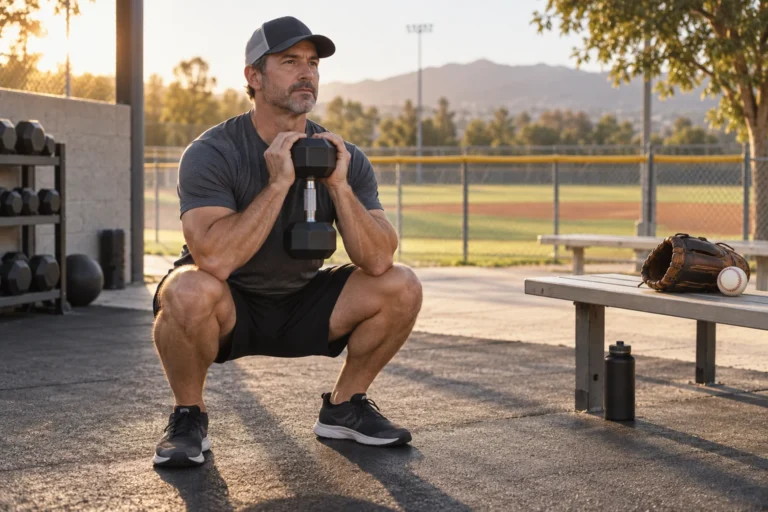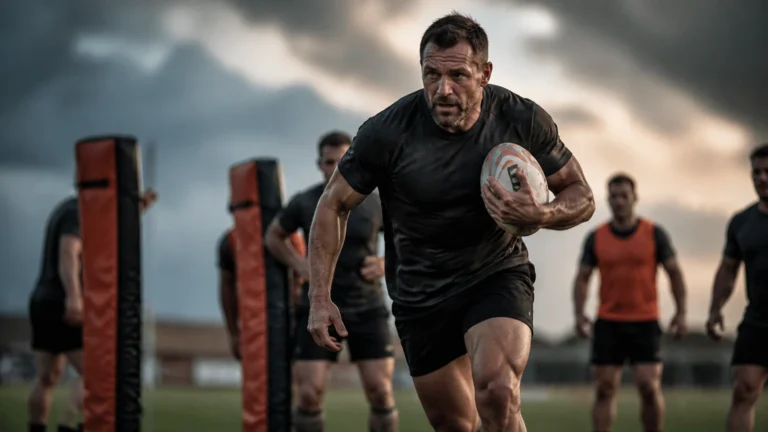
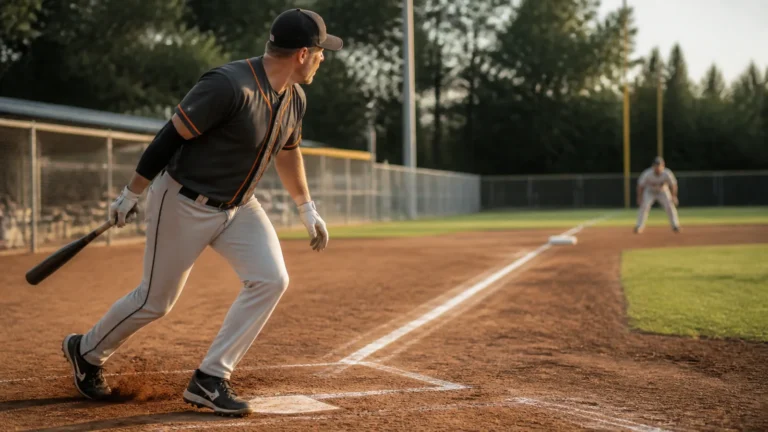
Softball workouts for men: train throwing, rotational power, sprinting, deceleration, strength, and conditioning with a practical weekly plan.
- A hard swing starts with force into the ground, not just stronger arms.
- Throwing volume must be progressed separately from gym volume.
- Speed work belongs before fatigue changes mechanics.
Bottom line Train legs, trunk, shoulder capacity, acceleration, and skill as one system—and arrive at games fresh enough to use it.
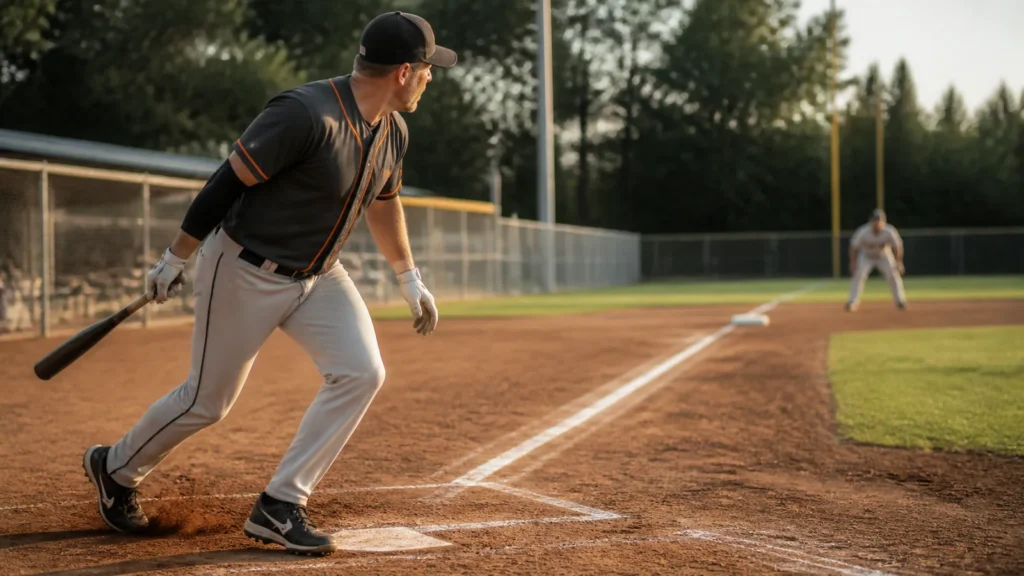
Softball Workouts works when every session has a defined job and the weekly load remains recoverable. The plan below separates technique, endurance, speed, strength, and recovery so effort produces adaptation instead of random fatigue.
This is a general training framework, not an individualized medical or coaching prescription. Adjust it for your sport history, current capacity, equipment, and competition calendar.
Quick Summary: Softball Workouts for Men
- Softball demands short accelerations, braking, lateral movement, throwing, and repeated rotational efforts.
- Strength work should connect lower-body force to trunk control and upper-body expression.
- Throwing-related injury evidence is limited, so workload progression and symptom monitoring matter more than a magic prevention circuit.
- Medicine-ball throws, jumps, and sprints should stop when speed or coordination clearly drops.
- Shoulder pain, loss of velocity with pain, numbness, or persistent elbow symptoms warrant qualified evaluation.
The Prime Perspective
The diamond rewards usable power. A bigger squat matters only if you can accelerate, stop, rotate, throw, and recover without your mechanics unraveling.
A complete softball workout includes a dynamic warm-up, short acceleration and deceleration work, throwing or hitting skill, low-volume power training, full-body strength, and conditioning that reflects short game actions rather than nonstop fatigue.
The Six Physical Demands of Softball
| Demand | Game example | Training option | Common mistake |
|---|---|---|---|
| Acceleration | First steps out of the box | 10–20 yard sprints | Conditioning before speed |
| Deceleration | Stopping at a base or fielding | Planned braking drills | Only training forward speed |
| Rotation | Swinging and throwing | Medicine-ball throws | Using loads too heavy to move fast |
| Throwing capacity | Position-specific throws | Progressive throwing plan | Sudden volume spikes |
| Strength | Force into the ground | Squat, hinge, split stance, row | Arm-only training |
| Repeat effort | Multiple innings and at-bats | Short shuttles with recovery | Long punishment runs |
Amazon Product Shortlist
These tools can organize warm-ups and practice. PrimeForMen has not independently tested them, and no band or swing device prevents injury by itself.

Jaeger J-Bands Resistance Bands
For a structured shoulder and throwing warm-up after a coach or clinician teaches the appropriate sequence.
- Built for baseball and softball arm routines.
- Portable for field warm-ups.
- Band work does not replace throwing-load management.

Power Swing Pro Resistance Trainer
For low-volume resisted swing practice when it preserves normal sequence and bat path.
- Five adjustable resistance settings.
- Designed for baseball and softball swing practice.
- Use sparingly before normal-speed swings.

Super Z Outlet Training Cones
For marking sprint starts, shuffle distances, braking zones, and base-running courses.
- Twenty-four high-visibility cones.
- Multiple colors simplify drill cues.
- Measure distances instead of guessing them.
*As an Amazon Associate, PrimeForMen earns from qualifying purchases. Availability and prices can change.
Warm Up From General to Specific
- Raise temperature with five minutes of easy movement.
- Use dynamic ankle, hip, thoracic, and shoulder movements.
- Perform skips, shuffles, and two or three progressive accelerations.
- Use light shoulder-band work if it is already part of a taught routine.
- Build throws from short and easy to longer and firmer.
- Take controlled practice swings before full-speed hitting.
The warm-up should make the next task feel prepared. It should not drain the shoulder or turn into a 30-minute workout of its own.
Track throws by approximate number, distance, intensity, position, and symptoms. Increase only one major demand at a time, and treat practices, warm-ups, games, and casual extra throwing as part of the same weekly workload.
A Two-Day Softball Strength Plan
Day A — Force and acceleration
- Medicine-ball scoop toss: 4 x 3 per side
- Trap-bar deadlift or squat: 4 x 4–6
- Rear-foot-elevated split squat: 3 x 6–8 per side
- Chest-supported row: 3 x 8–12
- Push-up or dumbbell bench: 3 x 6–10
- Suitcase carry: 3 x 20–30 yards per side
Day B — Power and braking
- Broad jump: 4 x 3 with full reset
- Romanian deadlift: 3 x 6–8
- Lateral lunge: 3 x 6–8 per side
- Half-kneeling cable or band press: 3 x 8 per side
- Face pull and external rotation: 2–3 x 10–15
- Pallof press: 3 x 8–12 per side
Train Rotation Without Chasing Fatigue
Rotational power begins with force into the ground and transfers through the hips and trunk. Use light medicine-ball scoop tosses, shot-put throws, and step-behind throws. Stop the set when the ball slows, balance disappears, or the finish changes.
Do not confuse rotational strength with endless twisting under fatigue. Anti-rotation work such as Pallof presses and suitcase carries helps the trunk manage force, while hitting and throwing practice teach the sport-specific sequence.
Build the Throwing Shoulder as Part of a Chain
A systematic review of throwing-injury prevention in softball found limited position-specific program evidence. Fatigue, range-of-motion restrictions, and strength imbalance appeared as risk factors, but the authors found only one detailed prevention program.
That uncertainty matters. Do not claim one band circuit “bulletproofs” the arm. Build lower-body strength, lumbopelvic control, balanced upper-body capacity, and gradual throwing exposure. A small trial in NCAA Division I players found improved throwing velocity after closed-chain upper-body training, but it involved only 14 athletes and does not establish a universal routine; see the original softball study.
Speed and Agility: Start With Braking
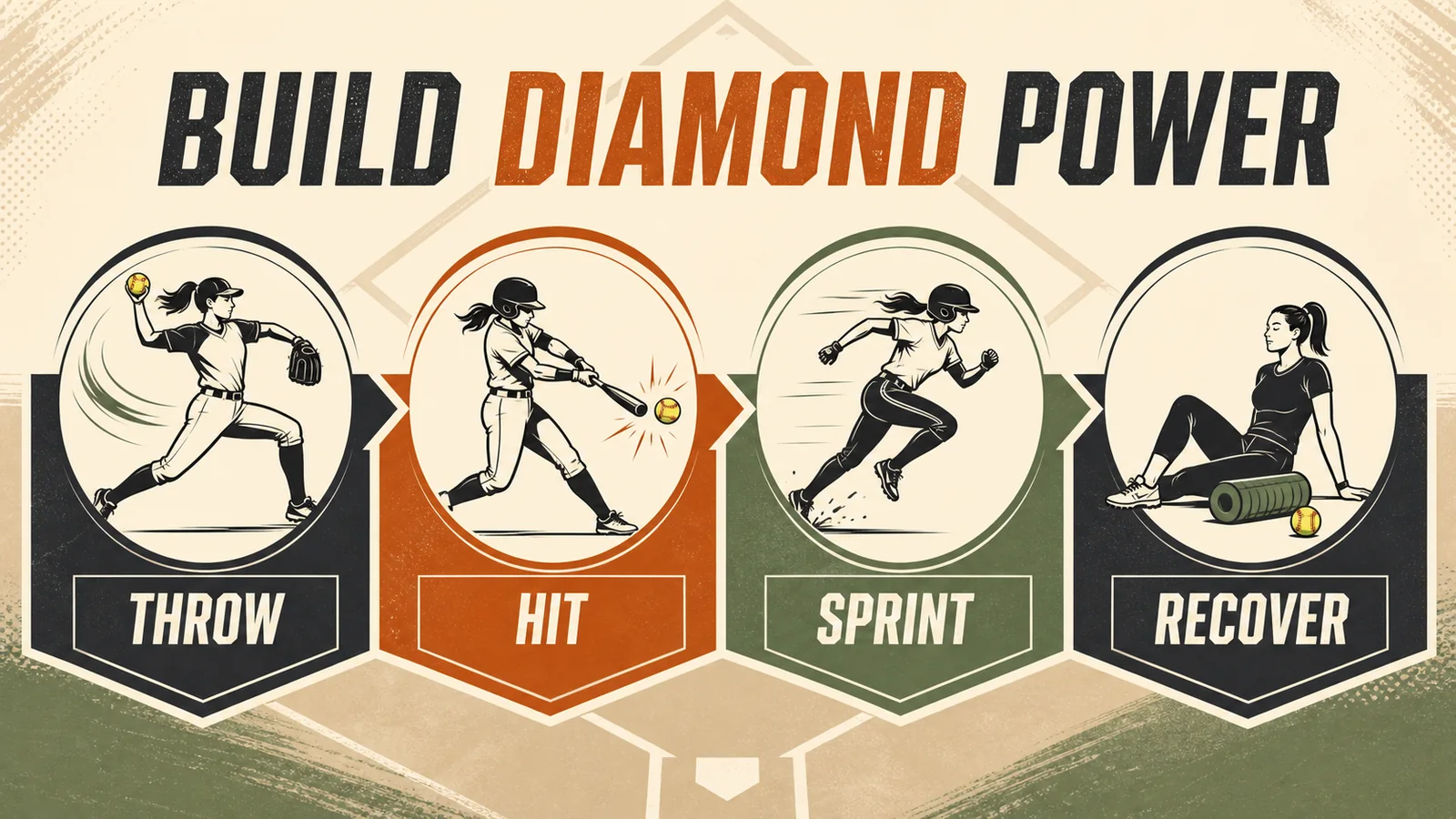
Game speed includes the first three steps, reading the ball, changing direction, and stopping under control. Use measured distances and full enough rest that the drill stays fast.
- Acceleration: 6 x 10 yards from different starts, 60–90 seconds rest.
- First-to-second: 4–6 curved accelerations with complete recovery.
- Deceleration: accelerate 10 yards, stop inside a 3-yard zone, then widen or narrow it gradually.
- Lateral fielding: shuffle on a visual cue, set the feet, simulate a clean throw.
Condition for Innings, Not Punishment
Softball contains brief actions and long pauses. Easy aerobic work can improve general recovery, while short shuttles or tempo intervals prepare repeated efforts. A practical session is two sets of six 10-second efforts with 50 seconds easy and three minutes between sets. Finish before mechanics turn sloppy.
An In-Season Week
| Day | Main work | Load decision |
|---|---|---|
| Monday | Strength A + short sprints | Highest gym stress |
| Tuesday | Skill practice and throwing | Track arm volume |
| Wednesday | Easy aerobic recovery | Conversational |
| Thursday | Strength B, reduced volume | Keep power fast |
| Friday | Short skill primer | Finish fresh |
| Saturday | Game | Count warm-up and throws |
| Sunday | Rest or easy movement | Review symptoms |
Throwing, batting practice, games, and lifting are not separate stress universes. The shoulder and trunk experience the total. Put every high-output exposure on one weekly calendar before adding more work.
Support the Diamond With Smarter Training
Use unilateral training, resistance-band training, core workouts, lower-body work, change-of-direction conditioning, and recovery planning to fill specific gaps.
What to Do This Week
- Count current weekly throws and games before adding arm work.
- Perform two full-body strength sessions with single-leg and pulling work.
- Add six to eight high-quality 10- to 20-yard sprints.
- Use low-volume medicine-ball throws before batting practice.
- Reduce volume if shoulder, elbow, back, or groin symptoms rise.
Conclusion
Train legs, trunk, shoulder capacity, acceleration, and skill as one system—and arrive at games fresh enough to use it.
Next Step: Build the Full Sports-Specific System
Connect this program to the PrimeForMen sports-specific training guide so skill, strength, conditioning, and recovery support the same goal.
Softball Workouts: Frequently Asked Questions
What are the best softball workouts?
The best softball workouts combine lower-body and pulling strength, rotational power, shoulder capacity, short sprints, deceleration, and position-specific skill without exhausting every quality in one session.
How often should softball players lift weights?
Two full-body sessions per week work well for many recreational players. In-season volume may drop while intensity is maintained and throwing and games take priority.
Do medicine-ball throws improve hitting power?
They can train rapid force transfer and rotation, but they are a supplement. Use light enough loads to move fast and pair them with actual batting practice.
How should I warm up my throwing arm?
Raise body temperature, move the shoulder and trunk dynamically, use light band work if appropriate, then progress from easy short throws to longer or harder throws gradually.
Should softball conditioning include long runs?
Easy aerobic work can support recovery, but game-specific conditioning should also include short accelerations, lateral movement, and enough rest to preserve speed and mechanics.
This article is educational and does not replace individualized medical advice, diagnosis, or treatment. Discuss persistent symptoms, hormone concerns, cardiovascular risk, digestive problems, medications, or exercise restrictions with a qualified clinician.
Some links are affiliate links. PrimeForMen may earn a commission at no extra cost to you. Product inclusion does not override evidence, fit, or safety.