

See which supplements men over 50 may need, including evidence and safety checks for joint supplements, and what to skip.
- Age alone does not justify a universal supplement stack.
- Food, medications, goals, and verified gaps decide what fits.
- Introduce one justified product at a time and reassess it.
Bottom line Keep every bottle tied to a clear need, dose, safety check, and review point.

The best supplements for men over 50 are the ones that correct a real gap or support a defined training goal. Age alone does not justify a large stack. Start with diet, medications, symptoms, and lab history; then consider protein or creatine for training, vitamin D or B12 when intake or testing supports it, omega-3 when fish intake is low, and fiber when food consistently falls short.
Food, training, sleep, medication review.
Specific need with a clear dose and outcome.
Megadoses, iron, interactions, and miracle blends.
Best supplements for men over 50 should make a targeted job easier—not turn aging into a shopping list. Under the standards in our editorial policy, this is an evidence-led decision guide, not a diagnosis or a universal prescription. If you take medication, have kidney, liver, heart, bleeding, or endocrine conditions, or are preparing for surgery, review supplements with a physician or pharmacist before starting.
Quick Summary: Best Supplements for Men Over 50
- Protein: useful when food does not reliably cover a muscle-preserving intake target.
- Creatine monohydrate: one of the better-supported performance options for resistance training, but still not mandatory.
- Vitamin D and B12: worth considering when diet, medication, absorption risk, or testing indicates a gap.
- Omega-3 and fiber: food-first categories that may help when fish, plants, and whole-grain intake stay low.
- Skip blind stacking: iron, high-dose antioxidants, proprietary testosterone blends, and multiple overlapping formulas can add risk without solving a need.
The Prime Perspective
The question is not, “What should every man over 50 take?” The better question is, “What gap is limiting this man’s health or training, and is a supplement the cleanest way to close it?” That shift prevents a cabinet full of bottles from replacing the basics that move more outcomes.
The Evidence-and-Need Scorecard
| Category | Who may benefit | What to verify | PrimeForMen tier |
|---|---|---|---|
| Protein powder | Men who repeatedly miss protein targets through food | Total daily intake, digestion, calories, product testing | Goal-dependent |
| Creatine monohydrate | Resistance trainees seeking strength and lean-mass support | Plain monohydrate, consistent dose, kidney/medical context | Well supported |
| Vitamin D | Men with low levels, low sun exposure, or clinician-identified risk | Blood level, total intake, medication and calcium context | Test-guided |
| Vitamin B12 | Vegans, low-intake eaters, older adults with absorption risks, some medication users | Diet, symptoms, labs, metformin or acid-suppressing drugs | Need-dependent |
| Omega-3 | Men who rarely eat fatty fish and have a defined reason to supplement | EPA/DHA amount, oxidation, bleeding risk, clinician advice | Diet-dependent |
| Fiber supplement | Men who cannot close a persistent fiber gap with food | Water intake, gradual dosing, medication timing | Food-gap tool |
| Iron | Only when deficiency is identified and the cause is evaluated | Labs and medical investigation | Do not self-start |
| Testosterone boosters | Rarely justified by marketing claims alone | Ingredient doses, evidence, interactions, actual hormone evaluation | Usually skip |
Three Practical Supplement Categories to Compare
These are shopping categories, not universal recommendations. Choose only when the category matches a verified need.
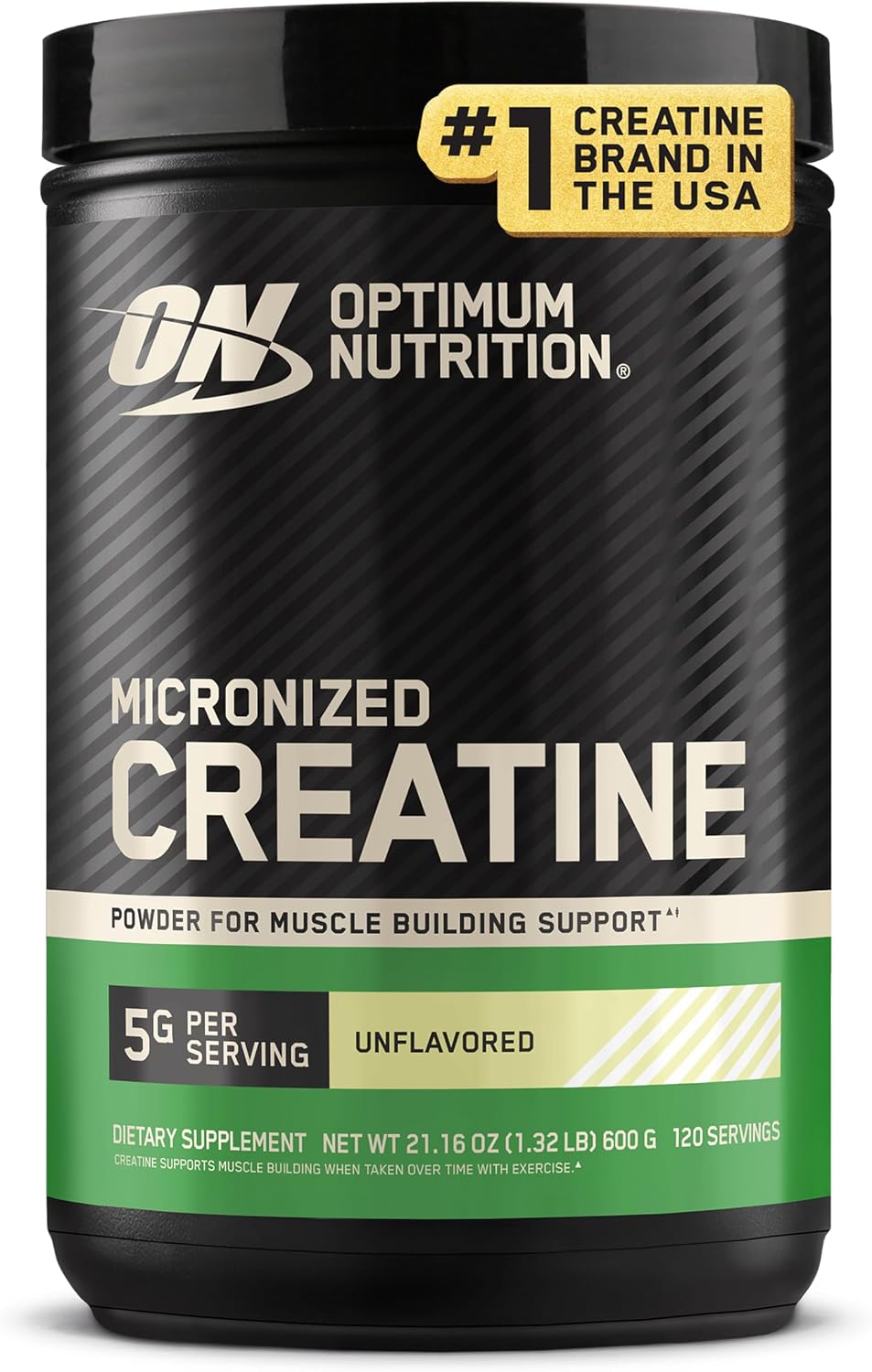
Optimum Nutrition Creatine Monohydrate
A single-ingredient creatine option for resistance-trained men comparing simple formulas.
- Check the current serving size and label.
- Avoid stacking duplicate creatine products.
- Review medical context if kidney health is a concern.

One A Day Men’s 50+ Healthy Advantage
A basic multivitamin option to compare when diet is inconsistent and a clinician agrees a gap-filling formula makes sense.
- Compare amounts with identified nutritional needs.
- Check for overlapping vitamins and minerals.
- Confirm the current label and directions before recurring use.

Dymatize ISO100 Whey Isolate
A protein-powder option to compare when convenience or appetite makes food-based protein inconsistent.
- Compare protein per serving and total calories.
- Choose a form your digestion tolerates.
- Use it to fill a gap, not replace most meals.
*Affiliate disclosure: PrimeForMen may earn a commission from qualifying purchases at no extra cost to you.
1. Protein: Food First, Powder for the Gap
Protein powder is convenience. It is useful when breakfast is low in protein, appetite is limited, or a post-training meal is hours away. It is not automatically superior to dairy, eggs, fish, poultry, legumes, tofu, or meat.
If muscle preservation is the goal, use the Protein Calculator for Men Over 50 to estimate a starting target, then audit normal meals before buying. The protein powder buying guide explains whey, casein, and plant options in more detail.
2. Creatine Monohydrate: Simple Beats Novel
Creatine monohydrate supports repeated high-intensity work and can improve strength and lean-mass outcomes when paired with resistance training. The useful product is usually the boring one: plain monohydrate with a transparent label. Loading is optional; consistency matters more than timing tricks.
Read the complete creatine and protein after 50 guide before combining products. Men with known kidney disease, complex medical histories, or unresolved lab abnormalities should discuss use with their clinician.
3. Vitamin D: Test the Story, Not Just the Bottle
Vitamin D matters for bone and muscle function, but more is not automatically better. Low sun exposure, darker skin, obesity, malabsorption, and age can change risk. A blood test and medical context are more useful than guessing from fatigue or aches.
The National Institute on Aging’s supplement guidance emphasizes diet, individual need, and professional input rather than a universal stack.
4. Vitamin B12: Intake and Absorption Both Matter
B12 deserves attention in vegans, men with very low animal-food intake, people with absorption conditions, and some users of metformin or long-term acid-suppressing medication. Symptoms such as fatigue are nonspecific, so use diet history and appropriate testing rather than self-diagnosis.
The NIH Office of Dietary Supplements notes that people over 50 are advised to obtain recommended B12 amounts mainly from fortified foods or supplements because absorption from food can decline. Its multivitamin and mineral fact sheet also shows why broad health claims remain much less certain than correcting a real nutrient gap.
5. Omega-3: Start With Fish Intake
If you regularly eat fatty fish, a supplement may add little. If intake is low, compare actual EPA plus DHA per serving—not the large “fish oil” number on the front. Oxidation, storage, anticoagulant use, surgery timing, and gastrointestinal tolerance matter. The existing omega-3 supplement guide covers product selection in more depth.
6. Fiber: A Food Problem With a Practical Backup
Beans, vegetables, fruit, whole grains, nuts, and seeds provide fiber plus other nutrients. A supplement such as psyllium can help when the food gap persists, but increase gradually, take it with enough fluid, and separate it from medications when instructed. New or persistent bowel changes deserve medical attention rather than endless supplement adjustments.
What Most 50+ Supplement Lists Miss
The same bottle can be useful for one man and unnecessary—or risky—for another. Medication, lab values, diet pattern, surgery plans, kidney function, bleeding risk, and duplicate ingredients change the decision. Build the stack from the problem backward. Never build the problem from the product forward.
7. Joint Supplements for Men Over 50: Use a Time-Limited Trial
Joint supplements are not a universal daily requirement, and no capsule can rebuild a worn joint on command. Glucosamine, chondroitin, curcumin or turmeric extracts, collagen, and boswellia are commonly marketed for joint comfort, but evidence and product quality vary. Start with the cause of discomfort: training load, sleep, body weight, footwear, technique, and an appropriate clinical assessment may matter more than a bottle.
| Ingredient | What the evidence suggests | Key buying or safety check |
|---|---|---|
| Glucosamine / chondroitin | Studies in osteoarthritis are mixed; benefit is not reliable for every person. | Check form, actual daily dose, shellfish source, diabetes care, and anticoagulant interactions. |
| Curcumin / turmeric extract | Some trials report symptom improvement, but formulations and absorption differ substantially. | Review bleeding risk, gallbladder issues, surgery timing, and medication interactions. |
| Collagen | May be worth a structured trial for some active adults, but it is not cartilage replacement. | Compare grams per serving, protein overlap, allergen source, and total cost. |
| Boswellia | Early evidence is promising but smaller and less certain than marketing often implies. | Avoid proprietary blends that hide the extract amount and standardization. |
The Joint-Supplement Decision Rule
Choose one clearly labeled product, verify it through a credible third-party program when possible, and define one outcome before starting—for example morning stiffness or pain during a specific activity. Keep training and medication changes stable, reassess after 8 to 12 weeks, and stop if there is no meaningful benefit or if side effects occur. Do not combine several new joint ingredients at once.
The National Center for Complementary and Integrative Health describes the glucosamine and chondroitin evidence as inconsistent and notes important safety questions. Men using warfarin or other blood-thinning treatment, preparing for surgery, managing diabetes, or dealing with persistent swelling, locking, weakness, or night pain should speak with a clinician or pharmacist before starting a joint formula.
Should Men Over 50 Take a Multivitamin?
A basic multivitamin can be reasonable when diet is limited, appetite is low, food groups are consistently missing, or a professional recommends one. It is not a substitute for adequate protein, produce, fiber, or medical care. Review the multivitamin guide for men and check for iron, large doses, and overlap with separate vitamin D, zinc, magnesium, or B-complex products.
Supplements Men Over 50 Should Not Start Blindly
Iron
Men do not generally need extra iron without a documented reason. Deficiency in an older man also deserves evaluation for the cause.
Hormone blends
“Testosterone support” does not prove a meaningful hormone or performance effect. Ingredient dose, interactions, and actual labs matter.
Megadose stacks
High doses and overlapping formulas can exceed safe intake, affect medication, or create side effects without improving outcomes.
How to Read the Label
- Serving size: a “one-month bottle” may require four or six pills per day.
- Active amount: look for the relevant ingredient dose, not the weight of a blend.
- Third-party verification: USP, NSF Certified for Sport, or another credible program adds quality assurance but does not prove effectiveness.
- Overlap: total vitamin D, zinc, magnesium, B6, and other nutrients across every product.
- Claims: structure/function marketing is not the same as proof that the product prevents or treats disease.
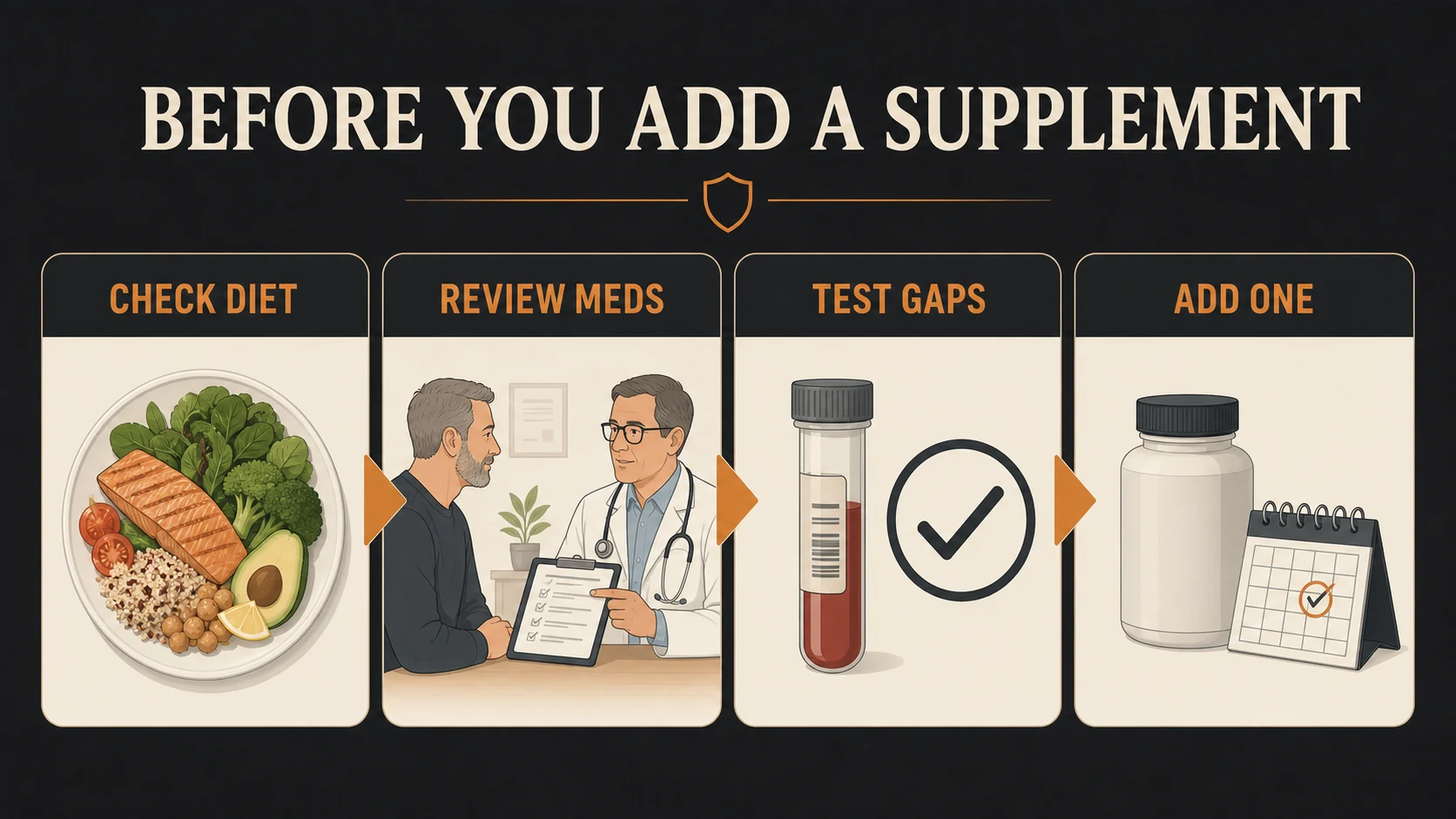
Your Safer 14-Day Start
- Days 1-3: list every medication, supplement, fortified drink, and protein product.
- Days 4-7: audit meals and training against the actual goal.
- Days 8-10: discuss interactions or testing with a pharmacist, physician, or dietitian where relevant.
- Days 11-14: introduce only one justified product, record dose and reason, and watch for side effects.
Conclusion
The best supplements for men over 50 are targeted, boring, and explainable. Protein and creatine may support a serious strength plan. Vitamin D or B12 can matter when intake, absorption, or testing supports them. Omega-3 and fiber are often food questions first. A multivitamin can fill some gaps but cannot create a strong diet.
Keep the stack small enough that every bottle has a reason, a dose, a safety check, and a point at which you reassess it.
Frequently Asked Questions About Supplements for Men Over 50
What supplements should a man over 50 take every day?
There is no universal daily stack. The best choice depends on diet, medications, health conditions, training goals, and verified deficiencies. Many men need fewer products than marketing suggests.
Is creatine safe for men over 50?
Creatine monohydrate is well studied in healthy adults and can support resistance training. Men with kidney disease or complex medical histories should get individualized medical guidance first.
Do men over 50 need a special multivitamin?
Not automatically. A 50+ formula may adjust ingredients such as iron or B12, but the label still needs to match your diet, medication, and total intake.
Should men over 50 take iron?
Do not self-start iron without evidence of deficiency and evaluation of the cause. Too much iron can be harmful, and deficiency in an older man may require medical investigation.
How can I tell whether a supplement is high quality?
Look for a transparent label, credible third-party verification, sensible doses, lot and expiration information, and no claims that exceed the evidence. Quality testing does not guarantee that you need the product.
This article is for educational purposes and does not replace individualized advice from a physician, pharmacist, or registered dietitian. Supplements can interact with medications and medical conditions.
Some links are affiliate links. PrimeForMen may earn a commission from qualifying purchases at no additional cost to you.