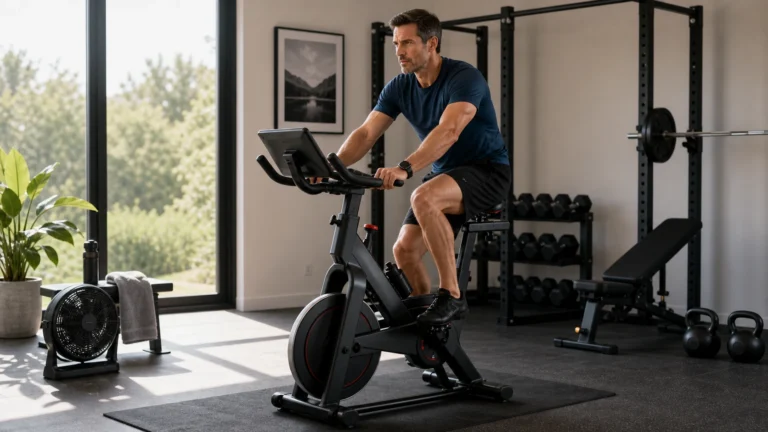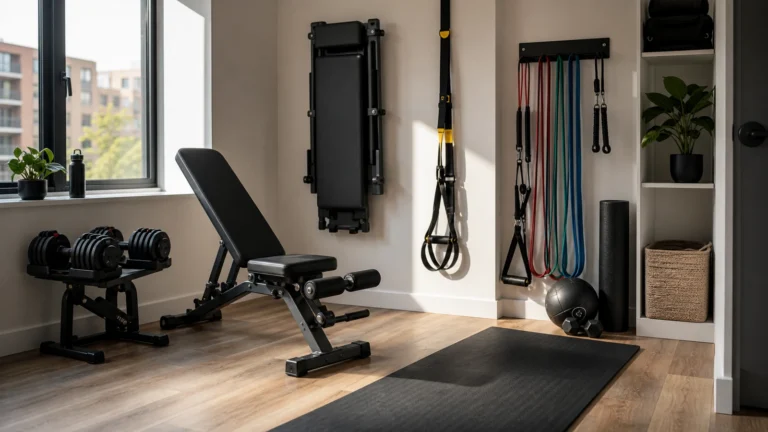
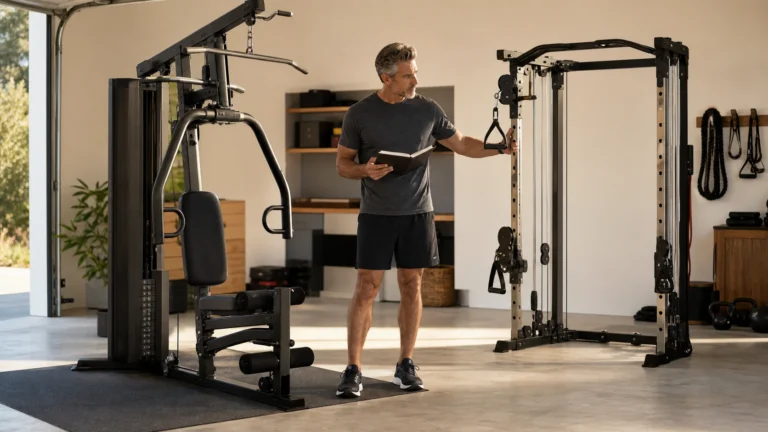
Compare all-in-one home gyms by resistance, stations, footprint, progression and ownership burden. Find the right system—or know when to skip one.
- Choose resistance and movement coverage before comparing accessory counts.
- Measure the working envelope—not just the listed machine footprint.
- Budget for delivery, assembly, plates and maintenance as part of the real price.
Bottom line The best system is the smallest machine that safely supports the movements and progression you will actually repeat.
Home Gym Buying Guide
Quick Answer
The best all-in-one home gym machine is the system that covers your weekly movement plan without creating cable, ceiling, or progression limits. A single-stack machine is simplest, a functional trainer is most flexible, and a Smith/rack combo is strongest for barbell-style progression—but it also requires the most space and setup discipline.
- Best simple choice: A selectorized single-stack gym for controlled full-body training.
- Best versatile choice: A dual-pulley functional trainer plus an adjustable bench.
- Best strength choice: A Smith/rack/cable combo when plates, ceiling height, and floor space work.
Best all-in-one home gym machines should solve a real training or tracking problem without creating a bigger problem in fit, space, cost, or complexity. This guide gives you the selection logic, transparent limitations, and current Amazon options needed to make that decision without pretending that every buyer needs the most expensive model.
Quick Summary: Best All-In-One Home Gym Machines
- Choose the resistance architecture first: selectorized stack, plate-loaded leverage, cable trainer, or rack/Smith combination.
- Measure the training envelope, not only the frame: include bench travel, cable reach, plate loading, and room to enter the station.
- Do not count exercise names. Count the movement patterns you can load progressively with good body fit.
- Budget for delivery, assembly, flooring, attachments, and future service—not only the machine price.
The Prime Perspective
An all-in-one machine is valuable when it removes friction. If one station lets you train squat or knee-dominant work, a hinge, a press, a row, a pulldown, and loaded carries or core work, it can support years of sensible programming.
The trap is buying the largest specification sheet. More stations can mean more compromise: short cable travel, awkward seat geometry, low maximum resistance, or a room that becomes difficult to use. PrimeForMen prioritizes repeatable movements, clear progression, and serviceable parts over novelty attachments.
How We Evaluated the Category
We did not physically test every machine in this guide. We evaluated current US listings, manufacturer-described architecture, adjustment logic, exercise coverage, footprint implications, resistance progression, warranty visibility, and the practical cost of completing the setup. Product availability and configurations can change, so confirm the exact variant at checkout.
Our shortlist is a researched buying framework, not a claim that PrimeForMen personally stress-tested every unit. We separate verified listing details from editorial judgment, avoid invented durability claims, and recommend checking the exact seller, variant, return terms, and current manual before purchase.
| Pick | Best for | Why it fits | Important limit |
|---|---|---|---|
| Body-Solid G9B Multi-Station Gym | Best for two-user, multi-station training | A large, selectorized system for households that want several stations available without changing plates between every exercise. | It demands a permanent footprint, careful delivery planning, and a realistic assembly plan. |
| Body-Solid G3S Single-Stack Home Gym | Best traditional single-stack choice | A conventional home-gym format for buyers who value guided pressing, pulldowns, rows, and leg work over free-weight flexibility. | Check cable ratios and maximum usable resistance for your strongest movements. |
| Best Fitness BFFT10R Functional Trainer | Best compact cable-focused option | A better fit when adjustable cable angles and exercise variety matter more than a built-in press arm or leg station. | You may still need a bench and attachments to cover your full plan. |
Amazon.com Shortlist
Three Current Options Worth Comparing
Each card solves a different buyer problem. Prices, sellers, configurations, and availability can change; verify the exact listing before checkout.
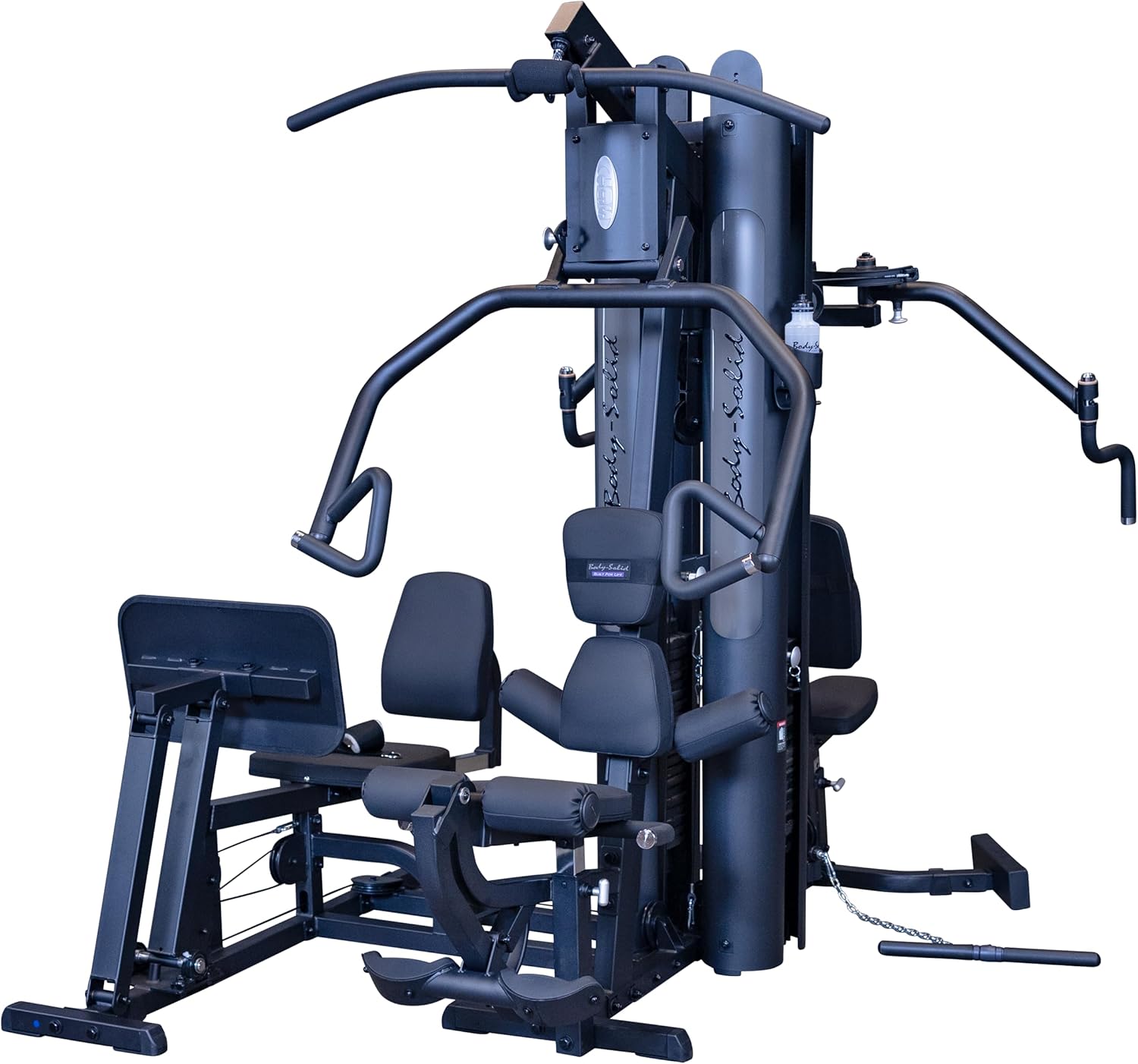
Body-Solid G9B Multi-Station Gym
A large, selectorized system for households that want several stations available without changing plates between every exercise.
- Separate stations reduce changeover friction when two people train together.
- Selectorized resistance suits controlled full-body sessions and progression by small increments.
- It demands a permanent footprint, careful delivery planning, and a realistic assembly plan.

Body-Solid G3S Single-Stack Home Gym
A conventional home-gym format for buyers who value guided pressing, pulldowns, rows, and leg work over free-weight flexibility.
- Single-stack operation keeps resistance changes simple and tidy.
- Guided movement can feel approachable for consistent solo training.
- Check cable ratios and maximum usable resistance for your strongest movements.

Best Fitness BFFT10R Functional Trainer
A better fit when adjustable cable angles and exercise variety matter more than a built-in press arm or leg station.
- Independent cable paths support presses, rows, raises, chops, and unilateral work.
- Compact trainer geometry can be easier to place than a sprawling multi-station unit.
- You may still need a bench and attachments to cover your full plan.
* As an Amazon Associate, PrimeForMen may earn from qualifying purchases. Editorial fit and limitations come first.
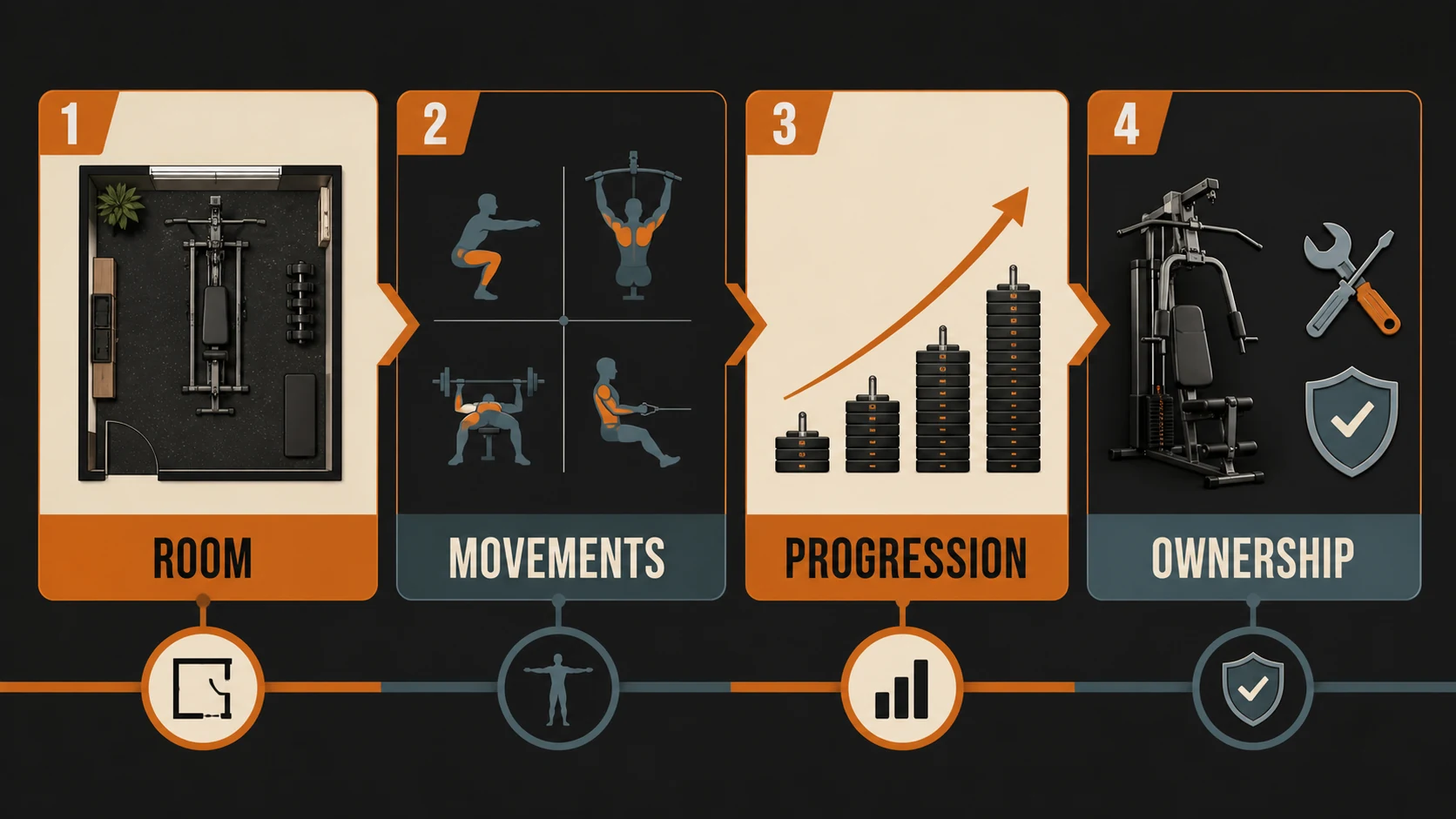
The Four-Decision Home Gym Filter
Move through these decisions in order. If a machine fails an early gate, more attachments will not rescue the purchase.
1. Room
Ceiling, floor, delivery path, bench travel, and plate clearance.
2. Movements
Push, pull, squat, hinge, single-leg, core, and carry options.
3. Progression
Usable resistance, increments, cable ratio, and loading speed.
4. Ownership
Assembly, warranty, parts, resale, and household fit.
Which All-in-One Home Gym Type Fits You?
A selectorized home gym is the lowest-friction format. You move a pin, adjust a seat or pad, and train. It suits general strength, beginners, older adults, and households that value quiet, controlled sessions. Its limits are fixed movement paths and a finite stack. Stronger users should ask what resistance reaches the handle after the cable ratio, not merely what the stack weighs.
A functional trainer uses adjustable pulleys to create many cable angles. It is usually the best middle ground for rows, presses, raises, chops, curls, extensions, split-stance work, and joint-friendly variations. It becomes a more complete system when paired with a stable bench and a few useful handles. If you mainly want barbell squats and heavy presses, however, a cable trainer is an accessory to that plan—not a replacement.
A Smith/rack/cable combination is the broadest solution. It can cover guided bar work, free-bar rack work, cables, pull-ups, and attachments. That versatility comes with more boxes, more assembly, more plate storage, and more points where poor design can create friction. Compare our separate guide to the best cable machines for home gyms if cable quality is the deciding feature.
Footprint Math: The Number Product Pages Rarely Explain
Published width and depth describe the steel frame, not the space needed to train. Add room to load plates, pull a bench out, step into a cable fly, use a low row footplate, and reach any rear storage. A practical rule is to map the full working rectangle with painter’s tape, then rehearse your largest movement inside it.
Ceiling height matters twice: once for the frame and again for pull-ups, cable travel, and your head above the bar. Baseboard, sloped garage floors, wall outlets, doors, and overhead tracks can also steal usable space. Heavy systems need an appropriate surface; our guide to home gym flooring explains when mats protect the floor and when the subfloor itself needs attention.
Resistance, Cable Ratio, and the Progression Ceiling
A 200-pound stack does not always deliver 200 pounds at the handle. Pulley geometry can reduce felt resistance while increasing cable travel. That can be useful for smooth unilateral work, but it changes whether the machine will remain challenging for rows, pulldowns, and presses. Ask the manufacturer for the effective resistance at each station if the listing is unclear.
Plate-loaded systems offer a higher ceiling, but loading every station takes time and requires plates. Selectorized stacks are faster and allow small jumps. The right choice depends on who trains: a couple doing circuit-style sessions may value speed, while an experienced lifter may value open-ended loading. Use the PrimeForMen plate loading calculator if a plate-based system is part of the plan.
Assembly, Service, and Warranty Reality
Large home gyms are logistics projects. Confirm how many packages arrive, whether curbside delivery is the default, and whether the heaviest component can pass through your doors or stairs. Inventory hardware before assembly and do not tighten the entire frame until the manual says the structure should be squared.
A long warranty is useful only if the brand identifies what is covered, how replacement parts are obtained, and whether cables, pulleys, upholstery, and bearings have shorter terms. Save the manual, serial number, proof of purchase, and cable-routing photos. Inspect cables and fasteners regularly, especially after the first month when bolts can settle.
Who Should Skip an All-in-One Machine?
Skip a large system if you move frequently, train in a temporary room, or have not yet built a consistent strength habit. A bench, adjustable dumbbells, and resistance bands may create a better first year. Start with our home gym equipment finder or the essential fitness gear guide before committing a room.
Also skip the category if your primary sport depends on free-bar competition practice. A machine can support accessory work, but a powerlifting plan still needs the appropriate rack, bar, plates, and safeties. See our power rack guide for that path.
What Most Buying Guides Leave Unclear
For health context, the U.S. Physical Activity Guidelines recommend muscle-strengthening work on two or more days per week. The machine is only useful if its setup makes that practice repeatable. For equipment-specific limits, use the current manufacturer manual for the exact model and variant.
The knowledge gap is not another list of features. It is the connection between a specification and a decision: whether the product fits your body, your room, your weekly plan, and your willingness to maintain it. That is why this guide includes who should skip the category as well as who should buy.
Conclusion
For most buyers, the best all-in-one home gym machine is not the one with the most stations. It is the one that fits the room, covers the six or seven movements you will repeat, provides enough progression, and has parts support you can understand. Choose a single stack for simplicity, a functional trainer for movement freedom, or a Smith/rack combination for the broadest strength setup.
Next Step: Place This Purchase in the Full System
Before checkout, compare the machine against the complete room plan in our home gym equipment guide. It helps prevent spending the entire budget on one impressive frame while forgetting flooring, bench fit, plates, and recovery space.
Frequently Asked Questions About Best All-In-One Home Gym Machines
What is the best all-in-one home gym machine for most people?
For most general-fitness buyers, a well-supported selectorized single-stack gym or compact functional trainer is the safest starting point. Choose the stack for simplicity and the functional trainer for movement variety.
Is an all-in-one home gym worth it?
It is worth it when several people will use it consistently, the room is permanent, and the movement and resistance limits fit your plan. It is poor value when space, ceiling, assembly, or progression is uncertain.
How much space do I need for an all-in-one home gym?
Use the manufacturer's assembled dimensions, then add the working space required for bench travel, plate loading, cable exercises, entry, and maintenance. Tape that full rectangle on the floor before buying.
Is a functional trainer better than a traditional home gym?
A functional trainer offers more cable angles and unilateral movement. A traditional home gym is usually simpler and more guided. The better choice depends on whether flexibility or low-friction setup matters more.
Should I buy a Smith machine combo or a cable machine?
Choose a Smith combo if guided barbell-style loading is central and you have plates and room. Choose a cable machine if joint-friendly exercise variety and quick adjustments are the priority.
This article provides general fitness and consumer education, not medical advice or an individualized exercise prescription. If you have pain, dizziness, chest symptoms, a recent procedure, or a condition that affects training safety, seek qualified guidance before changing exercise.
PrimeForMen may earn a commission from qualifying purchases through links in this article. That does not change our editorial standard: buyer fit, verified details, limitations, and practical value take priority.