
Ready for the 30 Day Beginner Home Workout Challenge in 2026? A complete holistic guide with habit stacking, nutrition rules, and zero equipment needed.
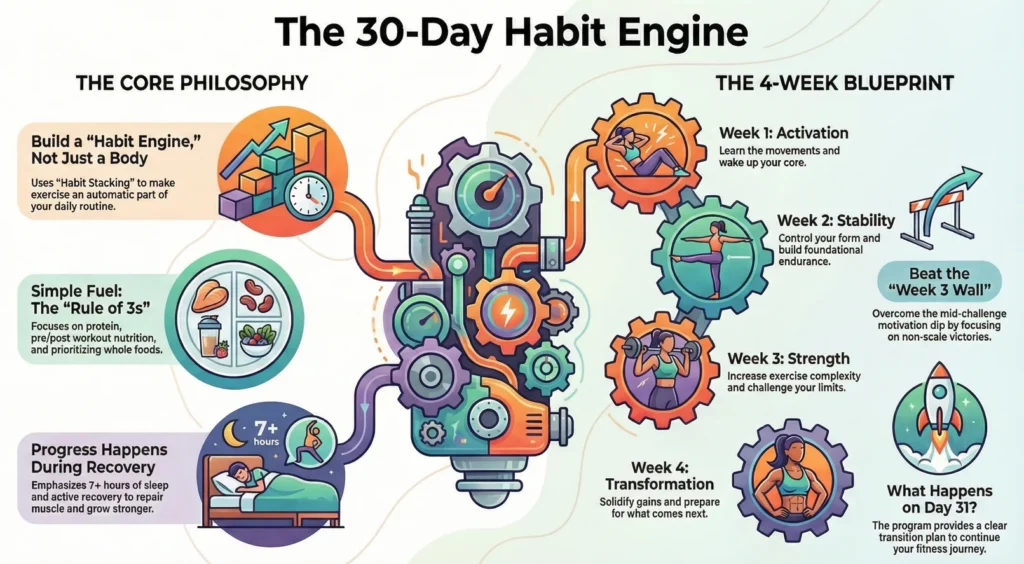
- The Habit Engine: We don't rely on willpower; we use "Habit Stacking" to make exercise an automatic part of your day.
- Neuromuscular Activation: In the first 14 days, your strength gains come from your brain learning to communicate with your muscles.
- The Rule of 3s Nutrition: Simple, non-restrictive fueling focusing on protein, hydration, and whole foods.
Bottom line Stay consistent, fuel your body with intent, and most importantly, listen to your body. We'll see you on Day 31.

Your 30 Day Beginner Home Workout Challenge in 2026 starts right here, right now, and it doesn’t require a credit card or a room full of chrome-plated machinery.
🚀 Key Takeaways
- The Habit Engine: We don’t rely on willpower; we use “Habit Stacking” to make exercise an automatic part of your day.
- Neuromuscular Activation: In the first 14 days, your strength gains come from your brain learning to communicate with your muscles.
- The Rule of 3s Nutrition: Simple, non-restrictive fueling focusing on protein, hydration, and whole foods.
- Scalable Intensity: Every movement features a Level 1, 2, and 3 modification to match your current fitness level.
- The Day 31 Bridge: We provide a clear transition plan so you never hit a “now what?” plateau.
Let’s be honest for a second. You’ve probably seen a hundred “30-day challenges” before. They usually promise you six-pack abs in a month or glutes of steel by next Tuesday. And they usually fail.
Why? Because they rely on the “all-or-nothing” mentality. They give you a list of exercises but forget to give you a life. They ignore the fact that you’re busy, that your knees might creak, and that motivation has a half-life shorter than a highly unstable isotope.
Most people quit on Day 4 because the soreness hits and life gets in the way.
This isn’t that kind of challenge.
We aren’t just here to make you sweat (though you will). We are here to build a “habit engine.” This guide addresses the gaps most plans leave wide open: nutrition for real people, the science of sticking to it, and how to recover so you don’t burn out.
According to the U.S. Department of Health and Human Services Physical Activity Guidelines, consistent movement is the single greatest predictor of long-term health.
This is your Knowledge Gap filler and your Unique Opportunity to finally get it right. We are playing the long game, using these 30 days to install the software that will run your health for the next 30 years.
The Biology of Change: Why You Feel Different
When you start a beginner home workouts plan, the first thing you notice isn’t a bigger bicep; it’s a feeling of being “uncoordinated.” This is completely normal. During the first two weeks of this challenge, your body is undergoing neuromuscular adaptation.
Think of your nervous system as a series of dirt roads connecting your brain to your muscles. When you start working out, those roads are full of potholes. Your brain is sending signals, but they aren’t reaching the muscle fibers efficiently.
By the end of Week 2, those dirt roads have been paved into high-speed fiber-optic cables. You aren’t just getting stronger; you’re getting “smarter” in how you move.
The Cortisol-Testosterone Balance
Stress is the enemy of progress. High stress levels lead to elevated cortisol, which tells your body to store fat—specifically around the midsection. This is often called “stress belly” or cortisol belly. By engaging in consistent, moderate-intensity movement, we are teaching your body to manage stress better.
Furthermore, compound movements like squats and push-ups are known exercises to boost testosterone naturally. This hormonal shift improves your mood, sleep quality, and ability to recover. We aren’t just burning calories; we are re-tuning your internal chemistry.
Preparation: The Anti-Gear Guide
One of the biggest barriers to entry is the idea that you need a home gym equipment setup that rivals a commercial facility. You don’t. In fact, relying on machines too early can rob you of stabilizing strength.
The Essential Non-Equipment
- Gravity: This is your primary resistance. Moving your own bodyweight through space is the most “functional” form of training.
- Floor Space: If you have enough room to do a snow angel, you have a gym.
- Hydration: Dehydration is a performance killer. Even a 2% drop in water levels can decrease your strength by 10%. Check out hydration supplements for an extra edge, but tap water is your MVP.
- Optional Upgrades: While not required, an exercise mat or a pair of adjustable dumbbells can make things more comfortable and allow for faster progression.
Nutrition: Fueling the 30-Day Engine
You cannot out-train a poor diet. However, for a 30-day beginner challenge, you don’t need a PhD in nutrition. You just need the “Rule of 3s.”
1. Protein is Non-Negotiable
Every time you work out, you are creating microscopic tears in your muscle fibers. Protein is the “glue” that repairs them. If you don’t eat enough protein, you won’t get stronger; you’ll just get tired.
Aim for a portion of protein the size of your palm at every meal. If you struggle to hit your targets, a high-quality protein powder can be a lifesaver.
2. Pre-Workout vs. Post-Workout
- Pre-Workout (30-60 mins before): You need “fast” energy. A banana or a slice of toast with honey is perfect. This provides the glucose your brain and muscles need to work hard.
- Post-Workout (within 2 hours): This is the window for repair. Combine protein with some healthy carbs to replenish the glycogen you just burned. A Greek yogurt bowl with berries is a classic choice.
3. Whole Foods Over Supplements
While things like creatine or ashwagandha have their place, they are the “icing” on the cake. The cake itself is made of whole, unprocessed foods. If it came out of the ground or had a mother, it’s a “go.” If it was engineered in a lab to be hyper-palatable, limit it.
The 30-Day Blueprint: Detailed Schedule
This schedule is designed for Linear Progression. Every week, we increase the volume (reps) or the complexity of the movements.
Week 1: The Activation Phase
Focus: Movement quality and waking up the core.
| Day | Focus | Routine |
|---|---|---|
| 1 | Full Body | 3×10 Squats, 3×8 Knee Push-ups, 3x20s Plank |
| 2 | Cardio/Core | 3 min Marching, 3×10 Bird-Dog, 3×10 Glute Bridges |
| 3 | Active Recovery | 20-minute brisk walk + flexibility stretching |
| 4 | Lower Body | 3×12 Squats, 3×10 Lunges (per leg), 3×15 Calf Raises |
| 5 | Upper Body | 3×10 Wall Push-ups, 3×10 Doorframe Rows, 3x20s Side Plank |
| 6 | Active Play | Go for a hike, play tag, or follow a 15-min dance video |
| 7 | Full Rest | No Exercise. Focus on hydration and sleep. |
Week 2: The Stability Phase
Focus: Holding positions longer and controlling the “negative” (the lowering part of a rep).
| Day | Focus | Routine |
|---|---|---|
| 8 | Full Body | 3×12 Squats (3s down), 3×10 Incline Push-ups, 3x30s Plank |
| 9 | Cardio/Core | 4 min High Knees, 3×12 Dead Bug, 3×12 Superman |
| 10 | Recovery | 20-minute walk + foam rolling |
| 11 | Lower Body | 3×15 Squats, 3×12 Reverse Lunges, 3×20 Glute Bridges |
| 12 | Upper Body | 3×12 Knee Push-ups, 3×12 Towel Rows, 3x30s Side Plank |
| 13 | Endurance | 30-minute brisk walk or light cycle |
| 14 | Full Rest | Reflect on your progress. How is your energy? |
Week 3: The Strength Phase
Focus: Increasing complexity and pushing through the “mid-challenge wall.”
| Day | Focus | Routine |
|---|---|---|
| 15 | Full Body | 3×15 Squats, 3×8 Standard Push-ups, 3x40s Plank |
| 16 | Core/Balance | 3×15 Bird-Dog, 3×15 Glute Bridge (1 leg), 3×12 Leg Raises |
| 17 | Recovery | Light yoga for athletes or stretching |
| 18 | Power | 3×10 Squat Jumps (L1: Fast squats), 3×15 Walking Lunges |
| 19 | Upper Body | 3×10 Standard Push-ups, 3×15 Band/Towel Rows |
| 20 | Cardio | 25 min HIIT (30s fast, 30s slow) |
| 21 | Full Rest | Mental reset day. You are almost there! |
Week 4: The Transformation Phase
Focus: Consolidating gains and preparing for life after Day 30.
| Day | Focus | Routine |
|---|---|---|
| 22 | Full Body | 4×12 Squats, 4×10 Push-ups, 3x45s Plank |
| 23 | Cardio/Core | 30 min brisk walk + 3×20 Crunches |
| 24 | Recovery | 20 min walk + focus on hydration |
| 25 | Lower Body | 4×15 Lunges, 3×20 Glute Bridges, 3×20 Calf Raises |
| 26 | Upper Body | 4×12 Push-ups, 4×12 Rows, 3x45s Side Plank |
| 27 | Challenge | AMRAP: As many squats as possible in 2 minutes |
| 28 | Recovery | Gentle movement only. |
| 29 | Final Prep | 20 min Full Body Mobility flow |
| 30 | Victory Lap | Repeat the Day 1 workout and compare the difficulty! |
The Visual Summary: The Holistic 30-Day Engine
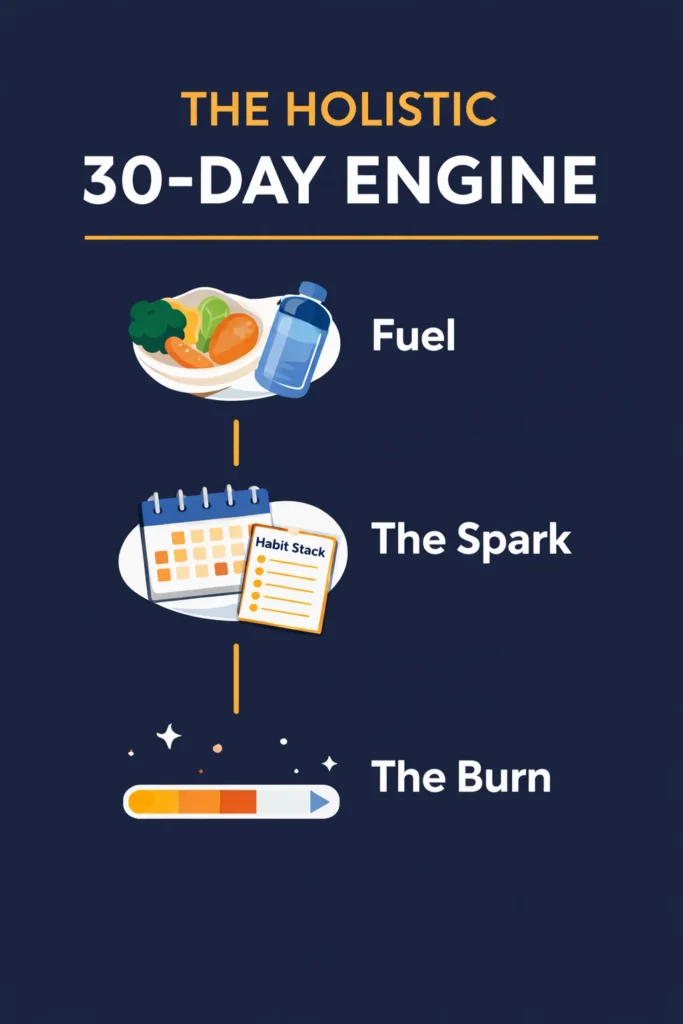
To help you stay on track, we’ve put together this visual infographic summarizing the pillars of your 30-day journey. Use this as a quick reference when things get tough.
Recovery: The Silent Progress Maker
Most beginners think progress happens in the gym. It doesn’t. Progress happens in your bed while you sleep. When you work out, you are causing controlled trauma to your body. Your body responds to that trauma by over-compensating—making the fibers thicker and the connections stronger.
The Power of Active Recovery
On rest days, don’t just sit on the couch. Low-intensity movement like a slow walk or core stability exercises helps flush out metabolic waste and brings fresh, oxygenated blood to your sore muscles. This significantly reduces Delayed Onset Muscle Soreness (DOMS).
Sleep: Your Anabolic Weapon
During deep sleep, your body releases Growth Hormone. This is your primary “repair” signal. If you are sleeping less than 7 hours, you are cutting your results in half. Think of sleep as the most powerful “testosterone booster” on the market.
Psychological Hurdles: The “Week 3 Wall”
Around Day 18, the novelty of the challenge wears off. Your “new workout” high is gone, and the results in the mirror might not be matching your effort yet. This is where most people quit.
To overcome the wall:
- Look for Non-Scale Victories: Are you sleeping better? Is your energy more stable in the afternoon? Can you carry the groceries without getting winded?
- Shorten the Goal: Don’t think about Day 30. Just think about getting through the next 10 minutes of your workout.
- Remember the Anchor: Fall back on your Habit Stack. Don’t rely on being “motivated”—rely on the fact that you always work out after you brew your coffee.
What Happens on Day 31?
You did it. You finished. But if you stop now, the gains will start to fade within two weeks. You have built a foundation; now it’s time to build the house.
Option 1: The Graduate
If you loved the structure, repeat the challenge but use the Level 2 or Level 3 modifications for every exercise. If you did knee push-ups, move to standard ones. If you did bodyweight squats, grab some kettlebells.
Option 2: The Specialist
Maybe you realized you love the cardio aspect. Graduate to a running training plan or a HIIT-at-home routine.
Option 3: The Hybrid Athlete
Combine your home strength work with a new sport. Whether it’s soccer conditioning or basketball drills, the functional strength you built over the last 30 days will make you a better athlete on the field.
Final Thoughts: The Journey is the Goal
The 30 Day Beginner Home Workout Challenge in 2026 isn’t just about the physical transformation. It’s about proving to yourself that you can make a commitment and stick to it. It’s about learning that your body is a capable, adaptable machine.
Stay consistent, fuel your body with intent, and most importantly, listen to your body. We’ll see you on Day 31.
30-Day Challenge FAQ
Answers to keep you moving forward.
I missed a few days. Should I start over?
Absolutely not. This is the trap most beginners fall into. If you miss a day, or even a week, just pick up where you left off. Starting over demands perfection; we are looking for persistence. Just do the next workout on the list.
Do I need rest days if I’m not tired?
Yes. Your muscles don’t grow while you are working out; they grow while you are resting. Skipping rest days accumulates systemic fatigue which leads to injury. If you can’t sit still, go for a walk or do some foam rolling.
Can I do this with bad knees?
Yes, but listen to your body. Stick to the Level 1 modifications. Swap out lunges for Glute Bridges or Wall Sits. High impact (jumping) is your enemy right now. Stability is your friend.
Will I lose weight in 30 days?
Exercise is the spark, but nutrition is the fuel. This challenge will burn calories and—more importantly—build muscle tissue, which raises your metabolism. However, for significant weight loss, you need to pair this with the nutritional “Rule of 3s” mentioned above.
What is the best time to work out?
The best time is the time you can stick to. Morning workouts are great for Habit Stacking (e.g., right after coffee), but if you are a night owl, evening workouts are fine. Consistency beats optimization every time.