Skip to content

SBD Program for Athletes: 12-Week Coach Plan for Speed, Power & Durability

The SBD Program for Athletes

If you want an SBD Program for Athletes that carries over to your sport (not just your gym numbers), this is the one to start with.

This guide gives you a complete 12-week off-season plan plus the missing pieces most articles skip: how to adjust for pre-season, in-season, and post-season, how an athlete’s technique should differ from a powerlifter’s, how to manage fatigue when you’re also practicing, and how to measure transfer to sprinting, jumping, and change-of-direction.

Quick safety note: This article is educational, not medical advice. If you’re returning from injury, have pain, or have a medical condition, get clearance from a qualified clinician and work with a coach.


What “SBD” Means (And Why Athletes Should Care)

SBD is short for Squat, Bench Press, and Deadlift—the “big three” lifts from powerlifting.

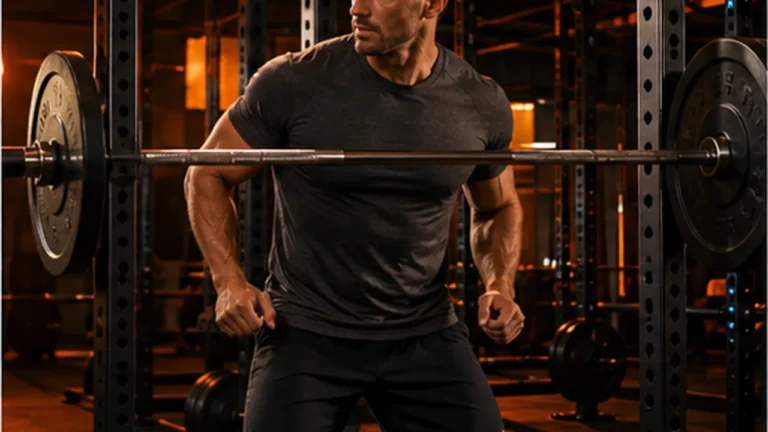
SBD program for athletes

Here’s the part athletes sometimes miss:

  • Powerlifters train SBD to lift the most weight for one rep on a platform.
  • Athletes use SBD to build a stronger “engine” so they can run faster, jump higher, hit harder, cut sharper, and stay healthy.

That’s the difference this article is built around.

If you’re new to the big three, start with a quick refresher on powerlifting basics. It’ll make everything else in this plan easier to understand.


Why SBD is a Game-Changer for Athletes (Not Just Powerlifters)

1) Strength is the base for power

Power is force fast. You can’t express power well if you don’t have much force to begin with.

A stronger squat and deadlift usually means you can:

  • produce more force into the ground
  • accelerate harder
  • hold positions better (think: contact, grappling, boxing, screening)

2) Better bracing, better control

SBD lifts teach full-body tension. That’s not a “core” thing. It’s an everything thing.

If you want extra core work that doesn’t feel like random crunches, build it in with smart progressions from:

3) More durability (when programmed like an athlete)

A well-built SBD plan strengthens muscles, tendons, and connective tissue—but only if you manage fatigue.

If you’re always sore, always beat up, and always “pushing through,” you’re not training… you’re collecting injuries.

If this feels familiar, read overtraining syndrome and bookmark importance of rest and recovery. Those two pages save careers.

4) It fits almost every sport—if you use the right version

Basketball, soccer, football, rugby, combat sports, track athletes, lifters who also play recreational sports—SBD can help all of them.

But the same exact SBD setup won’t help all of them equally. That’s one of the biggest knowledge gaps in the search results, and we’ll fix it here.


The Critical Mindset Shift: Training an Athlete vs. Training a Powerlifter

Goal #1: Transfer to sport

Your program is successful when you show up to practice feeling springy, fast, and confident.

Your program is not successful if:

  • your squat goes up, but your first step gets slower
  • you’re too fatigued to practice hard
  • your hips or shoulders always ache

Strength is a tool. Sport is the job.

Goal #2: Fatigue management is part of performance

Athletes already have a full “stress bucket”:

  • practices
  • games
  • school/work
  • travel
  • sleep debt

A smart SBD plan builds strength without overflowing the bucket.

Coach’s rule: You should leave the gym feeling like you could do a little more—not like you got hit by a truck.

Goal #3: Athlete-centric technique (yes, your form can differ)

Powerlifters often use technique choices that maximize leverage for a 1-rep max. Great for meets. Not always great for transfer.

Here’s the athlete-friendly approach:

  • Squat: more upright torso (often high-bar or safety bar), controlled depth, strong mid-foot pressure
  • Bench: shoulder-friendly setup, strong upper back, arch that supports you (not a circus trick)
  • Deadlift: strong hinge, tight lats, speed off the floor, no ugly grinders
See also  Top 10 Ingredients That Boost Testosterone Naturally

If you want help building “single-leg strength” that actually shows up when you sprint and cut, prioritize unilateral training and staple movements like Bulgarian split squats.


Your Athletic Year Has 4 Phases (Not 2)

Most guides only talk about “off-season vs. in-season.” That’s too simple.

A real athlete’s year has four phases:

  1. Off-season: build strength and muscle, raise work capacity
  2. Pre-season: shift toward speed, power, and freshness
  3. In-season: maintain strength with minimum fatigue
  4. Post-season (transition): deload, rebuild joints, restore energy

This is one of the biggest knowledge gaps online, and it’s also where athletes get the biggest payoff.

Athletic Year Planner

Season Switch: How to Adjust Your Lifting All Year

Use this quick guide to match your squat/bench/deadlift work to what your sport needs right now.

OFF-SEASON
Build
  • More volume (3–5 working sets)
  • Moderate-heavy loads (RPE 7–8)
  • More accessories + single-leg work
PRE-SEASON
Convert
  • Less volume (2–4 working sets)
  • Keep strength, add bar speed
  • More jumps/throws/sprints
IN-SEASON
Maintain
  • 1–2 lifts/week, brief sessions
  • Low volume (2–3 sets) + crisp reps
  • Stop sets before grindy reps
POST-SEASON
Restore
  • Deload + mobility work
  • Rebuild joints and movement quality
  • Then restart a new off-season block
Coach’s note: If practice intensity goes up, lifting volume goes down. Always.

SBD Program for Athletes: The 12-Week Off-Season Plan

This is a 3-day program built for athletes who also need time for:

  • practice
  • speed work
  • conditioning
  • recovery

You can run it as:

  • Mon / Wed / Fri lifting (classic)
  • Tue / Thu / Sat lifting (also great)

Who this plan fits best

This program is a great match if you:

  • have at least a few weeks of basic lifting experience
  • can squat to safe depth with control
  • can bench without shoulder pain
  • can deadlift with a neutral spine and tight lats

If you’re brand new, take 2–4 weeks to learn form and build consistency first. You can use strength training basics as your on-ramp.

The key rule: progress without grinding

This program uses RPE (rate of perceived exertion) so you can adjust loads when you’re tired from practice.

  • RPE 7: could do ~3 more reps
  • RPE 8: could do ~2 more reps
  • RPE 9: could do ~1 more rep

Most of your work will live at RPE 7–8.

That’s intentional.

You’re training to perform—not to survive.

How to Auto-Regulate This SBD Program for Athletes with RPE

If you’re stiff, stressed, or under-slept, RPE keeps you safe without killing progress.

Here’s the simple system:

  1. Warm up normally.
  2. Choose a load you think will match the target RPE.
  3. After the first working set, ask: “How many clean reps did I have left?”
  4. Adjust the weight for the next set.

Coach’s shortcut: If bar speed slows a lot, you’re done. Strength grows when reps are strong.

Need more help managing effort? Pair this with progressive overload so you’re adding weight at the right pace.

RPE + Readiness Check

Readiness & Effort Protocol

RPE Cheat Sheet
  • RPE 7 3 good reps left
  • RPE 8 2 good reps left
  • RPE 9 1 good rep left
  • RPE 10 Absolute Max (Avoid for Athletes)
Today’s Readiness

The Weekly Structure (So You Don’t Compete With Practice)

This program is three lifting days. Your speed, jumps, throws, and practice fit around it.

A simple template that works well:

  • Lift Day 1 (lower): squat strength + single-leg + core
  • Lift Day 2 (upper): bench strength + upper back + shoulders
  • Lift Day 3 (hinge + power): deadlift strength + explosive work

Then add:

  • 1–2 short jump or sprint sessions per week (10–25 minutes)
  • 1–2 conditioning sessions (sport-dependent)

For explosiveness ideas, use plyometric training. For quick footwork add-ons, agility ladder drills are easy to plug in.


The Program Tables (12 Weeks, Built-In Progression)

Below are the three training days, broken into three phases. The lift choices stay familiar so you can focus on loading and clean reps.

How to choose your weights

  • Use a weight that matches the target RPE on the first week of a phase.
  • Each week, add a small amount of weight only if you hit the same reps with the same bar speed.
  • When practice is brutal, keep the weight the same and aim for perfect reps.

Progress wins. Grinding loses.

Day 1 — Squat Focus (Strength + Single-Leg)

Coach’s notes (Day 1):

  • If your knees complain, check squat depth and foot pressure. Don’t “dive bomb.”
  • If your low back complains, tighten your brace and reduce load. Add more single-leg work.
See also  Unlocking the Power of Green Supplements: A Comprehensive Guide to Health and Wellness

Day 2 — Bench Focus (Upper Body Strength + Shoulder Health)

Coach’s notes (Day 2):

  • Upper back strength is shoulder insurance. Don’t skip the rows.
  • If your shoulders feel cranky, use dumbbells for presses and keep the bench grip moderate.

Day 3 — Deadlift Focus (Hinge Strength + Explosive Work)

Coach’s notes (Day 3):

  • Deadlifts should look the same on rep 1 and rep 5.
  • If your back rounds, reduce load and rebuild position.

How to Add Speed Work Without Burning Out

Athletes usually make one of two mistakes:

  1. They lift hard and sprint hard on the same day, every time.
  2. They sprint when they’re already cooked.

Better plan:

  • Put sprint/jump work before lifting (short, crisp, low volume)
  • Or put sprint/jump work on a separate day when your legs feel good

A simple weekly add-on (optional)

  • 1 day: 6–10 short sprints (10–30 meters) with full rest
  • 1 day: 12–20 total jumps (box jumps, broad jumps, or med ball throws)

If your sport already includes high-speed running (soccer, football), you may not need both.


Customizing Your Program: Sport-Specific Accessory “Packages”

This is another gap online: athletes aren’t all the same.

The main lifts stay similar. The accessories change based on your sport.

For Jumpers (basketball, volleyball)

Focus: stiffness, elastic power, single-leg strength.

Pick 2–3 accessories per lift day:

  • box jump / broad jump
  • split squat / step-up
  • Romanian deadlift
  • calf + tibialis work
  • anti-rotation core (Pallof press)

For Sprinters and Change-of-Direction athletes (soccer, hockey, receivers)

Focus: hamstrings, hips, and deceleration.

Pick 2–3:

  • Nordic curl progression or hamstring curls
  • single-leg RDL
  • lateral lunge / Cossack squat
  • sled pushes (if you have them)
  • agility ladder drills as a low-fatigue add-on

For Contact athletes (football, rugby, combat sports)

Focus: total-body strength, bracing, and upper back.

Pick 2–3:

  • heavy carries
  • rows and pull-ups
  • landmine press
  • neck work (coach-guided)
  • grip work

For Rotational sports (baseball, tennis, golf)

Focus: trunk stiffness + controlled rotation.

Pick 2–3:

  • landmine rotations
  • cable chops
  • med ball throws
  • single-arm rows

Want a deeper sport-specific plan? You can also explore your dedicated sport pages like soccer conditioning or football-specific workouts.


The Missing Piece: Nutrition + Recovery That Matches Training

Most SBD articles stop at sets and reps.

But athletes don’t fail because the program is “wrong.” They fail because recovery is missing.

Eat like you’re training

You don’t need a perfect diet. You need enough fuel.

A practical starting point:

  • Protein: a solid serving at each meal
  • Carbs: higher on hard practice + lower body days
  • Fats: enough to keep hormones and joints happy
  • Hydration: consistent, not random

If you sweat a lot, don’t ignore electrolytes. Here’s a simple primer on electrolytes for athletes.

And if you want one supplement with a strong record for strength and power, start with the basics from our creatine guide.

Sleep is your legal performance enhancer

If you sleep 5–6 hours, your training plan becomes a stress plan.

Aim for 7–9 when possible, and protect the hour before bed.

If your mind is racing at night, try simple breath work or a short practice of meditation for athletes.


How to Measure “Transfer” (So You Know It’s Working)

If you only track the barbell, you miss the whole point.

At the start of Week 1 and again at the end of Week 12, test:

  • Vertical jump (best of 3)
  • Broad jump (best of 3)
  • 10–20m sprint time (best of 2)
  • Change-of-direction test (pick one: 5-10-5 or similar)
  • Sport-specific output (example: throw velocity, repeated sprint ability, or practice metrics)

The win is not “I added 20 pounds to my squat.”

The win is “I’m faster, stronger, and I feel better in games.”

Performance Transfer Tracker

Track Transfer (Baseline → Week 12)

Fill this out on Week 1 and Week 12. If your barbell numbers go up and these improve, you’re doing athlete lifting correctly.

Vertical Jump
10–20m Sprint
Broad Jump
Change of Direction
Tip: Keep testing conditions the same (surface, shoes, warm-up). Consistency beats perfection.

How to Adjust This Plan for Pre-Season and In-Season

Pre-season (4–6 weeks before tryouts or competition)

Goal: keep strength, show up fresh.

  • Cut accessory volume by ~30–40%
  • Keep the main lift heavy-ish, but fewer sets
  • Add more jumps, throws, sprints
See also  Exploring the Best Sleep Aids: Natural and Prescription Options for a Restful Night

A simple pre-season template (per lift day):

  • Main lift: 3×3 @ RPE 7–8
  • One accessory: 2×6–8
  • One power drill: 4×3

In-season (maintenance mode)

Goal: stay strong without soreness.

  • Lift 1–2 days/week
  • Total work time: 30–45 minutes
  • Keep reps clean and fast

Simple in-season approach:

  • Day A: squat 2×3–5 + row 3×8 + core
  • Day B: bench 2×3–5 + hinge 2×5 + mobility

If you’re playing 2–3 games per week, you may only need one lift.

Post-season (transition)

Goal: rebuild you.

  • 1–2 weeks low intensity
  • more mobility, easy single-leg work, easy upper back
  • then restart off-season

Common Mistakes Athletes Make With SBD (And How to Avoid Them)

Mistake #1: Training like a powerlifter

If your main lift is always a max effort grind, you’re practicing fatigue.

Fix: live at RPE 7–8, save the maxing for rare test days.

Mistake #2: Neglecting single-leg work

Most sports are basically one-leg sports.

Fix: keep a split squat or step-up all year. Start with unilateral training.

Mistake #3: Skipping pulls

If you bench a lot but don’t row a lot, your shoulders will let you know.

Fix: 2–3 pulling movements per week.

Mistake #4: Doing too much conditioning

Conditioning is important. Too much of the wrong kind kills strength and speed.

Fix: keep conditioning specific to your sport and your season.


Evidence-Based Support (Without Drowning You in Science)

You don’t need a PhD to train well. But it helps to know the basics are supported by major organizations.

That’s your “trust layer.” The rest is doing the work consistently.


Final Rep: What to Do Next

  1. Pick your schedule (3 days/week).
  2. Start Week 1 with clean reps at RPE 7.
  3. Add load slowly when bar speed stays strong.
  4. Track transfer with the test widget.
  5. When the season changes, use the Season Switch widget and adjust volume.

If you do those five things, you’ll build strength that shows up where it counts.


SBD Athlete Training FAQ

Master the Big 3 for elite-level performance.

An SBD program is built around the “Big 3” compound movements: Squat, Bench, and Deadlift. While powerlifters use these to compete, athletes use them as the ultimate foundation for force production. By mastering these lifts, you build the structural integrity and horsepower needed for any high-contact or high-speed sport.

The goal is the differentiator. A powerlifter wants to lift the most weight possible within rulebook constraints (e.g., using a high back arch on bench). An athlete uses these lifts to develop qualities like:

  • Force Velocity: Moving heavy loads quickly.
  • Full ROM: Training through deep ranges of motion to prevent injury.
  • Structural Balance: Ensuring the upper and lower body are equally powerful.

For most athletes, a 3 or 4-day per week frequency is the “sweet spot.” This typically looks like:

  • Squat/Variation: 2-3 sessions per week.
  • Bench/Variation: 2-3 sessions per week.
  • Deadlift/Variation: 1-2 sessions per week.
This ensures you are building strength without being too fatigued for your actual sports practice or games.

Accessories should bridge the gap between the gym and the field. We recommend Bulgarian Split Squats for single-leg stability, Pull-ups for upper body balance, and Plyometrics (like box jumps) to ensure your new strength is “explosive” rather than just “slow and heavy.”

Absolutely. Speed is a byproduct of how much force you can apply to the ground. By increasing your 1-rep max in the Squat and Deadlift, you increase your relative strength. Scientific data consistently shows that athletes who improve their SBD totals (without gaining excessive fat) see immediate improvements in their 10-yard and 40-yard sprint times.

Premium Performance Selection

Scientifically-backed supplements curated to optimize hormonal balance, muscle recovery, and daily vitality.

PrimeGENIX

Advanced formula designed to naturally optimize testosterone and restore youthful energy levels.

View Details

GenF20 Muscle

Targeted support for lean mass accretion, strength gains, and significantly reduced recovery windows.

View Details

HyperGH 14X

Optimizes natural growth factor production to enhance metabolic rate and muscular definition.

View Details

Testodren

Clinically researched single-compound solution for increasing stamina and cognitive focus.

View Details

TestRX

Complete athletic support system designed for high-intensity training and overall longevity.

View Details