Start with a clear first workout, two strength days, manageable walks and a four-week plan. Includes easier options and a free beginner log.
- Start with one manageable set of five movements.
- Use two nonconsecutive strength days and short walks.
- Progress one part of the plan only when ready.
Bottom line Put two realistic sessions in your calendar and complete the easier version of the first workout.
Beginner fitness for men starts with a session you understand and can repeat. You do not need to earn your place with an exhausting first workout. Below is a specific first session, a manageable weekly schedule and a way to build the next four weeks around your actual response.
Quick Summary: Beginner Fitness For Men
- Start with one manageable set of five movements.
- Use two nonconsecutive strength days and short walks.
- Progress one part of the plan only when ready.
The Prime Perspective
The first month is about learning your setup, your starting level and a routine you can keep. A plan that survives an ordinary busy week is more useful than a perfect schedule that requires a different life.
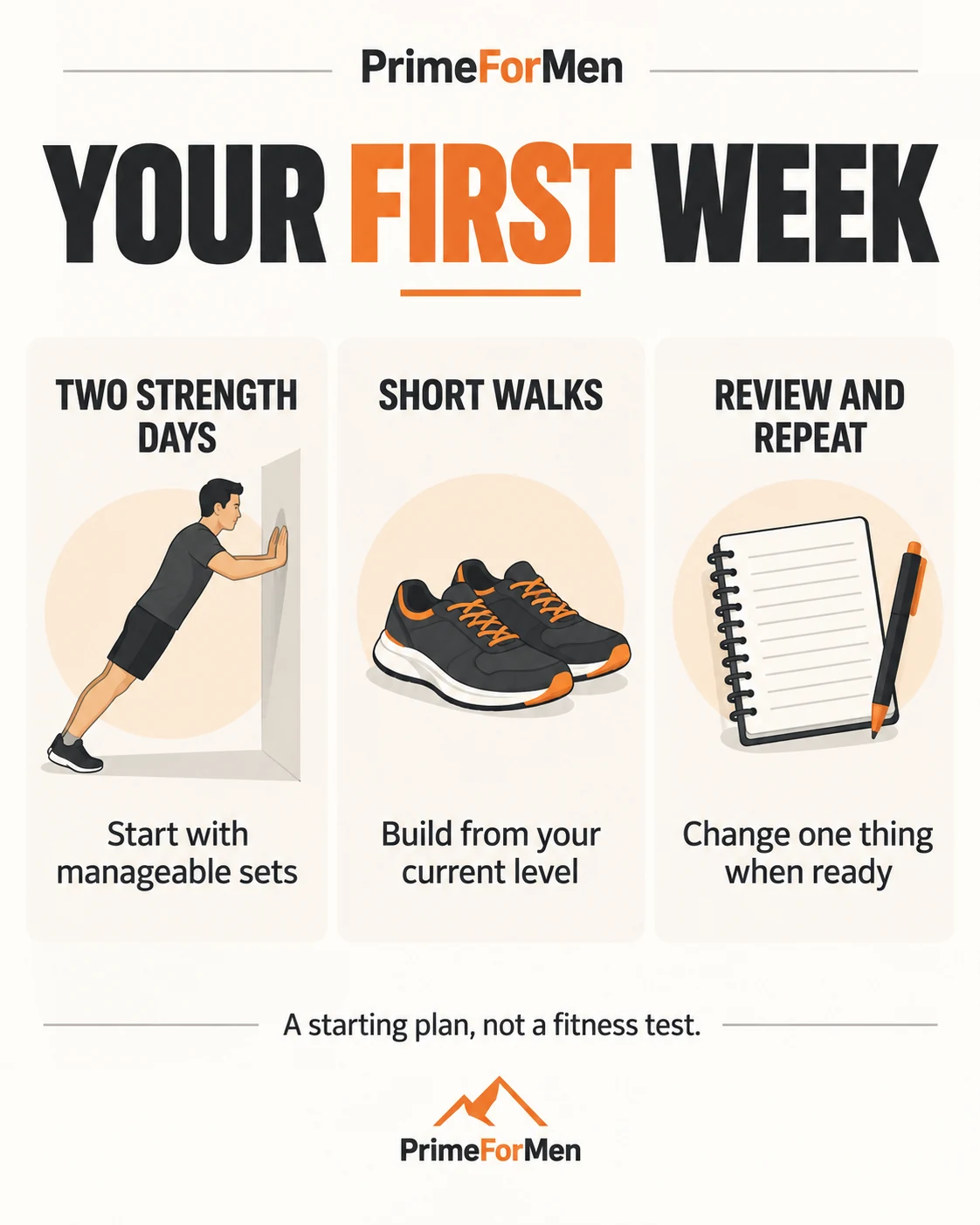
Your First Strength Session, Step by Step
This example is for generally healthy adults starting or returning to exercise. It is a practice session, not a test of fitness. Set aside approximately 20–30 minutes, clear the area and choose two nonconsecutive days in the week. If you have a condition that affects activity, use appropriate professional guidance to adapt the starting point.
Spend about five minutes on easy walking or step-touch, relaxed shoulder movements and a few unloaded sit-to-stands or shallow squats. Then try the movements below. One work set is enough for the first exposure when you are unsure how you will respond. Rest 60–90 seconds between exercises, or longer until comfortable.
On small screens, swipe the table sideways to see every column.
| Exercise | First-session example | How to make it easier |
|---|---|---|
| Sit-to-stand | 1 × 5–8 from a stable nonrolling chair. | Use a suitable higher seat or hand assistance. Do not rock or bounce. |
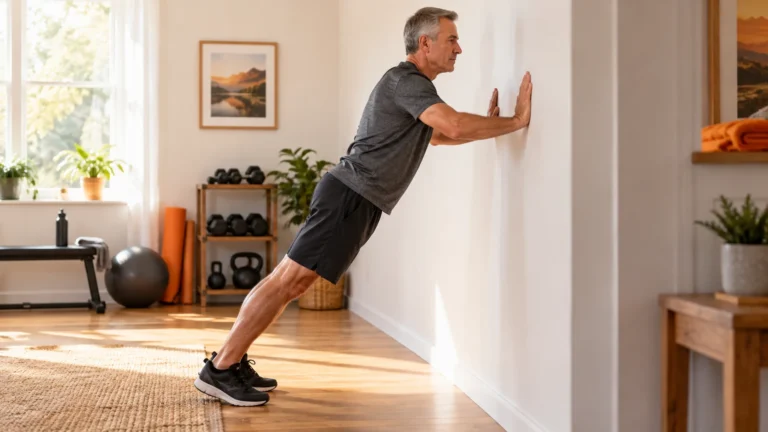
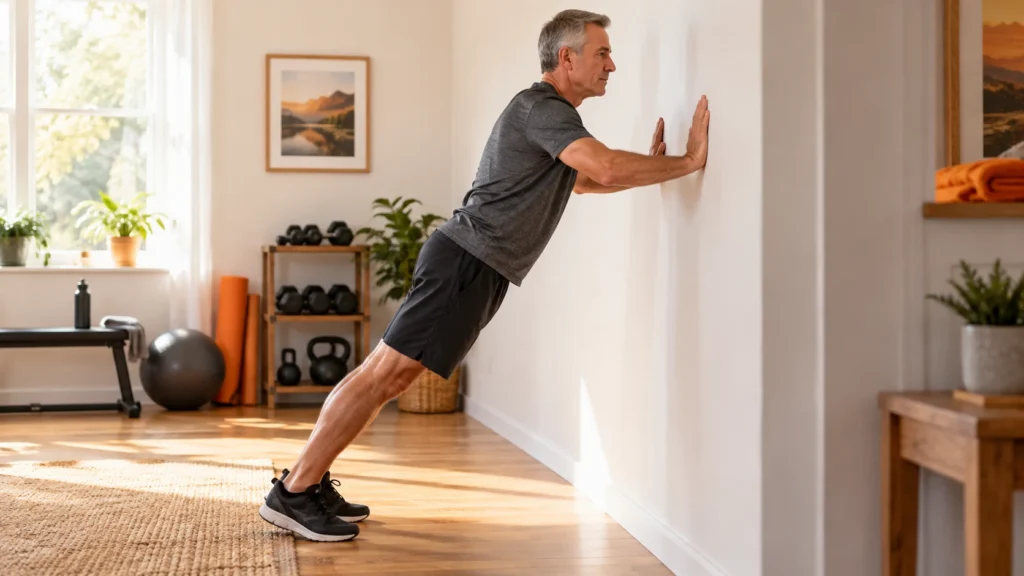
| Wall push-up | 1 × 5–8 with hands around chest height. | Move feet closer to the wall and use a smaller comfortable range. |
| Supported one-arm row | 1 × 8 each side with a manageable light dumbbell. | Use a lighter load. If no safe weight or support is available, omit temporarily and arrange a suitable pulling option. |
| Glute bridge | 1 × 8, lifting and lowering hips smoothly. | Use a smaller comfortable range, or a standing unloaded hinge if floor access is difficult. |
| Wall plank | 1 × 15–20 seconds with forearms on a solid wall. | Step closer, shorten the hold and breathe normally. |
Finish each set while you could still perform a few good repetitions. You do not need to prove the estimate by going to failure. If the session feels manageable and your normal movement remains comfortable afterward, repeat it later in the week. A trainer can help choose suitable technique and starting loads; that is different from medical assessment.
Learn the Positions Before Adding Difficulty
For a sit-to-stand, place feet comfortably, lean forward enough to rise and stand without using momentum. Sit down gently instead of dropping onto the chair. For a wall push-up, bend the elbows to bring the torso toward the wall while keeping your body controlled, then press away. The NHS illustrated strength guide shows these starter movements and explains chair stability.
For a row, place your free hand on a fixed support, hinge slightly and pull the dumbbell toward the side of the torso without a large twist. For a bridge, keep feet grounded and lift through a comfortable range without forcing a back arch. The wall plank is a brief steady hold, not a breath-holding challenge. Stop a movement that produces pain rather than trying to complete the table at any cost.
Do not start with an overhead exercise simply because a plan calls it fundamental. Choose options you can set up safely. Two-sided, supported movements are useful starting choices, and equipment does not need to be elaborate. Our apartment workout guide adds floor-space and quieter-movement checks.
A First Week With Room to Adjust
On small screens, swipe the table sideways to see every column.
| Day | Example | Purpose |
|---|---|---|
| Monday | Practice the short strength session. | Learn setup and record what you actually completed. |
| Tuesday | A comfortable 5–15 minute walk, adjusted to your baseline. | Find a repeatable route and pace. |
| Wednesday | Rest or easy everyday movement. | Observe recovery without adding a challenge. |
| Thursday | Repeat Monday if ready; simplify if needed. | Practice consistency before progression. |
| Friday or Saturday | One or two similar short walks when manageable. | Build a routine without a mandatory minute target. |
| Sunday | Review the log and choose next week’s schedule. | Keep what was practical and adjust barriers. |
This starting week is intentionally below the full adult aerobic guideline. Build from your present capacity rather than treating a missed target as failure. Walking minutes count toward the moderate-activity target when their intensity is appropriate; easy strolling can still be worthwhile movement without being the same training dose.
How to Build Weeks Two Through Four
Repeat familiar exercises in week two. If one set was comfortable and recovery is good, add a second set to one or two exercises, or add a repetition—choose one change. In week three, continue the same plan or extend a familiar walk slightly. Week four is a review point, not a deadline to lift heavy or reach an arbitrary step count.
For example, sit-to-stands might move from one set of six to one set of eight, then eventually two sets of six. That is an illustration, not a required timeline. Record discomfort, fatigue, time constraints and what made the session easier to start. There is no universal rule that you must hit 80% attendance or have zero soreness at exactly 48 hours before any progress is allowed.
If several sessions become harder rather than easier, reassess the workload and seek help when symptoms warrant it. The ACSM guidance for healthy adults supports a simple, consistent approach rather than compulsory advanced techniques. Use our worked progression examples once your setup is repeatable.
Build Toward Activity Guidelines Without Rushing the First Month
The CDC adult guidelines recommend at least 150 minutes of moderate-intensity aerobic activity each week, or an equivalent amount of vigorous activity, plus muscle-strengthening work on at least two days. That is a broader weekly destination, not a requirement to complete it immediately after a long inactive period.
Short walks can help you find a manageable starting point. If five minutes is appropriate today, record five minutes rather than labeling the session a failure. Increase duration gradually when the response and schedule allow. For moderate activity, being able to talk but not sing is a practical intensity cue; a very easy introductory walk may be below that level and still help establish the habit.
Choose a Setup You Can Repeat
On small screens, swipe the table sideways to see every column.
| Constraint | Starting choice | What to check |
|---|---|---|
| No gym membership | Use the wall, a stable chair and a suitable light weight for a row. | Clear floor space and secure support. |
| Difficult floor transfers | Use wall-based options and comfortable standing work. | Do not force a floor exercise to complete a checklist. |
| Only a short window | Complete fewer familiar movements with proper rest. | Do not rush transitions to fit the whole plan. |
| Unpredictable work week | Choose two available nonconsecutive days rather than fixed weekdays. | Keep a smaller fallback session ready. |
The apartment-friendly guide adds quiet exercise substitutions. The full-body home workout provides another home structure once your first sessions are familiar. Pick one plan rather than combining every exercise from both.
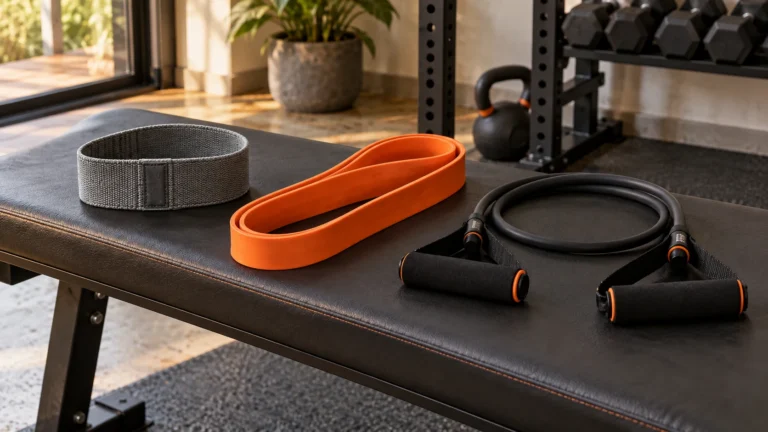
If you already own weights, use the dumbbell plan as a later option. If you are considering bands, read the band selection and attachment checks first. Buying equipment should solve a specific problem, such as having no practical pulling exercise, rather than becoming a prerequisite for beginning.
Use a Brief Weekly Review
Ask three questions: Which sessions happened? Which movements felt manageable? What got in the way? A missed session caused by a late shift calls for a scheduling change; repeatedly struggling with an exercise calls for a simpler variation or instruction. Neither problem is solved by adding an extra hard workout.
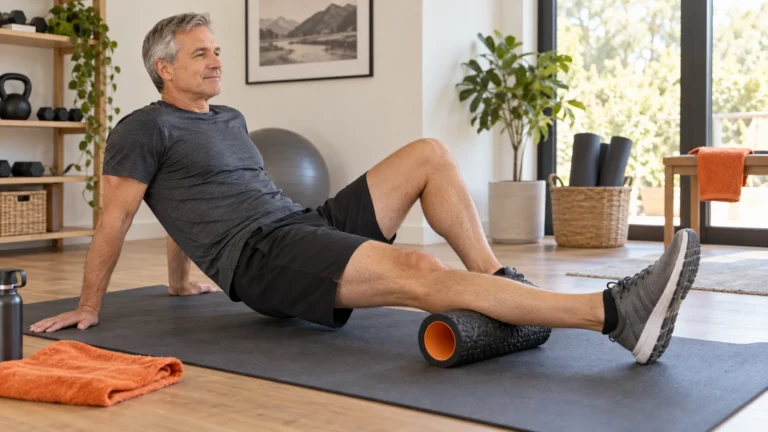
Keep ordinary meals, hydration and sleep in view without trying to overhaul everything simultaneously. A first-month exercise routine does not require a supplement stack, a crash diet or a perfect tracking system. If you have a medical condition or specific nutrition needs, use appropriately qualified guidance instead of generic training advice.
Use the progression guide when you need to decide between repeating and adding difficulty. If you feel unusually fatigued, the recovery decision guide can help you avoid turning every day into another session. A sustainable routine includes room to rest.
Download the Practical Worksheet
Use the one-page reference and three fillable fields to record your setup, what you completed and the next decision. Print it or save a filled copy using a PDF reader that supports forms. Read the full instructions and adaptations above before using the summary.
Optional Equipment: Buy for a Specific Job
The links below open Amazon category searches, not tested product recommendations. Compare the actual product instructions, dimensions and compatibility. Use equipment you already own when it fits the task.
As an Amazon Associate, PrimeForMen earns from qualifying purchases.
Conclusion: Make the Next Session Clear
Put two realistic sessions in your calendar and complete the easier version of the first workout. Use the worksheet to make that decision visible. Repeating a manageable session is a valid choice; the calendar alone does not require a harder workout.
Frequently Asked Questions
How many days should I train in week one?
The example uses two nonconsecutive strength days plus manageable short walks on suitable days. It is a starting structure, not a compulsory minimum for someone whose current capacity or circumstances require less.
What if I cannot get down to the floor?
Use the wall-based alternatives and comfortable standing work described in the guide. Do not force a floor transfer. Individual guidance can help select suitable movements if balance, pain or mobility makes common options difficult.
Do I need to feel sore for the workout to count?
No. Soreness is not the success target. Record what you completed and whether the session was manageable. Deliberately chasing soreness can make it harder to repeat the routine.
Should I buy equipment before starting?
Only when it solves a specific need. A wall, stable chair and clear space cover several starting movements. Pulling exercises need appropriate equipment or an alternative plan; a random household object is not automatically a safe weight.
What should I do after missing a week?
Resume with a manageable dose and review how you feel. Do not cram missed sessions into the next week. If circumstances have changed, simplify the schedule rather than treating the previous plan as an obligation.
Medical Disclaimer
This is general fitness education, not diagnosis, rehabilitation or an individualized exercise prescription. Choose movements appropriate to your situation. Stop for pain, dizziness or unusual symptoms and seek appropriate guidance. New or severe concerning symptoms warrant prompt medical assessment.
Our editorial policy explains our approach to sources and commercial independence. Exercise examples and illustrations do not represent individual coaching or product testing.
Affiliate Disclosure
Some links are affiliate links. We may receive a commission from qualifying purchases at no additional cost to you. Optional equipment is not a condition of benefiting from the guidance above.